
- Broschiertes Buch
- Merkliste
- Auf die Merkliste
- Bewerten Bewerten
- Teilen
- Produkt teilen
- Produkterinnerung
- Produkterinnerung
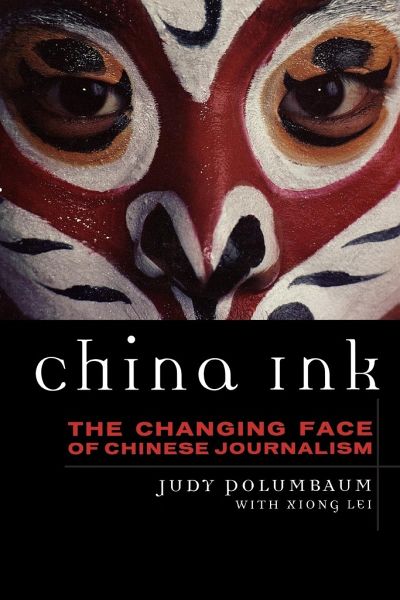
This lively book explores changes in contemporary China through the compelling personal accounts of young Chinese journalists. Through a series of engaging oral histories, Judy Polumbaum puts a human face on vital issues of freedom of expression and information that will chart China's future.
Andere Kunden interessierten sich auch für
 Lenoir ChambersSalt Water and Printer's Ink61,99 €
 Kathleen A. HansenFuture-Proofing the News29,99 €
 Matt NesviskyCovering Your Campus54,99 €
 Janet KolodzyConvergence Journalism49,99 €
 Noha MellorMaking of Arab News47,99 €
 James E. MuellerTowel Snapping the Press42,99 €
 Charles RaiteriWriting for Broadcast News52,99 €
-
-
-



This lively book explores changes in contemporary China through the compelling personal accounts of young Chinese journalists. Through a series of engaging oral histories, Judy Polumbaum puts a human face on vital issues of freedom of expression and information that will chart China's future.
Produktdetails
- Produktdetails
- Verlag: Rowman & Littlefield Publishers
- Seitenzahl: 216
- Erscheinungstermin: 29. Mai 2008
- Englisch
- Abmessung: 229mm x 152mm x 13mm
- Gewicht: 358g
- ISBN-13: 9780742556683
- ISBN-10: 0742556689
- Artikelnr.: 23527239
- Herstellerkennzeichnung
- Libri GmbH
- Europaallee 1
- 36244 Bad Hersfeld
- gpsr@libri.de
- Verlag: Rowman & Littlefield Publishers
- Seitenzahl: 216
- Erscheinungstermin: 29. Mai 2008
- Englisch
- Abmessung: 229mm x 152mm x 13mm
- Gewicht: 358g
- ISBN-13: 9780742556683
- ISBN-10: 0742556689
- Artikelnr.: 23527239
- Herstellerkennzeichnung
- Libri GmbH
- Europaallee 1
- 36244 Bad Hersfeld
- gpsr@libri.de
Judy Polumbaum is a former newspaper reporter. She is currently professor of journalism and mass communication at The University of Iowa. Along with Gao Yuan, she cowrote Born Red: A Chronicle of the Cultural Revolution and Lure the Tiger Out of the Mountains: The Thirty-six Stratagems of Ancient China. Xiong Lei spent 25 years as a reporter and editor for China Features, an English-language feature service of Xinhua News Agency. She is an environmental writer and consultant in Beijing.
Part 1 Preface by Aryeh Neier
Part 2 Introduction by Judy Polumbaum
Part 3 Part one: The changing establishment
Part 4 Chapter 1: In all my time as a journalist, there's been no moment I
didn't think about those four words: freedom of the press. Wang Jun,
Outlook Weekly
Part 5 Chapter 2: Some of my male competitors might have been very capable,
but nobody had a passion stronger than mine. Zhou Yijun, Xinhua News Agency
Part 6 Chapter 3: The question is how to be professional, how to be fair to
your interviewees, how to make balanced reports, how to convey different
voices and different sides. Lin Gu, China Features
Part 7 Chapter 4: Compared to other jobs, a journalist's work is always
fresh, as the sun is new every day. Gong Wen, People's Daily
Part 8 Chapter 5: We do not represent ourselves as a mouthpiece-other media
may have that concept, but not us. Tan Hongkai, China Daily
Part 9 Chapter 6: If you are not allowed to speak, you can stay silent, or
laugh. But you shouldn't tell lies. Jin Yongquan, China Youth News
Part 10 Part two: Into the fray
Part 11 Chapter 7: Why do we go after news? Because the news is there. Li
Yang, China Newsweek
Part 12 Chapter 8: If you have ideals, you'll be happy in journalism.
Although you'll face many vexations, you'll reap lots of spiritual rewards.
Liu Jianqiang, Southern Weekend
Part 13 Chapter 9: Being a journalist is not a job or a profession, but a
lifestyle. It is beyond man's will. Hu Zhibin, The First
Part 14 Chapter 10: My greatest challenge in work is gaining knowledge,
since you never know what kind of people and what sorts of things you'll
run into the next day. Zhan Minhui, Beijing News
Part 15 Part three: In the niches
Part 16 Chapter 11: I don't have to write about things I don't want to
write about, or report things I don't wish to report. Lu Yi, Sanlian Life
Weekly
Part 17 Chapter 12: Journalists who report on minority affairs, in addition
to truly reflecting facts and having morals and conscience, must have the
capacity for love and compassion. Yang Jin, Nationalities Pictorial
Part 18 Chapter 13: Sports reporting can be about very small things; a
story that provides something practical and beneficial doesn't have to be
of great significance. Zhang Xuguang, China Sports News
Part 19 Chapter 14: To many athletes, journalists are a headache because
they ask meaningless questions and intrude on their lives. Ma Yin, Titan
News
Part 20 Part four: Over the air
Part 21 Chapter 15: I go out reporting every day, sometimes doing three or
four pieces in a day. My time is not my own. Liu Qian, China Central
Television
Part 22 Chapter 16: Sometimes I'll feel good about my work, and it gets
trashed. Ai Da, Beijing Television
Part 23 Chapter 17: Live talk programs are one-to-one, although the one
could be millions of listeners. When I talk to them, I feel I'm talking to
an individual. Xiang Fei, China National Radio
Part 24 Part five: New configurations
Part 25 Chapter 18: There's no need to be discouraged; there are always
things one can accomplish. Wang Shuo, Finance & Economics Magazine
Part 26 Chapter 19: Our biggest challenge is the uncertainty of the future
of print media. Liu Zouwei, 21st Century Business Herald
Part 27 Chapter 20: My background actually makes it harder to arrive at
elementary knowledge-so only now can I learn the simplest principles and
regain some common sense. Zhang Lixian, Readers Warehouse
Part 2 Introduction by Judy Polumbaum
Part 3 Part one: The changing establishment
Part 4 Chapter 1: In all my time as a journalist, there's been no moment I
didn't think about those four words: freedom of the press. Wang Jun,
Outlook Weekly
Part 5 Chapter 2: Some of my male competitors might have been very capable,
but nobody had a passion stronger than mine. Zhou Yijun, Xinhua News Agency
Part 6 Chapter 3: The question is how to be professional, how to be fair to
your interviewees, how to make balanced reports, how to convey different
voices and different sides. Lin Gu, China Features
Part 7 Chapter 4: Compared to other jobs, a journalist's work is always
fresh, as the sun is new every day. Gong Wen, People's Daily
Part 8 Chapter 5: We do not represent ourselves as a mouthpiece-other media
may have that concept, but not us. Tan Hongkai, China Daily
Part 9 Chapter 6: If you are not allowed to speak, you can stay silent, or
laugh. But you shouldn't tell lies. Jin Yongquan, China Youth News
Part 10 Part two: Into the fray
Part 11 Chapter 7: Why do we go after news? Because the news is there. Li
Yang, China Newsweek
Part 12 Chapter 8: If you have ideals, you'll be happy in journalism.
Although you'll face many vexations, you'll reap lots of spiritual rewards.
Liu Jianqiang, Southern Weekend
Part 13 Chapter 9: Being a journalist is not a job or a profession, but a
lifestyle. It is beyond man's will. Hu Zhibin, The First
Part 14 Chapter 10: My greatest challenge in work is gaining knowledge,
since you never know what kind of people and what sorts of things you'll
run into the next day. Zhan Minhui, Beijing News
Part 15 Part three: In the niches
Part 16 Chapter 11: I don't have to write about things I don't want to
write about, or report things I don't wish to report. Lu Yi, Sanlian Life
Weekly
Part 17 Chapter 12: Journalists who report on minority affairs, in addition
to truly reflecting facts and having morals and conscience, must have the
capacity for love and compassion. Yang Jin, Nationalities Pictorial
Part 18 Chapter 13: Sports reporting can be about very small things; a
story that provides something practical and beneficial doesn't have to be
of great significance. Zhang Xuguang, China Sports News
Part 19 Chapter 14: To many athletes, journalists are a headache because
they ask meaningless questions and intrude on their lives. Ma Yin, Titan
News
Part 20 Part four: Over the air
Part 21 Chapter 15: I go out reporting every day, sometimes doing three or
four pieces in a day. My time is not my own. Liu Qian, China Central
Television
Part 22 Chapter 16: Sometimes I'll feel good about my work, and it gets
trashed. Ai Da, Beijing Television
Part 23 Chapter 17: Live talk programs are one-to-one, although the one
could be millions of listeners. When I talk to them, I feel I'm talking to
an individual. Xiang Fei, China National Radio
Part 24 Part five: New configurations
Part 25 Chapter 18: There's no need to be discouraged; there are always
things one can accomplish. Wang Shuo, Finance & Economics Magazine
Part 26 Chapter 19: Our biggest challenge is the uncertainty of the future
of print media. Liu Zouwei, 21st Century Business Herald
Part 27 Chapter 20: My background actually makes it harder to arrive at
elementary knowledge-so only now can I learn the simplest principles and
regain some common sense. Zhang Lixian, Readers Warehouse
Part 1 Preface by Aryeh Neier
Part 2 Introduction by Judy Polumbaum
Part 3 Part one: The changing establishment
Part 4 Chapter 1: In all my time as a journalist, there's been no moment I
didn't think about those four words: freedom of the press. Wang Jun,
Outlook Weekly
Part 5 Chapter 2: Some of my male competitors might have been very capable,
but nobody had a passion stronger than mine. Zhou Yijun, Xinhua News Agency
Part 6 Chapter 3: The question is how to be professional, how to be fair to
your interviewees, how to make balanced reports, how to convey different
voices and different sides. Lin Gu, China Features
Part 7 Chapter 4: Compared to other jobs, a journalist's work is always
fresh, as the sun is new every day. Gong Wen, People's Daily
Part 8 Chapter 5: We do not represent ourselves as a mouthpiece-other media
may have that concept, but not us. Tan Hongkai, China Daily
Part 9 Chapter 6: If you are not allowed to speak, you can stay silent, or
laugh. But you shouldn't tell lies. Jin Yongquan, China Youth News
Part 10 Part two: Into the fray
Part 11 Chapter 7: Why do we go after news? Because the news is there. Li
Yang, China Newsweek
Part 12 Chapter 8: If you have ideals, you'll be happy in journalism.
Although you'll face many vexations, you'll reap lots of spiritual rewards.
Liu Jianqiang, Southern Weekend
Part 13 Chapter 9: Being a journalist is not a job or a profession, but a
lifestyle. It is beyond man's will. Hu Zhibin, The First
Part 14 Chapter 10: My greatest challenge in work is gaining knowledge,
since you never know what kind of people and what sorts of things you'll
run into the next day. Zhan Minhui, Beijing News
Part 15 Part three: In the niches
Part 16 Chapter 11: I don't have to write about things I don't want to
write about, or report things I don't wish to report. Lu Yi, Sanlian Life
Weekly
Part 17 Chapter 12: Journalists who report on minority affairs, in addition
to truly reflecting facts and having morals and conscience, must have the
capacity for love and compassion. Yang Jin, Nationalities Pictorial
Part 18 Chapter 13: Sports reporting can be about very small things; a
story that provides something practical and beneficial doesn't have to be
of great significance. Zhang Xuguang, China Sports News
Part 19 Chapter 14: To many athletes, journalists are a headache because
they ask meaningless questions and intrude on their lives. Ma Yin, Titan
News
Part 20 Part four: Over the air
Part 21 Chapter 15: I go out reporting every day, sometimes doing three or
four pieces in a day. My time is not my own. Liu Qian, China Central
Television
Part 22 Chapter 16: Sometimes I'll feel good about my work, and it gets
trashed. Ai Da, Beijing Television
Part 23 Chapter 17: Live talk programs are one-to-one, although the one
could be millions of listeners. When I talk to them, I feel I'm talking to
an individual. Xiang Fei, China National Radio
Part 24 Part five: New configurations
Part 25 Chapter 18: There's no need to be discouraged; there are always
things one can accomplish. Wang Shuo, Finance & Economics Magazine
Part 26 Chapter 19: Our biggest challenge is the uncertainty of the future
of print media. Liu Zouwei, 21st Century Business Herald
Part 27 Chapter 20: My background actually makes it harder to arrive at
elementary knowledge-so only now can I learn the simplest principles and
regain some common sense. Zhang Lixian, Readers Warehouse
Part 2 Introduction by Judy Polumbaum
Part 3 Part one: The changing establishment
Part 4 Chapter 1: In all my time as a journalist, there's been no moment I
didn't think about those four words: freedom of the press. Wang Jun,
Outlook Weekly
Part 5 Chapter 2: Some of my male competitors might have been very capable,
but nobody had a passion stronger than mine. Zhou Yijun, Xinhua News Agency
Part 6 Chapter 3: The question is how to be professional, how to be fair to
your interviewees, how to make balanced reports, how to convey different
voices and different sides. Lin Gu, China Features
Part 7 Chapter 4: Compared to other jobs, a journalist's work is always
fresh, as the sun is new every day. Gong Wen, People's Daily
Part 8 Chapter 5: We do not represent ourselves as a mouthpiece-other media
may have that concept, but not us. Tan Hongkai, China Daily
Part 9 Chapter 6: If you are not allowed to speak, you can stay silent, or
laugh. But you shouldn't tell lies. Jin Yongquan, China Youth News
Part 10 Part two: Into the fray
Part 11 Chapter 7: Why do we go after news? Because the news is there. Li
Yang, China Newsweek
Part 12 Chapter 8: If you have ideals, you'll be happy in journalism.
Although you'll face many vexations, you'll reap lots of spiritual rewards.
Liu Jianqiang, Southern Weekend
Part 13 Chapter 9: Being a journalist is not a job or a profession, but a
lifestyle. It is beyond man's will. Hu Zhibin, The First
Part 14 Chapter 10: My greatest challenge in work is gaining knowledge,
since you never know what kind of people and what sorts of things you'll
run into the next day. Zhan Minhui, Beijing News
Part 15 Part three: In the niches
Part 16 Chapter 11: I don't have to write about things I don't want to
write about, or report things I don't wish to report. Lu Yi, Sanlian Life
Weekly
Part 17 Chapter 12: Journalists who report on minority affairs, in addition
to truly reflecting facts and having morals and conscience, must have the
capacity for love and compassion. Yang Jin, Nationalities Pictorial
Part 18 Chapter 13: Sports reporting can be about very small things; a
story that provides something practical and beneficial doesn't have to be
of great significance. Zhang Xuguang, China Sports News
Part 19 Chapter 14: To many athletes, journalists are a headache because
they ask meaningless questions and intrude on their lives. Ma Yin, Titan
News
Part 20 Part four: Over the air
Part 21 Chapter 15: I go out reporting every day, sometimes doing three or
four pieces in a day. My time is not my own. Liu Qian, China Central
Television
Part 22 Chapter 16: Sometimes I'll feel good about my work, and it gets
trashed. Ai Da, Beijing Television
Part 23 Chapter 17: Live talk programs are one-to-one, although the one
could be millions of listeners. When I talk to them, I feel I'm talking to
an individual. Xiang Fei, China National Radio
Part 24 Part five: New configurations
Part 25 Chapter 18: There's no need to be discouraged; there are always
things one can accomplish. Wang Shuo, Finance & Economics Magazine
Part 26 Chapter 19: Our biggest challenge is the uncertainty of the future
of print media. Liu Zouwei, 21st Century Business Herald
Part 27 Chapter 20: My background actually makes it harder to arrive at
elementary knowledge-so only now can I learn the simplest principles and
regain some common sense. Zhang Lixian, Readers Warehouse