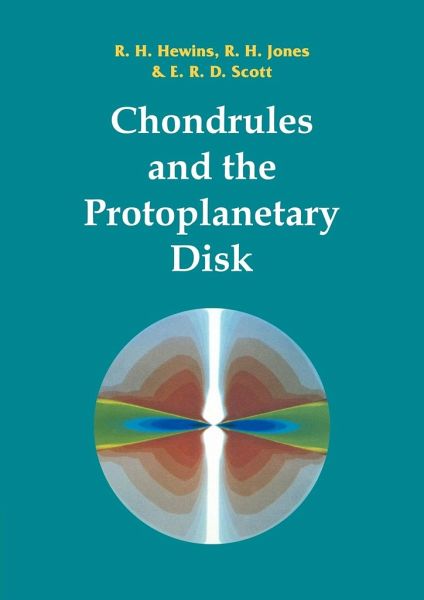
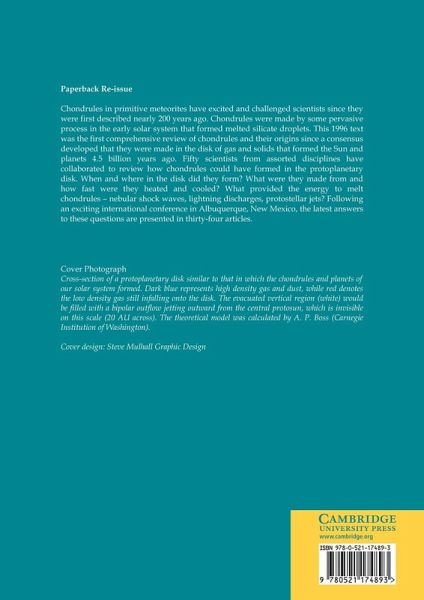
Chondrules in primitive meteorites have excited and challenged scientists since they were first described nearly 200 years ago. Chondrules were made by some pervasive process in the early solar system that formed melted silicate droplets. This 1996 text was the first comprehensive review of chondrules and their origins since a consensus developed that they were made in the disk of gas and solids that formed the Sun and planets 4.5 billion years ago. Fifty scientists from assorted disciplines have collaborated to review how chondrules could have formed in the protoplanetary disk. When and where…mehr
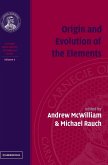
Chondrules in primitive meteorites have excited and challenged scientists since they were first described nearly 200 years ago. Chondrules were made by some pervasive process in the early solar system that formed melted silicate droplets. This 1996 text was the first comprehensive review of chondrules and their origins since a consensus developed that they were made in the disk of gas and solids that formed the Sun and planets 4.5 billion years ago. Fifty scientists from assorted disciplines have collaborated to review how chondrules could have formed in the protoplanetary disk. When and where in the disk did they form? What were they made from and how fast were they heated and cooled? What provided the energy to melt chondrules - nebular shock waves, lightning discharges, protostellar jets? Following an exciting international conference in Albuquerque, New Mexico, the latest answers to these questions are presented in thirty-four articles.
Part I. Introduction: 1. Chondrules and the protoplanetary disk: An overview R. H. Hewins; Part. II. Chonrules, Ca-Al-Rich Inclusions and Protoplanetary Disks: 2. Astronomical observations of phenomena in protostellar disks L. Hartmann; 3. Overview of models of the solar nebula: potential chondrule-forming environments P. Cassen; 4. Large scale processes in the solar nebula A. P. Boss; 5. Turbulence, chondrules and planetisimals J. N. Cuzzi, A. R. Dobrovolskis and R. C. Hogan; 6. Chondrule formation: energetics and length scales J. T. Wasson; 7. Unresolved issues in the formation of chondrules and chondrites J. A. Wood; 8. Thermal processing in the solar nebula: constraints from refractory inclusions A. M. Davis and G. J. MacPherson; 9. Formation times of chondrules and Ca-Al-Rich inclusions: constraints from short-lived radionuclides T. D. Swindle, A. M. Davis, C. M. Hohenberg, G. J. MacPherson and L. E. Nyquist; 10. Formation of chondrules and chondrites in the protoplanetary nebula E. R. D. Scott, S. G. Love and A. N. Krot; Part III. Chondrule precursors and multiple melting: 11. Origin of refractory precursor components of chondrules K. Misawa and N. Nakamura; 12. Mass-independent isotopic effects in chondrites: the role of chemical processes M. H. Thiemens; 13. Agglomeratic chondrules: implications for the nature of chondrule precursors and formation by incomplete melting M. K. Weisberg and M. Prinz; 14. Constraints on chondrule precursors from experimental Data H. C. Connolly Jr. and R. H. Hewins; 15. Nature of matrix in unequilibrated chondrites and its possible relationship to chondrules A. J. Brearly; 16. Constraints on chondrite agglomeration from fine-grained chondrule Rims K. Metzler and A. Bischoff; 17. Relict grains in chondrules: evidence for chondrule recycling R. H. Jones; 18. Multiple heating of chondrules A. E. Rubin and A. N. Krot; 19. Microchondrule-bearing chondrule rims: constraints on chondrule formation A. N. Krot and A. E. Rubin; Part IV. Heating, Cooling and Volatiles: 20. A dynamic crystallization model for chondrule melts G. E. Lofgren; 21. Peak temperatures of flash-melted chondrules R. H. Hewins and H. C. Connolly Jr.; 22. Congruent melting kinetics: constraints on chondrule formation J. P. Greenwood and P. C. Hess; 23. Sodium and sulfur in chondrules: heating time and cooling curves Y. Yu, R. H. Hewins and B. Zanda; 24. Open-system behaviour during chondrule formation D. W. G. Sears, S. Huang and P. H. Benoit; 25. Recycling and volatile loss in chondrule formation C. M. O'D. Alexander; 26. Chemical fractionations of chondrites: signatures of events before chondrule formation J. N. Grossmann; Part V. Models of Chondrule Formation: 27. A concise guide to chondrule formation models A. P. Boss; 28. Models for multiple heating mechanisms L. L. Hood and D. A. Kring; 29. Chondrule formation in the accretional shock T. V. Ruzmaikina and W. H. Ip; 30. The protostellar jet model of chondrule formation K. Liffman and M. Brown; 31. Chondrule formation in lightning discharges: status of theory and experiments M. Horanyi and S. Robertson; 32. Chondrules and their associates in ordinary chondrites: a planetary connection? R. Hutchinson; 33. Collision of icy and slightly differentiated bodies as an origin for unequilibriated ordinary chondrites M. Kitamura and A. Tsuchiyama; 34. A chondrule-forming scenario involving molten planetisimals I. S. Sanders.
Part I. Introduction: 1. Chondrules and the protoplanetary disk: An overview R. H. Hewins; Part. II. Chonrules, Ca-Al-Rich Inclusions and Protoplanetary Disks: 2. Astronomical observations of phenomena in protostellar disks L. Hartmann; 3. Overview of models of the solar nebula: potential chondrule-forming environments P. Cassen; 4. Large scale processes in the solar nebula A. P. Boss; 5. Turbulence, chondrules and planetisimals J. N. Cuzzi, A. R. Dobrovolskis and R. C. Hogan; 6. Chondrule formation: energetics and length scales J. T. Wasson; 7. Unresolved issues in the formation of chondrules and chondrites J. A. Wood; 8. Thermal processing in the solar nebula: constraints from refractory inclusions A. M. Davis and G. J. MacPherson; 9. Formation times of chondrules and Ca-Al-Rich inclusions: constraints from short-lived radionuclides T. D. Swindle, A. M. Davis, C. M. Hohenberg, G. J. MacPherson and L. E. Nyquist; 10. Formation of chondrules and chondrites in the protoplanetary nebula E. R. D. Scott, S. G. Love and A. N. Krot; Part III. Chondrule precursors and multiple melting: 11. Origin of refractory precursor components of chondrules K. Misawa and N. Nakamura; 12. Mass-independent isotopic effects in chondrites: the role of chemical processes M. H. Thiemens; 13. Agglomeratic chondrules: implications for the nature of chondrule precursors and formation by incomplete melting M. K. Weisberg and M. Prinz; 14. Constraints on chondrule precursors from experimental Data H. C. Connolly Jr. and R. H. Hewins; 15. Nature of matrix in unequilibrated chondrites and its possible relationship to chondrules A. J. Brearly; 16. Constraints on chondrite agglomeration from fine-grained chondrule Rims K. Metzler and A. Bischoff; 17. Relict grains in chondrules: evidence for chondrule recycling R. H. Jones; 18. Multiple heating of chondrules A. E. Rubin and A. N. Krot; 19. Microchondrule-bearing chondrule rims: constraints on chondrule formation A. N. Krot and A. E. Rubin; Part IV. Heating, Cooling and Volatiles: 20. A dynamic crystallization model for chondrule melts G. E. Lofgren; 21. Peak temperatures of flash-melted chondrules R. H. Hewins and H. C. Connolly Jr.; 22. Congruent melting kinetics: constraints on chondrule formation J. P. Greenwood and P. C. Hess; 23. Sodium and sulfur in chondrules: heating time and cooling curves Y. Yu, R. H. Hewins and B. Zanda; 24. Open-system behaviour during chondrule formation D. W. G. Sears, S. Huang and P. H. Benoit; 25. Recycling and volatile loss in chondrule formation C. M. O'D. Alexander; 26. Chemical fractionations of chondrites: signatures of events before chondrule formation J. N. Grossmann; Part V. Models of Chondrule Formation: 27. A concise guide to chondrule formation models A. P. Boss; 28. Models for multiple heating mechanisms L. L. Hood and D. A. Kring; 29. Chondrule formation in the accretional shock T. V. Ruzmaikina and W. H. Ip; 30. The protostellar jet model of chondrule formation K. Liffman and M. Brown; 31. Chondrule formation in lightning discharges: status of theory and experiments M. Horanyi and S. Robertson; 32. Chondrules and their associates in ordinary chondrites: a planetary connection? R. Hutchinson; 33. Collision of icy and slightly differentiated bodies as an origin for unequilibriated ordinary chondrites M. Kitamura and A. Tsuchiyama; 34. A chondrule-forming scenario involving molten planetisimals I. S. Sanders.
Es gelten unsere Allgemeinen Geschäftsbedingungen: www.buecher.de/agb
Impressum
www.buecher.de ist ein Internetauftritt der buecher.de internetstores GmbH
Geschäftsführung: Monica Sawhney | Roland Kölbl | Günter Hilger
Sitz der Gesellschaft: Batheyer Straße 115 - 117, 58099 Hagen
Postanschrift: Bürgermeister-Wegele-Str. 12, 86167 Augsburg
Amtsgericht Hagen HRB 13257
Steuernummer: 321/5800/1497
USt-IdNr: DE450055826