
John Rink
Chopin
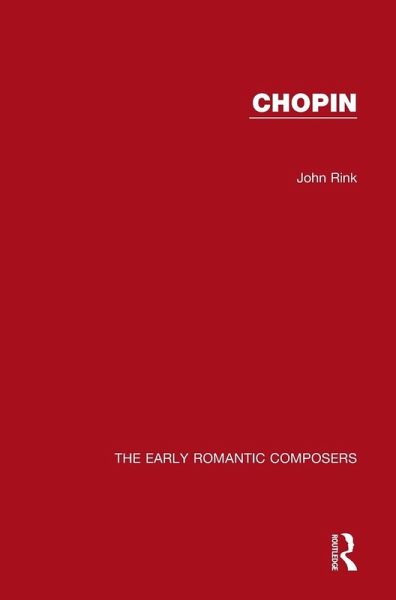
John Rink
Chopin
- Gebundenes Buch
- Merkliste
- Auf die Merkliste
- Bewerten Bewerten
- Teilen
- Produkt teilen
- Produkterinnerung
- Produkterinnerung
This anthology brings together the most significant and engaging scholarly writing on Chopin. The essays portray a rounded picture of Chopin as composer, pianist and teacher of his music, and of his overall achievement and legacy.
Andere Kunden interessierten sich auch für
 Josh Alan FriedmanTell the Truth Until They Bleed32,99 €
 François LesureClaude Debussy52,99 €
 Carlos Chávez and His World107,99 €
 Hermine Weigel WilliamsThomas Hastings19,99 €
 Franz BrendelGeschichte Der Musik In Italien Deutschland Und Frankreich31,99 €
 Alessandro BenedettiExtraordinary Records60,00 €
 Frederick BridgeTwelve Good Musicians29,99 €
-
-
-






This anthology brings together the most significant and engaging scholarly writing on Chopin. The essays portray a rounded picture of Chopin as composer, pianist and teacher of his music, and of his overall achievement and legacy.
Produktdetails
- Produktdetails
- Verlag: Routledge
- Seitenzahl: 594
- Erscheinungstermin: 5. Dezember 2017
- Englisch
- Abmessung: 250mm x 175mm x 36mm
- Gewicht: 1190g
- ISBN-13: 9781472440488
- ISBN-10: 147244048X
- Artikelnr.: 47858442
- Herstellerkennzeichnung
- Libri GmbH
- Europaallee 1
- 36244 Bad Hersfeld
- gpsr@libri.de
- Verlag: Routledge
- Seitenzahl: 594
- Erscheinungstermin: 5. Dezember 2017
- Englisch
- Abmessung: 250mm x 175mm x 36mm
- Gewicht: 1190g
- ISBN-13: 9781472440488
- ISBN-10: 147244048X
- Artikelnr.: 47858442
- Herstellerkennzeichnung
- Libri GmbH
- Europaallee 1
- 36244 Bad Hersfeld
- gpsr@libri.de
John Rink is Professor of Musical Performance Studies at the University of Cambridge, UK. He directs the Chopin Online projects and The Complete Chopin - A New Critical Edition; he is also an internationally acclaimed expert on the Chopin sources and on analytical and performance approaches to the composer's music.
Acknowledgements -- Series Preface -- Introduction -- Part I: Historical perspectives -- 1. Jolanta T. Pekacz, 'The nation's property: Chopin's biography as a cultural discourse', in Jolanta T. Pekacz (ed.), Musical Biography: Towards New Paradigms (Aldershot: Ashgate, 2006), pp. 43-68 -- 2. Józef Chomi
ski, 'Die Evolution des Chopinschen Stils', in Zofia Lissa (ed.), The Book of the First International Musicological Congress Devoted to the Works of Frederick Chopin (Warsaw: Pästwowe Wydawnictwo Naukowe, 1963), pp. 44-52 -- 3. Mieczys
aw Tomaszewski, 'Chopin's inspiration from Polish "common song"', in Artur Szklener (ed.), Chopin's Work: His Inspirations and Creative Process in the Light of the Sources (Warsaw: Narodowy Instytut Fryderyka Chopina), pp. 43-53 -- 4. Barbara Milewski, 'Chopin's mazurkas and the myth of the folk', 19th-Century Music 23 /2 (1999), pp. 113-135 -- 5. Ludwik Bronarski, 'La "dernière" mazurka de Chopin', in Ludwik Bronarski, Etudes sur Chopin (Lausanne: Editions La Concorde, 1944), pp. 165-175 -- 6. Karol Berger, 'Chopin's Ballade Op. 23 and the revolution of the intellectuals', in John Rink and Jim Samson (eds.), Chopin Studies 2 (Cambridge: Cambridge University Press, 1994), pp. 72-83 -- 7. Anselm Gerhard, 'Ballade und Drama', Archiv für Musikwissenschaft 48 (1991), pp. 110-125 -- 8. James W. Davison, An Essay on the Works of Frederic Chopin (London: Wessel & Co. [1843]) -- Part II: Source studies -- 9. John Rink, 'Playing with the Chopin sources', in Irena Poniatowska (ed.), Jan Ekier: artysta stulecia w darze Chopinowi (Warsaw: Narodowy Instytut Fryderyka Chopina, 2013), pp. 171-185 -- 10. Wojciech Nowik, 'The receptive-informational role of Chopin's musical autographs', in Dariusz
browski (ed.), Studies in Chopin (Warsaw: Towarzystwo im. Fryderyka Chopina, 1973), pp. 77-89 -- 11. Jeffrey Kallberg, 'Chopin and the aesthetic of the sketch: a new Prelude in E-flat minor?', Early Music 29 (2001), pp. 408-422 -- 12. Jan Ekier, 'On questions relating to the chronology of Chopin's works. Methods. A few examples concerning compositions from the last period', in Artur Szklener (ed.), Chopin's Musical Worlds: The 1840s (Warsaw: Narodowy Instytut Fryderyka Chopina, 2008), pp. 169-188 -- 13. Charles Rosen, 'The first movement of Chopin's Sonata in B-flat minor, Op. 35', 19th-Century Music 14 /1 (1990), pp. 60-66 -- 14. Maurice J. E. Brown, 'The posthumous publication of Chopin's songs', Musical Quarterly 42 (1956), pp. 51-65 -- 15. Christophe Grabowski, 'Wessel's Complete Collection of the Compositions of Frederic Chopin: the history of a title-page', Early Music 29 (2001), pp. 424-433 -- Part III: Performance studies -- 16. Dana Gooley, 'Between esprit and génie - Chopin in the field of performance', in Artur Szklener (ed.), Chopin's Musical Worlds: The 1840s (Warsaw: Narodowy Instytut Fryderyka Chopina, 2008), pp. 141-156 -- 17. James Methuen-Campbell, Chopin Playing from the Composer to the Present Day (London: Gollancz, 1981): Chapter 1, 'The playing of Chopin and his contemporaries', pp. 26-44 -- 18. David Rowland, 'Chopin's tempo rubato in context', in John Rink and Jim Samson (eds.), Chopin Studies 2 (Cambridge: Cambridge University Press, 1994), pp. 199-213 -- 19. Thomas Higgins, 'Tempo and character in Chopin', Musical Quarterly 59 (1973), pp. 106-120 -- 20. Sandra Rosenblum, 'Some enigmas of Chopin's pedal indications: what do the sources tell us?', Journal of Musicological Research 16 (1996), pp. 41-61 -- 21. Nicholas Cook, 'Performance analysis and Chopin's mazurkas', in Artur Szklener (ed.), Chopin in Paris: The 1830s (Warsaw: Narodowy Instytut Fryderyka Chopina, 2008), pp. 121-141 -- Part IV: Analysis, aesthetics, reception -- 22. Jim Samson, 'Chopin and genre', Music Analysis 8 /3 (1989), pp. 213-231 -- 23. Zofia Chechli
ska, 'Scherzo as a genre - selected problems', Chopin Studies, vol. 5 (Warsaw: Towarzystwo im. Fryderyka Chopina, 1995), pp. 165-173 -- 24. John Rink, 'Chopin's ballades and the dialectic: analysis in historical perspective', Music Analysis 13 (1994), pp. 99-115 -- 25. Donald Francis Tovey, Essays in Musical Analysis, 6 vols. (London: Oxford University Press, 1936): 'Concertos', vol. 3, pp. 103-106 -- 26. Felix Salzer, 'Chopin's Etude in F major, Opus 25, No. 3', in The Music Forum, vol. 3 (New York: Columbia University Press, 1973), pp. 281-290 -- 27. Gastone Belotti, 'L'asimmetria ritmica nella mazurca chopiniana', Nuova Rivista Musicale Italiana 5 /4-5 (1971), pp. 657-668, 827-846 -- 28. William Rothstein, 'Phrase rhythm in Chopin's nocturnes and mazurkas', in Jim Samson (ed.), Chopin Studies (Cambridge: Cambridge University Press, 1988), pp. 115-141 -- 29. Jean-Jacques Eigeldinger, 'Chopin and "La note bleue": an interpretation of the Prelude Op. 45', Music & Letters 78 /2 (1997), pp. 233-253 -- 30. Lawrence Kramer, 'Romantic meaning in Chopin's Prelude in A minor', 19th-Century Music 9 /2 (1985), pp. 145-155 -- 31. Rose Rosengard Subotnik, 'On grounding Chopin', in Richard Leppert and Susan McClary (eds.), Music and Society: The Politics of Composition, Performance and Reception (Cambridge: Cambridge University Press, 1987), pp. 105-131 -- Part V: Epilogue -- 32. Frederick Niecks, Frederick Chopin as a Man and Musician, 3rd edn, 2 vols. (London: Novello, Ewer and Co., 1902): 'Epilogue', vol. 2, pp. 328-333 -- Index.
ski, 'Die Evolution des Chopinschen Stils', in Zofia Lissa (ed.), The Book of the First International Musicological Congress Devoted to the Works of Frederick Chopin (Warsaw: Pästwowe Wydawnictwo Naukowe, 1963), pp. 44-52 -- 3. Mieczys
aw Tomaszewski, 'Chopin's inspiration from Polish "common song"', in Artur Szklener (ed.), Chopin's Work: His Inspirations and Creative Process in the Light of the Sources (Warsaw: Narodowy Instytut Fryderyka Chopina), pp. 43-53 -- 4. Barbara Milewski, 'Chopin's mazurkas and the myth of the folk', 19th-Century Music 23 /2 (1999), pp. 113-135 -- 5. Ludwik Bronarski, 'La "dernière" mazurka de Chopin', in Ludwik Bronarski, Etudes sur Chopin (Lausanne: Editions La Concorde, 1944), pp. 165-175 -- 6. Karol Berger, 'Chopin's Ballade Op. 23 and the revolution of the intellectuals', in John Rink and Jim Samson (eds.), Chopin Studies 2 (Cambridge: Cambridge University Press, 1994), pp. 72-83 -- 7. Anselm Gerhard, 'Ballade und Drama', Archiv für Musikwissenschaft 48 (1991), pp. 110-125 -- 8. James W. Davison, An Essay on the Works of Frederic Chopin (London: Wessel & Co. [1843]) -- Part II: Source studies -- 9. John Rink, 'Playing with the Chopin sources', in Irena Poniatowska (ed.), Jan Ekier: artysta stulecia w darze Chopinowi (Warsaw: Narodowy Instytut Fryderyka Chopina, 2013), pp. 171-185 -- 10. Wojciech Nowik, 'The receptive-informational role of Chopin's musical autographs', in Dariusz
browski (ed.), Studies in Chopin (Warsaw: Towarzystwo im. Fryderyka Chopina, 1973), pp. 77-89 -- 11. Jeffrey Kallberg, 'Chopin and the aesthetic of the sketch: a new Prelude in E-flat minor?', Early Music 29 (2001), pp. 408-422 -- 12. Jan Ekier, 'On questions relating to the chronology of Chopin's works. Methods. A few examples concerning compositions from the last period', in Artur Szklener (ed.), Chopin's Musical Worlds: The 1840s (Warsaw: Narodowy Instytut Fryderyka Chopina, 2008), pp. 169-188 -- 13. Charles Rosen, 'The first movement of Chopin's Sonata in B-flat minor, Op. 35', 19th-Century Music 14 /1 (1990), pp. 60-66 -- 14. Maurice J. E. Brown, 'The posthumous publication of Chopin's songs', Musical Quarterly 42 (1956), pp. 51-65 -- 15. Christophe Grabowski, 'Wessel's Complete Collection of the Compositions of Frederic Chopin: the history of a title-page', Early Music 29 (2001), pp. 424-433 -- Part III: Performance studies -- 16. Dana Gooley, 'Between esprit and génie - Chopin in the field of performance', in Artur Szklener (ed.), Chopin's Musical Worlds: The 1840s (Warsaw: Narodowy Instytut Fryderyka Chopina, 2008), pp. 141-156 -- 17. James Methuen-Campbell, Chopin Playing from the Composer to the Present Day (London: Gollancz, 1981): Chapter 1, 'The playing of Chopin and his contemporaries', pp. 26-44 -- 18. David Rowland, 'Chopin's tempo rubato in context', in John Rink and Jim Samson (eds.), Chopin Studies 2 (Cambridge: Cambridge University Press, 1994), pp. 199-213 -- 19. Thomas Higgins, 'Tempo and character in Chopin', Musical Quarterly 59 (1973), pp. 106-120 -- 20. Sandra Rosenblum, 'Some enigmas of Chopin's pedal indications: what do the sources tell us?', Journal of Musicological Research 16 (1996), pp. 41-61 -- 21. Nicholas Cook, 'Performance analysis and Chopin's mazurkas', in Artur Szklener (ed.), Chopin in Paris: The 1830s (Warsaw: Narodowy Instytut Fryderyka Chopina, 2008), pp. 121-141 -- Part IV: Analysis, aesthetics, reception -- 22. Jim Samson, 'Chopin and genre', Music Analysis 8 /3 (1989), pp. 213-231 -- 23. Zofia Chechli
ska, 'Scherzo as a genre - selected problems', Chopin Studies, vol. 5 (Warsaw: Towarzystwo im. Fryderyka Chopina, 1995), pp. 165-173 -- 24. John Rink, 'Chopin's ballades and the dialectic: analysis in historical perspective', Music Analysis 13 (1994), pp. 99-115 -- 25. Donald Francis Tovey, Essays in Musical Analysis, 6 vols. (London: Oxford University Press, 1936): 'Concertos', vol. 3, pp. 103-106 -- 26. Felix Salzer, 'Chopin's Etude in F major, Opus 25, No. 3', in The Music Forum, vol. 3 (New York: Columbia University Press, 1973), pp. 281-290 -- 27. Gastone Belotti, 'L'asimmetria ritmica nella mazurca chopiniana', Nuova Rivista Musicale Italiana 5 /4-5 (1971), pp. 657-668, 827-846 -- 28. William Rothstein, 'Phrase rhythm in Chopin's nocturnes and mazurkas', in Jim Samson (ed.), Chopin Studies (Cambridge: Cambridge University Press, 1988), pp. 115-141 -- 29. Jean-Jacques Eigeldinger, 'Chopin and "La note bleue": an interpretation of the Prelude Op. 45', Music & Letters 78 /2 (1997), pp. 233-253 -- 30. Lawrence Kramer, 'Romantic meaning in Chopin's Prelude in A minor', 19th-Century Music 9 /2 (1985), pp. 145-155 -- 31. Rose Rosengard Subotnik, 'On grounding Chopin', in Richard Leppert and Susan McClary (eds.), Music and Society: The Politics of Composition, Performance and Reception (Cambridge: Cambridge University Press, 1987), pp. 105-131 -- Part V: Epilogue -- 32. Frederick Niecks, Frederick Chopin as a Man and Musician, 3rd edn, 2 vols. (London: Novello, Ewer and Co., 1902): 'Epilogue', vol. 2, pp. 328-333 -- Index.
Acknowledgements -- Series Preface -- Introduction -- Part I: Historical perspectives -- 1. Jolanta T. Pekacz, 'The nation's property: Chopin's biography as a cultural discourse', in Jolanta T. Pekacz (ed.), Musical Biography: Towards New Paradigms (Aldershot: Ashgate, 2006), pp. 43-68 -- 2. Józef Chomi
ski, 'Die Evolution des Chopinschen Stils', in Zofia Lissa (ed.), The Book of the First International Musicological Congress Devoted to the Works of Frederick Chopin (Warsaw: Pästwowe Wydawnictwo Naukowe, 1963), pp. 44-52 -- 3. Mieczys
aw Tomaszewski, 'Chopin's inspiration from Polish "common song"', in Artur Szklener (ed.), Chopin's Work: His Inspirations and Creative Process in the Light of the Sources (Warsaw: Narodowy Instytut Fryderyka Chopina), pp. 43-53 -- 4. Barbara Milewski, 'Chopin's mazurkas and the myth of the folk', 19th-Century Music 23 /2 (1999), pp. 113-135 -- 5. Ludwik Bronarski, 'La "dernière" mazurka de Chopin', in Ludwik Bronarski, Etudes sur Chopin (Lausanne: Editions La Concorde, 1944), pp. 165-175 -- 6. Karol Berger, 'Chopin's Ballade Op. 23 and the revolution of the intellectuals', in John Rink and Jim Samson (eds.), Chopin Studies 2 (Cambridge: Cambridge University Press, 1994), pp. 72-83 -- 7. Anselm Gerhard, 'Ballade und Drama', Archiv für Musikwissenschaft 48 (1991), pp. 110-125 -- 8. James W. Davison, An Essay on the Works of Frederic Chopin (London: Wessel & Co. [1843]) -- Part II: Source studies -- 9. John Rink, 'Playing with the Chopin sources', in Irena Poniatowska (ed.), Jan Ekier: artysta stulecia w darze Chopinowi (Warsaw: Narodowy Instytut Fryderyka Chopina, 2013), pp. 171-185 -- 10. Wojciech Nowik, 'The receptive-informational role of Chopin's musical autographs', in Dariusz
browski (ed.), Studies in Chopin (Warsaw: Towarzystwo im. Fryderyka Chopina, 1973), pp. 77-89 -- 11. Jeffrey Kallberg, 'Chopin and the aesthetic of the sketch: a new Prelude in E-flat minor?', Early Music 29 (2001), pp. 408-422 -- 12. Jan Ekier, 'On questions relating to the chronology of Chopin's works. Methods. A few examples concerning compositions from the last period', in Artur Szklener (ed.), Chopin's Musical Worlds: The 1840s (Warsaw: Narodowy Instytut Fryderyka Chopina, 2008), pp. 169-188 -- 13. Charles Rosen, 'The first movement of Chopin's Sonata in B-flat minor, Op. 35', 19th-Century Music 14 /1 (1990), pp. 60-66 -- 14. Maurice J. E. Brown, 'The posthumous publication of Chopin's songs', Musical Quarterly 42 (1956), pp. 51-65 -- 15. Christophe Grabowski, 'Wessel's Complete Collection of the Compositions of Frederic Chopin: the history of a title-page', Early Music 29 (2001), pp. 424-433 -- Part III: Performance studies -- 16. Dana Gooley, 'Between esprit and génie - Chopin in the field of performance', in Artur Szklener (ed.), Chopin's Musical Worlds: The 1840s (Warsaw: Narodowy Instytut Fryderyka Chopina, 2008), pp. 141-156 -- 17. James Methuen-Campbell, Chopin Playing from the Composer to the Present Day (London: Gollancz, 1981): Chapter 1, 'The playing of Chopin and his contemporaries', pp. 26-44 -- 18. David Rowland, 'Chopin's tempo rubato in context', in John Rink and Jim Samson (eds.), Chopin Studies 2 (Cambridge: Cambridge University Press, 1994), pp. 199-213 -- 19. Thomas Higgins, 'Tempo and character in Chopin', Musical Quarterly 59 (1973), pp. 106-120 -- 20. Sandra Rosenblum, 'Some enigmas of Chopin's pedal indications: what do the sources tell us?', Journal of Musicological Research 16 (1996), pp. 41-61 -- 21. Nicholas Cook, 'Performance analysis and Chopin's mazurkas', in Artur Szklener (ed.), Chopin in Paris: The 1830s (Warsaw: Narodowy Instytut Fryderyka Chopina, 2008), pp. 121-141 -- Part IV: Analysis, aesthetics, reception -- 22. Jim Samson, 'Chopin and genre', Music Analysis 8 /3 (1989), pp. 213-231 -- 23. Zofia Chechli
ska, 'Scherzo as a genre - selected problems', Chopin Studies, vol. 5 (Warsaw: Towarzystwo im. Fryderyka Chopina, 1995), pp. 165-173 -- 24. John Rink, 'Chopin's ballades and the dialectic: analysis in historical perspective', Music Analysis 13 (1994), pp. 99-115 -- 25. Donald Francis Tovey, Essays in Musical Analysis, 6 vols. (London: Oxford University Press, 1936): 'Concertos', vol. 3, pp. 103-106 -- 26. Felix Salzer, 'Chopin's Etude in F major, Opus 25, No. 3', in The Music Forum, vol. 3 (New York: Columbia University Press, 1973), pp. 281-290 -- 27. Gastone Belotti, 'L'asimmetria ritmica nella mazurca chopiniana', Nuova Rivista Musicale Italiana 5 /4-5 (1971), pp. 657-668, 827-846 -- 28. William Rothstein, 'Phrase rhythm in Chopin's nocturnes and mazurkas', in Jim Samson (ed.), Chopin Studies (Cambridge: Cambridge University Press, 1988), pp. 115-141 -- 29. Jean-Jacques Eigeldinger, 'Chopin and "La note bleue": an interpretation of the Prelude Op. 45', Music & Letters 78 /2 (1997), pp. 233-253 -- 30. Lawrence Kramer, 'Romantic meaning in Chopin's Prelude in A minor', 19th-Century Music 9 /2 (1985), pp. 145-155 -- 31. Rose Rosengard Subotnik, 'On grounding Chopin', in Richard Leppert and Susan McClary (eds.), Music and Society: The Politics of Composition, Performance and Reception (Cambridge: Cambridge University Press, 1987), pp. 105-131 -- Part V: Epilogue -- 32. Frederick Niecks, Frederick Chopin as a Man and Musician, 3rd edn, 2 vols. (London: Novello, Ewer and Co., 1902): 'Epilogue', vol. 2, pp. 328-333 -- Index.
ski, 'Die Evolution des Chopinschen Stils', in Zofia Lissa (ed.), The Book of the First International Musicological Congress Devoted to the Works of Frederick Chopin (Warsaw: Pästwowe Wydawnictwo Naukowe, 1963), pp. 44-52 -- 3. Mieczys
aw Tomaszewski, 'Chopin's inspiration from Polish "common song"', in Artur Szklener (ed.), Chopin's Work: His Inspirations and Creative Process in the Light of the Sources (Warsaw: Narodowy Instytut Fryderyka Chopina), pp. 43-53 -- 4. Barbara Milewski, 'Chopin's mazurkas and the myth of the folk', 19th-Century Music 23 /2 (1999), pp. 113-135 -- 5. Ludwik Bronarski, 'La "dernière" mazurka de Chopin', in Ludwik Bronarski, Etudes sur Chopin (Lausanne: Editions La Concorde, 1944), pp. 165-175 -- 6. Karol Berger, 'Chopin's Ballade Op. 23 and the revolution of the intellectuals', in John Rink and Jim Samson (eds.), Chopin Studies 2 (Cambridge: Cambridge University Press, 1994), pp. 72-83 -- 7. Anselm Gerhard, 'Ballade und Drama', Archiv für Musikwissenschaft 48 (1991), pp. 110-125 -- 8. James W. Davison, An Essay on the Works of Frederic Chopin (London: Wessel & Co. [1843]) -- Part II: Source studies -- 9. John Rink, 'Playing with the Chopin sources', in Irena Poniatowska (ed.), Jan Ekier: artysta stulecia w darze Chopinowi (Warsaw: Narodowy Instytut Fryderyka Chopina, 2013), pp. 171-185 -- 10. Wojciech Nowik, 'The receptive-informational role of Chopin's musical autographs', in Dariusz
browski (ed.), Studies in Chopin (Warsaw: Towarzystwo im. Fryderyka Chopina, 1973), pp. 77-89 -- 11. Jeffrey Kallberg, 'Chopin and the aesthetic of the sketch: a new Prelude in E-flat minor?', Early Music 29 (2001), pp. 408-422 -- 12. Jan Ekier, 'On questions relating to the chronology of Chopin's works. Methods. A few examples concerning compositions from the last period', in Artur Szklener (ed.), Chopin's Musical Worlds: The 1840s (Warsaw: Narodowy Instytut Fryderyka Chopina, 2008), pp. 169-188 -- 13. Charles Rosen, 'The first movement of Chopin's Sonata in B-flat minor, Op. 35', 19th-Century Music 14 /1 (1990), pp. 60-66 -- 14. Maurice J. E. Brown, 'The posthumous publication of Chopin's songs', Musical Quarterly 42 (1956), pp. 51-65 -- 15. Christophe Grabowski, 'Wessel's Complete Collection of the Compositions of Frederic Chopin: the history of a title-page', Early Music 29 (2001), pp. 424-433 -- Part III: Performance studies -- 16. Dana Gooley, 'Between esprit and génie - Chopin in the field of performance', in Artur Szklener (ed.), Chopin's Musical Worlds: The 1840s (Warsaw: Narodowy Instytut Fryderyka Chopina, 2008), pp. 141-156 -- 17. James Methuen-Campbell, Chopin Playing from the Composer to the Present Day (London: Gollancz, 1981): Chapter 1, 'The playing of Chopin and his contemporaries', pp. 26-44 -- 18. David Rowland, 'Chopin's tempo rubato in context', in John Rink and Jim Samson (eds.), Chopin Studies 2 (Cambridge: Cambridge University Press, 1994), pp. 199-213 -- 19. Thomas Higgins, 'Tempo and character in Chopin', Musical Quarterly 59 (1973), pp. 106-120 -- 20. Sandra Rosenblum, 'Some enigmas of Chopin's pedal indications: what do the sources tell us?', Journal of Musicological Research 16 (1996), pp. 41-61 -- 21. Nicholas Cook, 'Performance analysis and Chopin's mazurkas', in Artur Szklener (ed.), Chopin in Paris: The 1830s (Warsaw: Narodowy Instytut Fryderyka Chopina, 2008), pp. 121-141 -- Part IV: Analysis, aesthetics, reception -- 22. Jim Samson, 'Chopin and genre', Music Analysis 8 /3 (1989), pp. 213-231 -- 23. Zofia Chechli
ska, 'Scherzo as a genre - selected problems', Chopin Studies, vol. 5 (Warsaw: Towarzystwo im. Fryderyka Chopina, 1995), pp. 165-173 -- 24. John Rink, 'Chopin's ballades and the dialectic: analysis in historical perspective', Music Analysis 13 (1994), pp. 99-115 -- 25. Donald Francis Tovey, Essays in Musical Analysis, 6 vols. (London: Oxford University Press, 1936): 'Concertos', vol. 3, pp. 103-106 -- 26. Felix Salzer, 'Chopin's Etude in F major, Opus 25, No. 3', in The Music Forum, vol. 3 (New York: Columbia University Press, 1973), pp. 281-290 -- 27. Gastone Belotti, 'L'asimmetria ritmica nella mazurca chopiniana', Nuova Rivista Musicale Italiana 5 /4-5 (1971), pp. 657-668, 827-846 -- 28. William Rothstein, 'Phrase rhythm in Chopin's nocturnes and mazurkas', in Jim Samson (ed.), Chopin Studies (Cambridge: Cambridge University Press, 1988), pp. 115-141 -- 29. Jean-Jacques Eigeldinger, 'Chopin and "La note bleue": an interpretation of the Prelude Op. 45', Music & Letters 78 /2 (1997), pp. 233-253 -- 30. Lawrence Kramer, 'Romantic meaning in Chopin's Prelude in A minor', 19th-Century Music 9 /2 (1985), pp. 145-155 -- 31. Rose Rosengard Subotnik, 'On grounding Chopin', in Richard Leppert and Susan McClary (eds.), Music and Society: The Politics of Composition, Performance and Reception (Cambridge: Cambridge University Press, 1987), pp. 105-131 -- Part V: Epilogue -- 32. Frederick Niecks, Frederick Chopin as a Man and Musician, 3rd edn, 2 vols. (London: Novello, Ewer and Co., 1902): 'Epilogue', vol. 2, pp. 328-333 -- Index.