

Andere Kunden interessierten sich auch für
 Media Violence and Christian Ethics83,99 €
 Human Evolution and Christian Ethics71,99 €
 Biblical Interpretation and Christian Ethics119,99 €
 Alcohol, Addiction and Christian Ethics104,99 €
 Forgiveness and Christian Ethics103,99 €
 Priorities and Christian Ethics103,99 €
 The Common Good and Christian Ethics87,99 €






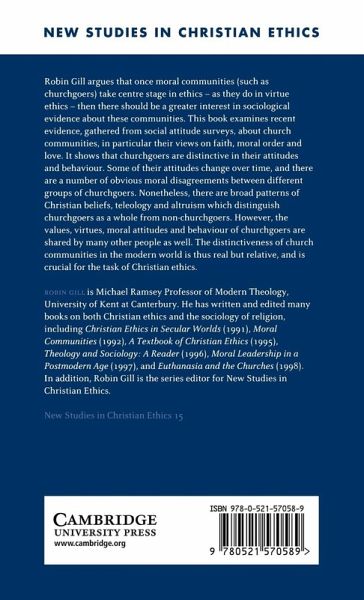
Robin Gill argues that once moral communities (such as churchgoers) take centre stage in ethics - as they do in virtue ethics - then there should be a greater interest in sociological evidence about these communities. This book, first published in 1999, examines evidence gathered from social attitude surveys about church communities, in particular their views on faith, moral order and love. It shows that churchgoers are distinctive in their attitudes and behaviour. Some of their attitudes change over time, and there are a number of obvious moral disagreements between different groups of churchgoers. Nonetheless, there are broad patterns of Christian beliefs, teleology and altruism which distinguish churchgoers as a whole from non-churchgoers. However, the values, virtues, moral attitudes and behaviour of churchgoers are shared by many other people as well. The distinctiveness of church communities in the modern world is thus real but relative, and is crucial for the task of Christian ethics.