Bishop
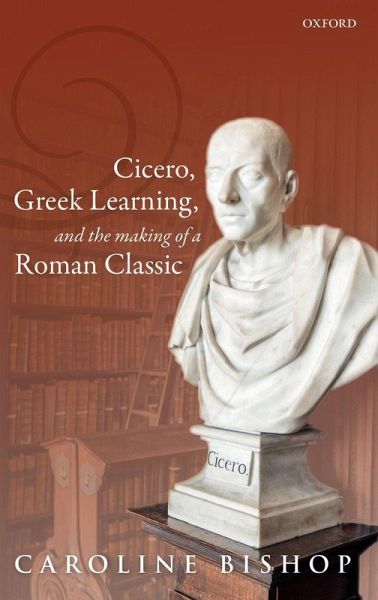
CICERO, GREEK LEARN, & MAK ROM CLAS C
Bishop
CICERO, GREEK LEARN, & MAK ROM CLAS C
- Gebundenes Buch
Andere Kunden interessierten sich auch für
PotterPROPH HIST CRIS ROM EMP OCM C193,99 €
Sarah Culpepper StroupCatullus, Cicero, and a Society of Patrons66,99 €
Ingo GildenhardCicero, Philippic 2, 44-50, 78-92, 100-11929,99 €
MeisterGREEK PRAISE POETRY & RHET DIVIN OCM C98,99 €
Sandra SquirrelLove, Learn, Live51,99 €
Receptions of the Classics in the African Diaspora of the Hispanophone and Lusophone Worlds97,99 €
George MiddletonThe Student's Companion to Latin Authors19,99 €-
-
-
Produktdetails
- Verlag: ACADEMIC
- Seitenzahl: 374
- Erscheinungstermin: 10. Januar 2019
- Englisch
- Abmessung: 240mm x 161mm x 25mm
- Gewicht: 725g
- ISBN-13: 9780198829423
- ISBN-10: 0198829426
- Artikelnr.: 54015422
- Herstellerkennzeichnung
- Libri GmbH
- Europaallee 1
- 36244 Bad Hersfeld
- gpsr@libri.de
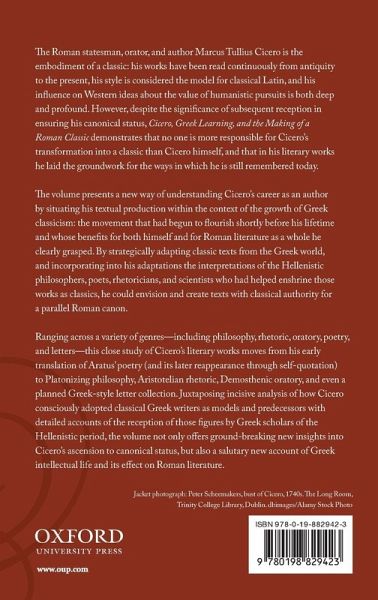
Caroline Bishop is Assistant Professor of Classics at Texas Tech University. She specializes in Greek and Roman intellectual history, Cicero and Latin prose, and the mechanics of reception in the ancient world, with a particular focus on classicism, canon formation, and cultural exchange from Greece to Rome. Her current research centres on questions of reading and interpretation in antiquity, and the ways in which ancient intellectual culture intersected with ancient literary production.
* Frontmatter
* Texts and Abbreviations
* 0: Introduction
* 0.1: Cicero's intellectual politics: textual production as a new man
* 0.2: Greek intellectual culture and Roman classicism
* 0.3: ^iGraecus et scholasticus: Roman ambivalence towards Greek
culture
* 0.4: Intellectual and scholastic culture in Republican Rome
* 0.5: Conclusion and chapter summary
* 1: Aratus
* 1.1: Cicero and the virtues of translation
* 1.2: Aratus' Phaenomena
* 1.3: The Phaenomena in Hellenistic Greece
* 1.4: Cicero's Aratea
* 1.5: Conclusion
* 2: Plato
* 2.1: The features of Cicero's Plato
* 2.2: Plato in Philo's Academy
* 2.3: Plato in Antiochus' Academy
* 2.4: Scepticism and syncretism in Cicero's Timaeus
* 2.5: Conclusion
* 3: Aristotle
* 3.1: The features of Cicero's Aristotle
* 3.2: Aristotle, Philo, and in utramque partem debate
* 3.3: Aristotle in Cicero's rhetorical works
* 3.4: Conclusion
* 4: Demosthenes
* 4.1: Demosthenes' Hellenistic reputation
* 4.2: Demosthenes in Cicero's early career
* 4.3: Demosthenes, tyranny, and Atticism in Cicero's late career
* 4.3.1: Brutus
* 4.3.2: De Optimo Genere Oratorum and Orator
* 4.3.3: The Philippics
* 5: Letters
* 5.1: Cicero and the world of Greek letters
* 5.1.1: Greek (and Roman) epistolary theory
* 5.1.2: Greek letter collections
* 5.2: Cicero's (planned) letter collection
* 5.3: Conclusion
* 6: Cicero
* 6.1: Modelling reception in the philosophical dialogues
* 6.2: Hellenistic philosophy and Roman poetry in the philosophical
dialogues
* 6.3: The Aratea in De Natura Deorum
* 6.4: Cicero's poetry in De Divinatione
* 6.5: Conclusion
* 7: Conclusion
* Endmatter
* Bibliography
* Index

* Texts and Abbreviations
* 0: Introduction
* 0.1: Cicero's intellectual politics: textual production as a new man
* 0.2: Greek intellectual culture and Roman classicism
* 0.3: ^iGraecus et scholasticus: Roman ambivalence towards Greek
culture
* 0.4: Intellectual and scholastic culture in Republican Rome
* 0.5: Conclusion and chapter summary
* 1: Aratus
* 1.1: Cicero and the virtues of translation
* 1.2: Aratus' Phaenomena
* 1.3: The Phaenomena in Hellenistic Greece
* 1.4: Cicero's Aratea
* 1.5: Conclusion
* 2: Plato
* 2.1: The features of Cicero's Plato
* 2.2: Plato in Philo's Academy
* 2.3: Plato in Antiochus' Academy
* 2.4: Scepticism and syncretism in Cicero's Timaeus
* 2.5: Conclusion
* 3: Aristotle
* 3.1: The features of Cicero's Aristotle
* 3.2: Aristotle, Philo, and in utramque partem debate
* 3.3: Aristotle in Cicero's rhetorical works
* 3.4: Conclusion
* 4: Demosthenes
* 4.1: Demosthenes' Hellenistic reputation
* 4.2: Demosthenes in Cicero's early career
* 4.3: Demosthenes, tyranny, and Atticism in Cicero's late career
* 4.3.1: Brutus
* 4.3.2: De Optimo Genere Oratorum and Orator
* 4.3.3: The Philippics
* 5: Letters
* 5.1: Cicero and the world of Greek letters
* 5.1.1: Greek (and Roman) epistolary theory
* 5.1.2: Greek letter collections
* 5.2: Cicero's (planned) letter collection
* 5.3: Conclusion
* 6: Cicero
* 6.1: Modelling reception in the philosophical dialogues
* 6.2: Hellenistic philosophy and Roman poetry in the philosophical
dialogues
* 6.3: The Aratea in De Natura Deorum
* 6.4: Cicero's poetry in De Divinatione
* 6.5: Conclusion
* 7: Conclusion
* Endmatter
* Bibliography
* Index
* Frontmatter
* Texts and Abbreviations
* 0: Introduction
* 0.1: Cicero's intellectual politics: textual production as a new man
* 0.2: Greek intellectual culture and Roman classicism
* 0.3: ^iGraecus et scholasticus: Roman ambivalence towards Greek
culture
* 0.4: Intellectual and scholastic culture in Republican Rome
* 0.5: Conclusion and chapter summary
* 1: Aratus
* 1.1: Cicero and the virtues of translation
* 1.2: Aratus' Phaenomena
* 1.3: The Phaenomena in Hellenistic Greece
* 1.4: Cicero's Aratea
* 1.5: Conclusion
* 2: Plato
* 2.1: The features of Cicero's Plato
* 2.2: Plato in Philo's Academy
* 2.3: Plato in Antiochus' Academy
* 2.4: Scepticism and syncretism in Cicero's Timaeus
* 2.5: Conclusion
* 3: Aristotle
* 3.1: The features of Cicero's Aristotle
* 3.2: Aristotle, Philo, and in utramque partem debate
* 3.3: Aristotle in Cicero's rhetorical works
* 3.4: Conclusion
* 4: Demosthenes
* 4.1: Demosthenes' Hellenistic reputation
* 4.2: Demosthenes in Cicero's early career
* 4.3: Demosthenes, tyranny, and Atticism in Cicero's late career
* 4.3.1: Brutus
* 4.3.2: De Optimo Genere Oratorum and Orator
* 4.3.3: The Philippics
* 5: Letters
* 5.1: Cicero and the world of Greek letters
* 5.1.1: Greek (and Roman) epistolary theory
* 5.1.2: Greek letter collections
* 5.2: Cicero's (planned) letter collection
* 5.3: Conclusion
* 6: Cicero
* 6.1: Modelling reception in the philosophical dialogues
* 6.2: Hellenistic philosophy and Roman poetry in the philosophical
dialogues
* 6.3: The Aratea in De Natura Deorum
* 6.4: Cicero's poetry in De Divinatione
* 6.5: Conclusion
* 7: Conclusion
* Endmatter
* Bibliography
* Index
* Texts and Abbreviations
* 0: Introduction
* 0.1: Cicero's intellectual politics: textual production as a new man
* 0.2: Greek intellectual culture and Roman classicism
* 0.3: ^iGraecus et scholasticus: Roman ambivalence towards Greek
culture
* 0.4: Intellectual and scholastic culture in Republican Rome
* 0.5: Conclusion and chapter summary
* 1: Aratus
* 1.1: Cicero and the virtues of translation
* 1.2: Aratus' Phaenomena
* 1.3: The Phaenomena in Hellenistic Greece
* 1.4: Cicero's Aratea
* 1.5: Conclusion
* 2: Plato
* 2.1: The features of Cicero's Plato
* 2.2: Plato in Philo's Academy
* 2.3: Plato in Antiochus' Academy
* 2.4: Scepticism and syncretism in Cicero's Timaeus
* 2.5: Conclusion
* 3: Aristotle
* 3.1: The features of Cicero's Aristotle
* 3.2: Aristotle, Philo, and in utramque partem debate
* 3.3: Aristotle in Cicero's rhetorical works
* 3.4: Conclusion
* 4: Demosthenes
* 4.1: Demosthenes' Hellenistic reputation
* 4.2: Demosthenes in Cicero's early career
* 4.3: Demosthenes, tyranny, and Atticism in Cicero's late career
* 4.3.1: Brutus
* 4.3.2: De Optimo Genere Oratorum and Orator
* 4.3.3: The Philippics
* 5: Letters
* 5.1: Cicero and the world of Greek letters
* 5.1.1: Greek (and Roman) epistolary theory
* 5.1.2: Greek letter collections
* 5.2: Cicero's (planned) letter collection
* 5.3: Conclusion
* 6: Cicero
* 6.1: Modelling reception in the philosophical dialogues
* 6.2: Hellenistic philosophy and Roman poetry in the philosophical
dialogues
* 6.3: The Aratea in De Natura Deorum
* 6.4: Cicero's poetry in De Divinatione
* 6.5: Conclusion
* 7: Conclusion
* Endmatter
* Bibliography
* Index