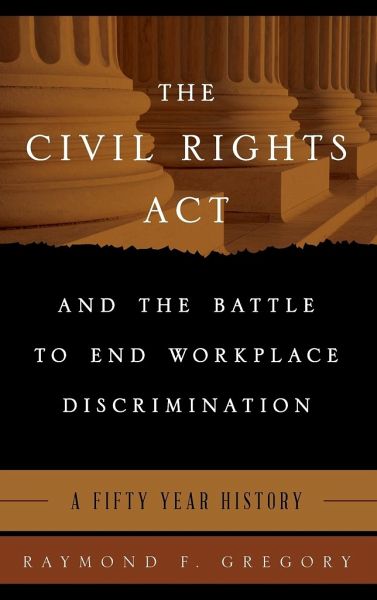
On the fiftieth anniversary of the Civil Rights Act of 1964, Raymond F. Gregory evaluates our progress towards the full implementation of Title VII, which prohibits discrimination in the workplace, and how the law has come to protect against discrimination based on more than just race, but on gender, age, ethnicity, and sexual orientation.
On the fiftieth anniversary of the Civil Rights Act of 1964, Raymond F. Gregory evaluates our progress towards the full implementation of Title VII, which prohibits discrimination in the workplace, and how the law has come to protect against discrimination based on more than just race, but on gender, age, ethnicity, and sexual orientation.
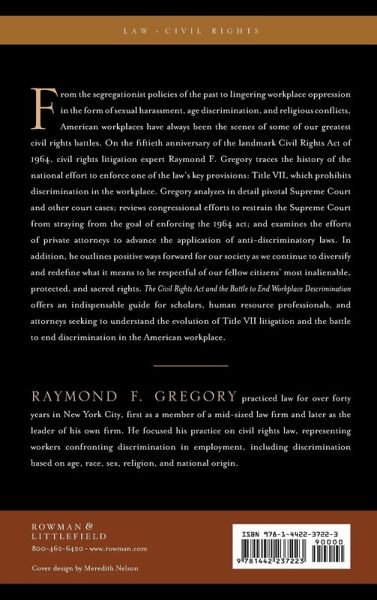
Raymond F. Gregory practiced law for over 40 years in New York City, first as a member of a mid-sized law firm and later as the leader of his own firm. He focused his practice on civil rights law, representing workers confronting discrimination in employment, including discrimination based on age, race, sex, religion, and national origin.
Inhaltsangabe
Introduction Part I. Enactment of the Employment Discrimination Laws Employment Discrimination Prior to 1964Enactment of the Civil Rights Act of 1964 and the Age Discrimination in Employment Act of 1967Part II. Early Employment Discrimination Cases Proving Employment DiscriminationEarly Race Discrimination CasesEarly Sex Discrimination CasesEarly National Origin Discrimination CasesEarly Religious Discrimination CasesEarly Age Discrimination CasesPart III. Later Trends in the Development of the Employment Discrimination Laws Congressional Amendment of Title VII and the ADEACurrent Trends in the Law Prohibiting Race Discrimination Current Trends in the Law Prohibiting Sex Discrimination Current Trends in the Law Prohibiting Discrimination of Pregnant Women Current Trends in the Law Prohibiting Discrimination of Women with ChildrenSexual Harassment and the Sex Discrimination Prohibitions of Title VIIEmployer Liability for Employee Acts of Sexual HarassmentCurrent Trends in the Law Prohibiting National Origin DiscriminationCurrent Trends in the Law Prohibiting Religious DiscriminationThe Ministerial Exception to Title VII Prohibition of Religious DiscriminationAccommodating Employee Religious Beliefs and Practices Current Trends in the Law Prohibiting Age DiscriminationPart IV. Proving Employment Discrimination 21. Later Developments in Proving Discrimination in Title VII Cases 22. Later Developments in Proving Discrimination in ADEA Cases Part V. More Recent Developments 23. The Gender Gap and the Lilly Ledbetter Case 24. Same Sex Sexual Harassment 25. Retaliation 26. Arbitration Part VI. The EEOC and the Private Attorney 27. Political and Judicial Opposition to the Employment Discrimination Laws 28. The Roles of the EEOC and the Private Attorney Part VII. The Future of the Employment Discrimination Laws 29. What Lay Ahead for the Employment Discrimination Laws? Table of Cases Endnotes
Introduction Part I. Enactment of the Employment Discrimination Laws Employment Discrimination Prior to 1964Enactment of the Civil Rights Act of 1964 and the Age Discrimination in Employment Act of 1967Part II. Early Employment Discrimination Cases Proving Employment DiscriminationEarly Race Discrimination CasesEarly Sex Discrimination CasesEarly National Origin Discrimination CasesEarly Religious Discrimination CasesEarly Age Discrimination CasesPart III. Later Trends in the Development of the Employment Discrimination Laws Congressional Amendment of Title VII and the ADEACurrent Trends in the Law Prohibiting Race Discrimination Current Trends in the Law Prohibiting Sex Discrimination Current Trends in the Law Prohibiting Discrimination of Pregnant Women Current Trends in the Law Prohibiting Discrimination of Women with ChildrenSexual Harassment and the Sex Discrimination Prohibitions of Title VIIEmployer Liability for Employee Acts of Sexual HarassmentCurrent Trends in the Law Prohibiting National Origin DiscriminationCurrent Trends in the Law Prohibiting Religious DiscriminationThe Ministerial Exception to Title VII Prohibition of Religious DiscriminationAccommodating Employee Religious Beliefs and Practices Current Trends in the Law Prohibiting Age DiscriminationPart IV. Proving Employment Discrimination 21. Later Developments in Proving Discrimination in Title VII Cases 22. Later Developments in Proving Discrimination in ADEA Cases Part V. More Recent Developments 23. The Gender Gap and the Lilly Ledbetter Case 24. Same Sex Sexual Harassment 25. Retaliation 26. Arbitration Part VI. The EEOC and the Private Attorney 27. Political and Judicial Opposition to the Employment Discrimination Laws 28. The Roles of the EEOC and the Private Attorney Part VII. The Future of the Employment Discrimination Laws 29. What Lay Ahead for the Employment Discrimination Laws? Table of Cases Endnotes
Es gelten unsere Allgemeinen Geschäftsbedingungen: www.buecher.de/agb
Impressum
www.buecher.de ist ein Internetauftritt der buecher.de internetstores GmbH
Geschäftsführung: Monica Sawhney | Roland Kölbl | Günter Hilger
Sitz der Gesellschaft: Batheyer Straße 115 - 117, 58099 Hagen
Postanschrift: Bürgermeister-Wegele-Str. 12, 86167 Augsburg
Amtsgericht Hagen HRB 13257
Steuernummer: 321/5800/1497
USt-IdNr: DE450055826