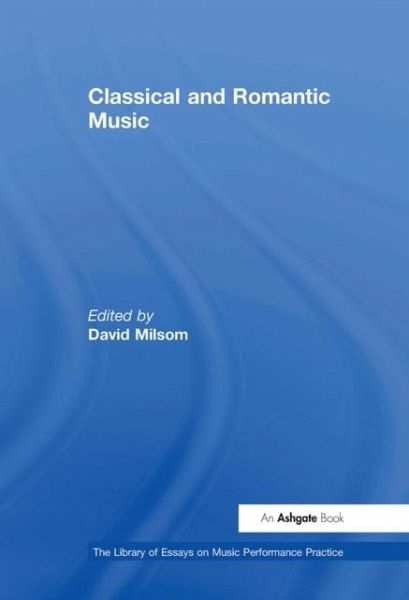
This volume brings together twenty-two of the most diverse and stimulating journal articles on classical and romantic performing practice, representing a rich vein of enquiry into epochs of music still very much at the forefront of current concert repertoire. In so doing, it provides a wide range of subject-based scholarship. It also reveals a fascinating window upon the historical performance debate of the last few decades in music where such matters still stimulate controversy.
This volume brings together twenty-two of the most diverse and stimulating journal articles on classical and romantic performing practice, representing a rich vein of enquiry into epochs of music still very much at the forefront of current concert repertoire. In so doing, it provides a wide range of subject-based scholarship. It also reveals a fascinating window upon the historical performance debate of the last few decades in music where such matters still stimulate controversy.
Produktdetails
Produktdetails
The Library of Essays on Music Performance Practice
David Milsom, who has written widely on nineteenth-century performing practice, is the author of Theory and Practice in Late Nineteenth-Century Violin Performance 1850-1900 (Ashgate, Aldershot, 2003). He is an active violinist and violist, specialising in late nineteenth-century violin performing practice and an experienced instrumental teacher. He is a lecturer in music at the University of Huddersfield.
Inhaltsangabe
Contents: Introduction; Part I Style and Purpose: Appraising 18th and 19th Century Aesthetics: Performing Classical repertoire: the unbridgeable gulf between contemporary practice and historical reality Clive Brown; Mozart as early music: a Romantic antidote Laurence Dreyfus; Listening and responding to the evidence of early 20th-century performance Daniel Leech-Wilkinson. Part II Studies in Historical Sources: Mathis Lussy's Traite de l'expressione musicale as a window into performance practice Michael D. Green; Quantz's unegal: implications for the performance of 18th-century music Claire A. Fontijn; The recordings of Joachim YsaÃe and Sarasate in light of their reception by 19th-century British critics Dorottya Fabian. Part III Instruments Ensembles and Conducting: Towards a Verdian ideal of singing: emancipation from modern orthodoxy Roger Freitas; Brahms's pianos and the performance of his late piano works Camilla Cai; The orchestra in Beethoven's Vienna Clive Brown; Mozart's Viennese orchestras Dexter Edge; Rejected traditions: ensemble placement in 19th-century Paris Donna M. Di Grazia; Style and sonority in Wagner string performance David Milsom; The origins of the ideology of authenticity in interpretation: Mendelssohn Berlioz and Wagner as conductors José Antonio Bowen. Part IV Tempo and Rhythm: Historical performance metronome marks and tempo in Beethoven's symphonies Clive Brown; The case of compensating rubato Sarah Martin; Tempo as an expressive element in the late Romantic lied Edward F. Kravitt; New light on late 18th-century tempo: William Crotch's pendulum markings Emanuel Rubin. Part V Aspects of Notation: Dots and strokes in late 18th- and 19th-century music Clive Brown; The expressive pause: punctuation rests and breathing in England 1770-1850 Robert Toft; Beggar at the door: the rise and fall of portamento in singing John Potter; Bowing styles vibrato and portamento in 19th-century violin playing Clive Brown; Port
Contents: Introduction; Part I Style and Purpose: Appraising 18th and 19th Century Aesthetics: Performing Classical repertoire: the unbridgeable gulf between contemporary practice and historical reality Clive Brown; Mozart as early music: a Romantic antidote Laurence Dreyfus; Listening and responding to the evidence of early 20th-century performance Daniel Leech-Wilkinson. Part II Studies in Historical Sources: Mathis Lussy's Traite de l'expressione musicale as a window into performance practice Michael D. Green; Quantz's unegal: implications for the performance of 18th-century music Claire A. Fontijn; The recordings of Joachim YsaÃe and Sarasate in light of their reception by 19th-century British critics Dorottya Fabian. Part III Instruments Ensembles and Conducting: Towards a Verdian ideal of singing: emancipation from modern orthodoxy Roger Freitas; Brahms's pianos and the performance of his late piano works Camilla Cai; The orchestra in Beethoven's Vienna Clive Brown; Mozart's Viennese orchestras Dexter Edge; Rejected traditions: ensemble placement in 19th-century Paris Donna M. Di Grazia; Style and sonority in Wagner string performance David Milsom; The origins of the ideology of authenticity in interpretation: Mendelssohn Berlioz and Wagner as conductors José Antonio Bowen. Part IV Tempo and Rhythm: Historical performance metronome marks and tempo in Beethoven's symphonies Clive Brown; The case of compensating rubato Sarah Martin; Tempo as an expressive element in the late Romantic lied Edward F. Kravitt; New light on late 18th-century tempo: William Crotch's pendulum markings Emanuel Rubin. Part V Aspects of Notation: Dots and strokes in late 18th- and 19th-century music Clive Brown; The expressive pause: punctuation rests and breathing in England 1770-1850 Robert Toft; Beggar at the door: the rise and fall of portamento in singing John Potter; Bowing styles vibrato and portamento in 19th-century violin playing Clive Brown; Port
Es gelten unsere Allgemeinen Geschäftsbedingungen: www.buecher.de/agb
Impressum
www.buecher.de ist ein Internetauftritt der buecher.de internetstores GmbH
Geschäftsführung: Monica Sawhney | Roland Kölbl | Günter Hilger
Sitz der Gesellschaft: Batheyer Straße 115 - 117, 58099 Hagen
Postanschrift: Bürgermeister-Wegele-Str. 12, 86167 Augsburg
Amtsgericht Hagen HRB 13257
Steuernummer: 321/5800/1497
USt-IdNr: DE450055826