
Andere Kunden interessierten sich auch für
 Clinical Psychiatry: Psychotherapy Topics Volume 182,99 €
 Psychiatrie clinique : Sujets de psychothérapie Volume 274,99 €
 Psichiatria clinica: Argomenti di psicoterapia Volume 274,99 €
 Psychiatrie clinique : Sujets de psychothérapie Volume 180,99 €
 Psiquiatria Clínica: Tópicos de Psicoterapia Volume 180,99 €
 Psichiatria clinica: Argomenti di psicoterapia Volume 180,99 €
 Psiquiatria Clínica: Tópicos de Psicoterapia Volume 274,99 €




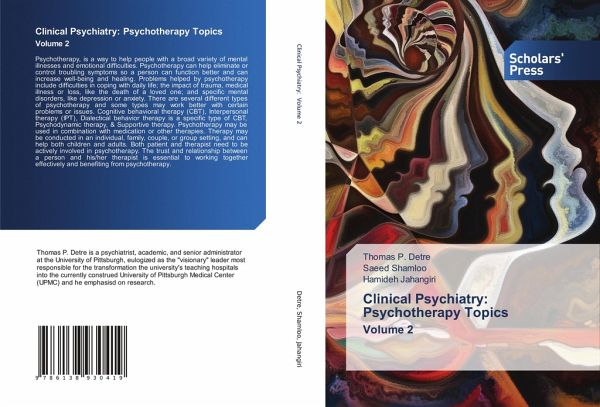
Psychotherapy, is a way to help people with a broad variety of mental illnesses and emotional difficulties. Psychotherapy can help eliminate or control troubling symptoms so a person can function better and can increase well-being and healing. Problems helped by psychotherapy include difficulties in coping with daily life; the impact of trauma, medical illness or loss, like the death of a loved one; and specific mental disorders, like depression or anxiety. There are several different types of psychotherapy and some types may work better with certain problems or issues. Cognitive behavioral therapy (CBT), Interpersonal therapy (IPT), Dialectical behavior therapy is a specific type of CBT, Psychodynamic therapy, & Supportive therapy. Psychotherapy may be used in combination with medication or other therapies. Therapy may be conducted in an individual, family, couple, or group setting, and can help both children and adults. Both patient and therapist need to be actively involved inpsychotherapy. The trust and relationship between a person and his/her therapist is essential to working together effectively and benefiting from psychotherapy.