
Andere Kunden interessierten sich auch für
 Small Particles and Inorganic Clusters115,99 €
 Quantum Dynamics of Complex Molecular Systems113,99 €
 Stochasticity and Intramolecular Redistribution of Energy39,99 €
 Rotational Dynamics of Small and Macromolecules39,99 €
 Quantum Kinetic Theory106,99 €
 Photon and Electron Collisions with Atoms and Molecules151,99 €
 Atomic Physics Methods in Modern Research76,99 €
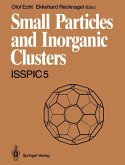
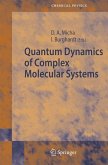


Small particles in gaseous systems are called clusters, aerosols, dust particles, Aitken particles, etc., depending on their size, the media where they are observed, and the field of science in which they are studied. Below we call clusters systems of bound atoms or molecules containing from several atoms (molecules) up to thousands, so that their structure can be essential for determining their properties. If clusters are like bulk systems, we call them small particles. The principal pecu liarity of clusters is with respect to magic numbers of cluster atoms that correspond to a heightened cluster stability. Magic numbers correspond to complete structures of clusters as systems of bound atoms or molecules. The values of magic nwnbers depend on the character of interaction of the cluster's atoms. Cluster parameters as a function of the number of cluster atoms n have extrema at the magic nwnbers of atoms. For example, a cluster with a magic nwnber of atoms has a higher binding energy and ionization potential than clusters with neighboring nwnbers of atoms. The difference between clusters and small particles is such that parameters of small particles are monotonic functions of the nwnber of their atoms, while for clusters these parameters have local extrema at magic nwnbers of atoms.