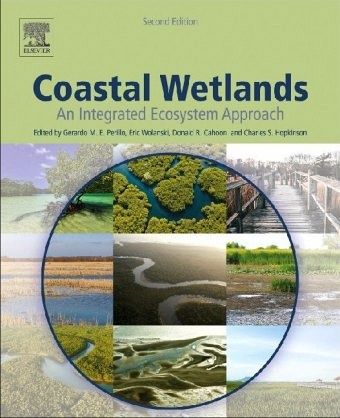
Coastal Wetlands, Second Edition: An Integrated and Ecosystem Approach provides an understanding of the functioning of coastal ecosystems and the ecological services that they provide. As coastal wetlands are under a great deal of pressure from the dual forces of rising sea levels and the intervention of human populations, both along the estuary and in the river catchment, this book covers important issues, such as the destruction or degradation of wetlands from land reclamation and infrastructures, impacts from the discharge of pollutants, changes in river flows and sediment supplies, land clearing, and dam operations. …mehr
Coastal Wetlands, Second Edition: An Integrated and Ecosystem Approach provides an understanding of the functioning of coastal ecosystems and the ecological services that they provide. As coastal wetlands are under a great deal of pressure from the dual forces of rising sea levels and the intervention of human populations, both along the estuary and in the river catchment, this book covers important issues, such as the destruction or degradation of wetlands from land reclamation and infrastructures, impacts from the discharge of pollutants, changes in river flows and sediment supplies, land clearing, and dam operations.
Die Herstellerinformationen sind derzeit nicht verfügbar.
Autorenporträt
Professor Gerardo M. E. Perillo is a Senior Superior Researcher from CONICET working at the Instituto Argentino de Oceanografía (IADO) (where he was Vicedirector for 11 years). He is also Professor in the departments of Geología, and Geografía and Turismo, both from the Universidad Nacional del Sur, all in Bahía Blanca, Argentina. Although his main research interest is the dynamic of sediment transport in both marine and continental environments, he works in a wide range of fields including: process-related geomorphologic evolution and physical-biological interactions in estuaries, coastal wetlands, beaches, lakes and rivers. In the last 10 years he also works in participatory activities related to stakeholder engagement. He has published or edited 15 books and special issues of journals plus over 300 publications and reports. He was awarded several prizes including the Konex Award to the trajectory. He has been Chief Editor of Latin American Journal of Sedimentology and Basin Analysis (LAJSBA), and member of the editorial board of Marine Geology, Estuarine, Coastal and Shelf Sciences, Wetland Ecology and Management, and LAJSBA. He also serves in various committees regarding to the National Program for Oceanography under the Ministry of Science and Technology of Argentina
Inhaltsangabe
1. Coastal Wetlands: A Synthesis 2. The Morphology and Development of Coastal Wetlands in the Tropics 3. Temperate Coastal Wetlands: Morphology, Sediment Processes, and Plant Communities 4. Northern Polar Coastal Wetlands: Development, Structure and Land Use 5. Salt-Marsh Eco-Geomorphological Dynamics and Hydrodynamic Circulation 6. Geomorphology of Tidal Courses and Depressions 7. Methods to Estimate Heat Balance in Coastal Wetlands 8. Hydrodynamics and Modeling of Water Flow in Coastal Wetlands 9. Mathematical Modeling of Tidal Flow over Saltmarshes and Tidal Flats with Applications to the Venice Lagoon 10. Geomorphology and Sedimentology of Tidal Flats 11. Intertidal Flats: Form and Function 12. Biogeochemical Dynamics of Coastal Tidal Flats 13. Productivity and Biogeochemical Cycling in Seagrass Ecosystems 14. Tidal Salt marshes: Sedimentology and Geomorphology 15. Ecosystem Structure of Tidal Saline Marshes 16. Salt Marsh Biogeochemistry - An Overview 17. The role of freshwater flows on salt marsh growth and development 18. Tidal Freshwater Wetlands 19. Biogeochemistry of Tidal Freshwater Wetlands 20. Biogeomorphology of mangroves 21. Biogeochemistry of mangroves 22. Ecogeomorphic Models of Nutrient Biogeochemistry for Mangrove Wetlands 23. Tidal Marsh Creation 24. Salt Marsh Restoration 25. Managed Realignment: Re-Creating Intertidal Habitats on Formerly Reclaimed Land 26. Methods and Criteria for Successful Mangrove Forest Rehabilitation 27. Evaluating Restored Tidal Freshwater Wetlands 28. The Shifting Salt Marsh-Mangrove Ecotone in Australasia and the Americas 29. The Value of Coastal Wetland Ecosystem Services 30. Blue Carbon 31. Towards a Salt Marsh Management Plan for New York City: Recommendations for Strategic Restoration and Protection 32. Living Shorelines for Coastal Resilience 33. Mangrove Management: Challenges and Guidelines
1. Coastal Wetlands: A Synthesis 2. The Morphology and Development of Coastal Wetlands in the Tropics 3. Temperate Coastal Wetlands: Morphology, Sediment Processes, and Plant Communities 4. Northern Polar Coastal Wetlands: Development, Structure and Land Use 5. Salt-Marsh Eco-Geomorphological Dynamics and Hydrodynamic Circulation 6. Geomorphology of Tidal Courses and Depressions 7. Methods to Estimate Heat Balance in Coastal Wetlands 8. Hydrodynamics and Modeling of Water Flow in Coastal Wetlands 9. Mathematical Modeling of Tidal Flow over Saltmarshes and Tidal Flats with Applications to the Venice Lagoon 10. Geomorphology and Sedimentology of Tidal Flats 11. Intertidal Flats: Form and Function 12. Biogeochemical Dynamics of Coastal Tidal Flats 13. Productivity and Biogeochemical Cycling in Seagrass Ecosystems 14. Tidal Salt marshes: Sedimentology and Geomorphology 15. Ecosystem Structure of Tidal Saline Marshes 16. Salt Marsh Biogeochemistry - An Overview 17. The role of freshwater flows on salt marsh growth and development 18. Tidal Freshwater Wetlands 19. Biogeochemistry of Tidal Freshwater Wetlands 20. Biogeomorphology of mangroves 21. Biogeochemistry of mangroves 22. Ecogeomorphic Models of Nutrient Biogeochemistry for Mangrove Wetlands 23. Tidal Marsh Creation 24. Salt Marsh Restoration 25. Managed Realignment: Re-Creating Intertidal Habitats on Formerly Reclaimed Land 26. Methods and Criteria for Successful Mangrove Forest Rehabilitation 27. Evaluating Restored Tidal Freshwater Wetlands 28. The Shifting Salt Marsh-Mangrove Ecotone in Australasia and the Americas 29. The Value of Coastal Wetland Ecosystem Services 30. Blue Carbon 31. Towards a Salt Marsh Management Plan for New York City: Recommendations for Strategic Restoration and Protection 32. Living Shorelines for Coastal Resilience 33. Mangrove Management: Challenges and Guidelines
Es gelten unsere Allgemeinen Geschäftsbedingungen: www.buecher.de/agb
Impressum
www.buecher.de ist ein Internetauftritt der buecher.de internetstores GmbH
Geschäftsführung: Monica Sawhney | Roland Kölbl | Günter Hilger
Sitz der Gesellschaft: Batheyer Straße 115 - 117, 58099 Hagen
Postanschrift: Bürgermeister-Wegele-Str. 12, 86167 Augsburg
Amtsgericht Hagen HRB 13257
Steuernummer: 321/5800/1497
USt-IdNr: DE450055826