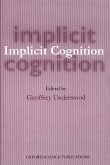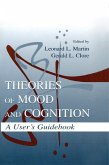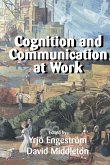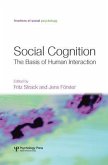
Addiction research has a long history, but it is only recently that experimental psychologists and neuroscientists have begun to investigate the cognitive aspects of addictive behaviours. This has revealed a complex inter-play of cognitive mechanisms that subserve subjective experiences associated with addiction, such as drug craving. This has led to a marked increase in interest in the potential of such research to elucidate, for example, the processes that may lead to relapse following abstinence. Although research into the relationship between cognitive processes and addictive behaviours is…mehr
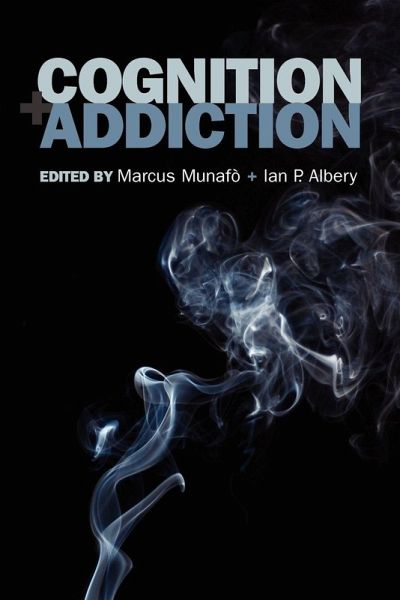
Addiction research has a long history, but it is only recently that experimental psychologists and neuroscientists have begun to investigate the cognitive aspects of addictive behaviours. This has revealed a complex inter-play of cognitive mechanisms that subserve subjective experiences associated with addiction, such as drug craving. This has led to a marked increase in interest in the potential of such research to elucidate, for example, the processes that may lead to relapse following abstinence. Although research into the relationship between cognitive processes and addictive behaviours is currently an area of substantial growth and interest, this book has brought together the state-of-the-art in this research. As the field matures such a monograph is timely and will serve to capture the current state of knowledge, as well as identifying directions for future research. Within the book, current research and theoretical models have been synthesised by leading authors in the field of cognition and addiction, with a particular emphasis on widely investigated substances of abuse such as alcohol, nicotine, cocaine and opiates. The individual authors, all of whom are high profile researchers of international standing, have provided a series of chapters that cover mechanisms that underpin cognitive processes in addiction and their application to specific addictive behaviours.
Marcus Munafò's research interests are in the integration of multiple research perspectives to understand individual differences in smoking behaviour and, in particular, smoking cessation. This has included substantial work on smoking cessation pharmacogenetics, as well as behavioural and neuroimaging studies of smoking-related endophenotypes. He recently contributed material on the genetics of smoking behaviour and smoking cessation pharmacogenetics, with Caryn Lerman, to the forthcoming Surgeon General's Report on tobacco-related disease. In 2004 he was awarded the Society for Research on Nicotine and Tobacco Young Investigator Award, and in 2005 the European College of Neuropsychopharmacology Fellowship Award. Ian P. Albery is Professor of Psychology at London South Bank University, Associate Fellow of the British Psychological Society, Member of the Division of Health Psychology of the BPS and a Chartered Health Psychologist. He previously held posts at the University of Kent at Canterbury, the National Addiction Centre at the Institute of Psychiatry and the University of Reading. He is the author of numerous chapters and academic papers in aspects of cognition and addiction and also runs a very successful MSc in Addiction Psychology and Counselling at London South Bank University.
Inhaltsangabe
* 1: Ian P. Albery, Dinkar Sharma, Asli Niazi and Antony C. Moss: Theoretical perspectives and approaches * 2: Alan W. Stacy and Reinout W. Wiers: An implicit cognition, associative memory framework for addiction * 3: Matt Field: Attentional biases in drug abuse and addiction: cognitive mechanisms, causes, consequences and implications * 4: I. Miles Cox, Eric Klinger and Javad Salehi Fadardi: Motivational basis of cognitive determinants of addiction * 5: Chris McCusker: Towards understanding loss of control: an automatic network theory of addictive behaviours * 6: Mark S. Goldman, Jack Darkes, Richard R. Reich and Karen O. Brandon: From DNA to conscious thought: the influence of anticipatory processes on human alcohol consumption * 7: Ross McD. Young, Barry T. Jones, Carey Walmsley and Antony Nutting : Opiate cognitions * 8: Marcus R. Munafó and Brian Hitsman: Neurocircuitry of attentional processes in addictive behaviours * 9: Andrew J. Waters and Adam Leventhal^: Clinical relevance of implicit cognition in addiction * 10: Frank Ryan: Appetite lost and found: cognitive psychology in the addiction clinic
Es gelten unsere Allgemeinen Geschäftsbedingungen: www.buecher.de/agb
Impressum
www.buecher.de ist ein Internetauftritt der buecher.de internetstores GmbH
Geschäftsführung: Monica Sawhney | Roland Kölbl | Günter Hilger
Sitz der Gesellschaft: Batheyer Straße 115 - 117, 58099 Hagen
Postanschrift: Bürgermeister-Wegele-Str. 12, 86167 Augsburg
Amtsgericht Hagen HRB 13257
Steuernummer: 321/5800/1497
USt-IdNr: DE450055826