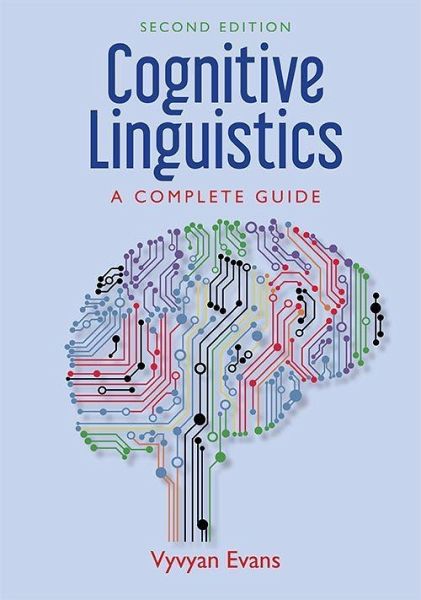
An authoritative general introduction to cognitive linguistics, this book provides up-to-date coverage of all areas of the field and sets in context recent developments within cognitive semantics and cognitive approaches to grammar.
An authoritative general introduction to cognitive linguistics, this book provides up-to-date coverage of all areas of the field and sets in context recent developments within cognitive semantics and cognitive approaches to grammar.
Professor Vyvyan Evans is an internationally renowned expert on language and communication and has taught at the University of Sussex, Brighton University and Bangor University in the UK.
Inhaltsangabe
Preface; List of figures; List of tables; List of abbreviations Part I: The Cognitive Linguistics Enterprise 1: What do cognitive linguists study? 2: Key commitments and research methods 3: Foundations of experience I: Space 4: Foundations of experience II: Time 5: Language in use I: Knowledge of language 6: Language in use II: Language change, and acquisition 7: Key topics in language science: Formal versus cognitive linguistics Part II: Conceptual Structure 8: What is a cognitive linguistics approach to conceptual structure? 9: Image schemas and the origin of concepts 10: Cognitive Semantics 11: Categorisation and idealised cognitive models 12: Conceptual metaphor theory 13: Primary metaphors and conceptual metonymy Part III: Semantic Structure 14: What is a cognitive linguistics approach to semantic structure? 15: The encyclopaedic approach to semantic structure I: Overview 16: The encyclopaedic approach to semantic structure II: Two theories 17: Network approaches to semantic structure 18: Access semantics and meaning construction 19: Mental spaces and discourse meaning 20: Conceptual blending and semantic creativity Part IV: Grammar 21: What is a cognitive linguistics approach to grammar? 22: Cognitive Grammar I: Lexical classes 23: Cognitive Grammar II: Constructions 24: Cognitive Grammar III: The verb string 25: Construction Grammar I: Accounting for irregularity in grammar 26: Construction Grammar II: accounting for generalisations in grammar 27: The evolution of grammar Part V: Applications and Extensions of Cognitive Linguistics 28: Language, society and discourse 29: Text, narrative and literature 30: Gesture and sign language References; Index
Preface; List of figures; List of tables; List of abbreviations Part I: The Cognitive Linguistics Enterprise 1: What do cognitive linguists study? 2: Key commitments and research methods 3: Foundations of experience I: Space 4: Foundations of experience II: Time 5: Language in use I: Knowledge of language 6: Language in use II: Language change, and acquisition 7: Key topics in language science: Formal versus cognitive linguistics Part II: Conceptual Structure 8: What is a cognitive linguistics approach to conceptual structure? 9: Image schemas and the origin of concepts 10: Cognitive Semantics 11: Categorisation and idealised cognitive models 12: Conceptual metaphor theory 13: Primary metaphors and conceptual metonymy Part III: Semantic Structure 14: What is a cognitive linguistics approach to semantic structure? 15: The encyclopaedic approach to semantic structure I: Overview 16: The encyclopaedic approach to semantic structure II: Two theories 17: Network approaches to semantic structure 18: Access semantics and meaning construction 19: Mental spaces and discourse meaning 20: Conceptual blending and semantic creativity Part IV: Grammar 21: What is a cognitive linguistics approach to grammar? 22: Cognitive Grammar I: Lexical classes 23: Cognitive Grammar II: Constructions 24: Cognitive Grammar III: The verb string 25: Construction Grammar I: Accounting for irregularity in grammar 26: Construction Grammar II: accounting for generalisations in grammar 27: The evolution of grammar Part V: Applications and Extensions of Cognitive Linguistics 28: Language, society and discourse 29: Text, narrative and literature 30: Gesture and sign language References; Index
Es gelten unsere Allgemeinen Geschäftsbedingungen: www.buecher.de/agb
Impressum
www.buecher.de ist ein Internetauftritt der buecher.de internetstores GmbH
Geschäftsführung: Monica Sawhney | Roland Kölbl | Günter Hilger
Sitz der Gesellschaft: Batheyer Straße 115 - 117, 58099 Hagen
Postanschrift: Bürgermeister-Wegele-Str. 12, 86167 Augsburg
Amtsgericht Hagen HRB 13257
Steuernummer: 321/5800/1497
USt-IdNr: DE450055826