

Andere Kunden interessierten sich auch für
 History and Psyche83,99 €
 Verbote und Geheimnisse39,90 €
 Wie die Couch nach Kalkutta kam32,00 €
 Landscapes of the Soul38,00 €
 An Introduction To Psychology35,99 €
 Soon15,99 €
: Reflections of a Pioneer") Origins of Professional Psychology in Canada (1925-1965): Reflections of a Pioneer20,99 €
Origins of Professional Psychology in Canada (1925-1965): Reflections of a Pioneer20,99 €





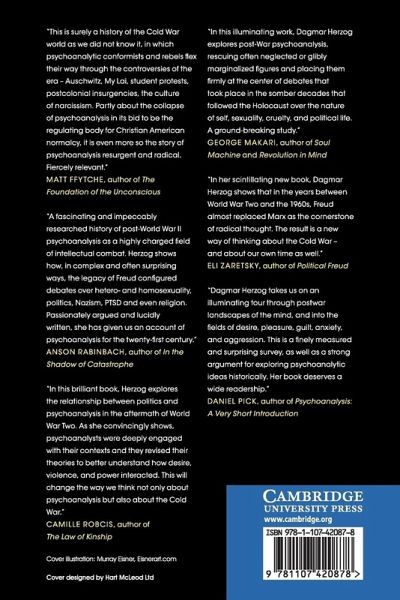
Hitzige Kämpfe tobten in der Folge des Zweiten Weltkrieges um das Erbe Sigmund Freuds. Die verspätete Aufarbeitung des Nationalsozialismus, die sexuelle Revolution und die Dekolonisation stießen fundamentale Transformationsprozesse in der psychoanalytischen Theorie an, die ihrerseits auf die Kultur zurückwirkten. Von den USA über Europa bis nach Lateinamerika schildert Dagmar Herzog die Deutungskämpfe einer Zunft, deren konkurrierende Theorien über Begehren, Angst, Aggression, Lust und Trauma mal konservativen, mal subversiven Zielen dienten - und hält damit ein innovatives Plädoyer für die Psychoanalyse als Erkenntnisinstrument im Dickicht der Verflechtung von Psyche und Gesellschaft.
'This is surely a history of the Cold War world as we did not know it, in which psychoanalytic conformists and rebels flex their way through the controversies of the era - Auschwitz, My Lai, student protests, postcolonial insurgencies, the culture of narcissism. Partly about the collapse of psychoanalysis in its bid to be the regulating body for Christian American normalcy, it is even more so the story of psychoanalysis resurgent and radical. Fiercely relevant.' Matt Ffytche, author of The Foundation of the Unconscious