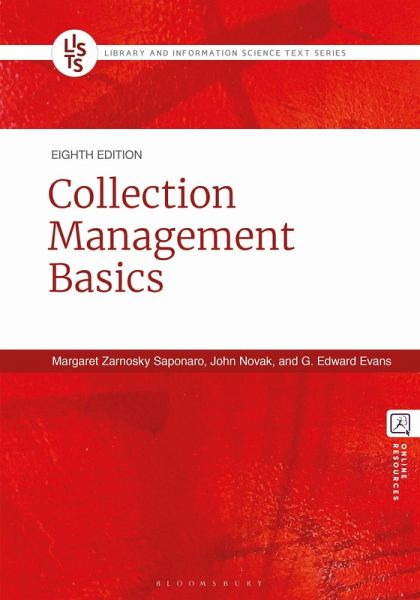
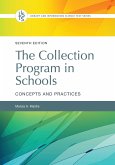
If the heart of the library is its collection, this textbook provides the keys to the heart of your library. Alongside standards of basic principles and processes, you'll find practical guidance on everything from acquisitions to preservation. Managing collections in today's libraries is more complicated and challenging than ever. Electronic formats, new options for collaboration and sharing, and the drive to use data for evaluation purposes are just a few of the changes now driving collection management. This updated edition of a classic text addresses changes in the field and provides a…mehr
If the heart of the library is its collection, this textbook provides the keys to the heart of your library. Alongside standards of basic principles and processes, you'll find practical guidance on everything from acquisitions to preservation. Managing collections in today's libraries is more complicated and challenging than ever. Electronic formats, new options for collaboration and sharing, and the drive to use data for evaluation purposes are just a few of the changes now driving collection management. This updated edition of a classic text addresses changes in the field and provides a thorough overview of what collection development specialists now need to know to effectively and efficiently manage processes that range from selection and assessment to sharing resources, handling challenges, weeding, and preservation. Readers will find increased coverage of technical services, intellectual freedom and censorship, and collection policy development, as well as budget development and tracking, joint purchasing, and negotiating with vendors. Updates on e-resources, user needs assessment (including data visualization), and disaster management, along with suggestions for further reading, are also included. Engagingly written and easy to understand, this is a valuable text for students preparing for careers in public, academic, school, and special libraries. It will additionally serve as a training resource and professional refresher for practitioners.
Margaret Zarnosky Saponaro, MLS, is Director of Collection Development Strategies at the University of Maryland Libraries (UMD), USA, where she provides leadership for the collections and manages the collections budget. Her prior work experience includes serving as Manager of Staff Learning and Development, and later Librarian for the College of Journalism at UMD, as Associate Director of Learning Resources at the Alexandria Campus of Northern Virginia Community College, and as Librarian for the Northern Virginia Center of Virginia Polytechnic Institute and State University. Her research interests are in the areas of collection management, instruction, and emerging technologies in libraries.
Inhaltsangabe
Preface 1 Introduction What Is Collection Management? Access to Information New Trends, Issues, and Approaches Points to Keep in Mind Notes 2 Intellectual Freedom and Ethics Libraries, the First Amendment, and Intellectual Freedom Ethics, Personal Beliefs, Biases, and Collection Management Diversity, Equity, and Inclusion in Collection Management Access - Filtering Points to Keep in Mind Notes 3 Collection Management Components of Collection Management Trends in Collection Management Taking on Collection Management Responsibilities Points to Keep in Mind Notes 4 Collection Management Policies What Is a Collection Management Policy? Does a Library Need a Collection Management Policy? Creating a Policy and the Stages of the Policy Development Process Getting the Policy Approved Points to Keep in Mind Notes 5 Assessing User Needs Defining Needs The Value of User Studies Getting Started Listening to Your Users: Collecting Primary Data Information About Your Users: Collecting Secondary Data Communicating Value Points to Keep in Mind Notes 6 Selecting Materials Resources to Consult What is in the Collection/What is Lacking Language Quality Cost Issues Variations in Selection by Library Type Quality or Demand Points to Keep in Mind Notes 7 Acquisitions Acquiring Materials Vendor Selection Fiscal Management Points to Keep in Mind Notes 8 Assessing Collections and the Library Collection Assessment Methodologies Deselection: Weeding Points to Keep in Mind Notes 9 Cooperation, Collaboration, and Consortia Issues Background Reasons for Engaging in Joint Ventures Collaboration on the Personal Level Making Collaborative Projects Work Points to Keep in Mind Notes 10 Print and Media Producers of Collection Resources Types of Producers Media Formats Nontraditional Formats: Library of Things Format Selection Considerations Points to Keep in Mind Notes 11 Serials Types of Serials and Their Characteristics Print Serials Electronic Serials Selection and Management of Serials E-Resource Management Financial Aspects and Pricing Models Trends and Developments Points to Keep in Mind Notes 12 E-Resources and Their Management Differences Between Traditional and E-Resources Management of E-Resources E-Formats Points to Keep in Mind Notes 13 Preservation Issues Preserving the Investment in the Collection Disaster Preparedness Digital Preservation Conservation Points to Keep in Mind Notes 14 Legal Issues and Collection Management Copyright Laws and Collection Management Gifts and the Internal Revenue Service Accessibility and Collection Management Privacy Points to Keep in Mind Notes Index
Preface 1 Introduction What Is Collection Management? Access to Information New Trends, Issues, and Approaches Points to Keep in Mind Notes 2 Intellectual Freedom and Ethics Libraries, the First Amendment, and Intellectual Freedom Ethics, Personal Beliefs, Biases, and Collection Management Diversity, Equity, and Inclusion in Collection Management Access - Filtering Points to Keep in Mind Notes 3 Collection Management Components of Collection Management Trends in Collection Management Taking on Collection Management Responsibilities Points to Keep in Mind Notes 4 Collection Management Policies What Is a Collection Management Policy? Does a Library Need a Collection Management Policy? Creating a Policy and the Stages of the Policy Development Process Getting the Policy Approved Points to Keep in Mind Notes 5 Assessing User Needs Defining Needs The Value of User Studies Getting Started Listening to Your Users: Collecting Primary Data Information About Your Users: Collecting Secondary Data Communicating Value Points to Keep in Mind Notes 6 Selecting Materials Resources to Consult What is in the Collection/What is Lacking Language Quality Cost Issues Variations in Selection by Library Type Quality or Demand Points to Keep in Mind Notes 7 Acquisitions Acquiring Materials Vendor Selection Fiscal Management Points to Keep in Mind Notes 8 Assessing Collections and the Library Collection Assessment Methodologies Deselection: Weeding Points to Keep in Mind Notes 9 Cooperation, Collaboration, and Consortia Issues Background Reasons for Engaging in Joint Ventures Collaboration on the Personal Level Making Collaborative Projects Work Points to Keep in Mind Notes 10 Print and Media Producers of Collection Resources Types of Producers Media Formats Nontraditional Formats: Library of Things Format Selection Considerations Points to Keep in Mind Notes 11 Serials Types of Serials and Their Characteristics Print Serials Electronic Serials Selection and Management of Serials E-Resource Management Financial Aspects and Pricing Models Trends and Developments Points to Keep in Mind Notes 12 E-Resources and Their Management Differences Between Traditional and E-Resources Management of E-Resources E-Formats Points to Keep in Mind Notes 13 Preservation Issues Preserving the Investment in the Collection Disaster Preparedness Digital Preservation Conservation Points to Keep in Mind Notes 14 Legal Issues and Collection Management Copyright Laws and Collection Management Gifts and the Internal Revenue Service Accessibility and Collection Management Privacy Points to Keep in Mind Notes Index
Es gelten unsere Allgemeinen Geschäftsbedingungen: www.buecher.de/agb
Impressum
www.buecher.de ist ein Internetauftritt der buecher.de internetstores GmbH
Geschäftsführung: Monica Sawhney | Roland Kölbl | Günter Hilger
Sitz der Gesellschaft: Batheyer Straße 115 - 117, 58099 Hagen
Postanschrift: Bürgermeister-Wegele-Str. 12, 86167 Augsburg
Amtsgericht Hagen HRB 13257
Steuernummer: 321/5800/1497
USt-IdNr: DE450055826