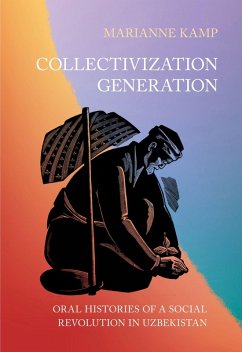
In Collectivization Generation, we meet Uzbeks who were driven from their homes by bandits, whose fathers disappeared in the Stalinist gulag, who suffered starvation and orphanhood. We also meet Uzbeks who told of embracing the project of collectivization, of feeling rewarded with dignity, recognition, pay, association with national triumphs, and with the progress represented by a tractor.
Marianne Kamp is Associate Professor in the Central Eurasian Studies Department, Indiana University. She is the author of The New Woman in Uzbekistan, and editor and cotranslator of Muslim Women of the Fergana Valley.
Inhaltsangabe
Introduction: Collectivization Generation 1. Inedible Harvest: Cotton and Dehqons 2. BosmachiStories 3. Land Reform 4. Agitating for the Kolkhoz 5. Making Quloqs: Arrest, Exile, Escape, and Identity 6. Famine 7. Working 8. Orphans Conclusion: A Generation, a Time, and Remembering
Es gelten unsere Allgemeinen Geschäftsbedingungen: www.buecher.de/agb
Impressum
www.buecher.de ist ein Internetauftritt der buecher.de internetstores GmbH
Geschäftsführung: Monica Sawhney | Roland Kölbl | Günter Hilger
Sitz der Gesellschaft: Batheyer Straße 115 - 117, 58099 Hagen
Postanschrift: Bürgermeister-Wegele-Str. 12, 86167 Augsburg
Amtsgericht Hagen HRB 13257
Steuernummer: 321/5800/1497
USt-IdNr: DE450055826