
Andere Kunden interessierten sich auch für
 An International History of South America in the Era of Military Rule38,99 €
 The New Pan-Americanism and the Structuring of Inter-American Relations38,99 €
 Remaking Indigeneity in the Amazon38,99 €
 Latin America and the World's Fairs, 1867-1939137,99 €
 The Routledge History of Latin American Culture47,99 €
 Religion and Politics in Europe and Latin America38,99 €
 Region, Race, and Class in the Making of Colombia38,99 €



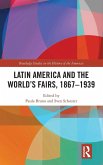



Colonial Scholasticism: Interpreting Nature, Society, and Philosophy in Spanish America explores the enduring influence of scholasticism beyond Europe, tracing its evolution in the intellectual and educational institutions of colonial Latin America.
Far from being a mere extension of European thought, colonial scholasticism developed in response to new cultural, political, and scientific contexts, engaging with both local realities and global philosophical traditions. This volume examines the emergence and adaptation of scholastic philosophy in Spanish America, from the establishment of schools and universities to the development of novel approaches to law, science, and theology. It explores how the works of Aristotle and his ancient and medieval followers continued to shape intellectual discourse in the American world. At the same time, it highlights how these traditions were reinterpreted in dialogue with Indigenous knowledge, social structures, and the challenges posed by colonial rule. Bringing together contributions from leading scholars in the field, Colonial Scholasticism sheds light on a neglected chapter in the history of Western philosophy. It challenges Eurocentric periodisations that confine scholasticism to the Middle Ages and demonstrates its continued relevance in shaping philosophical and scientific thought well into early modernity.
This book is an essential resource for historians of philosophy, scholars of Latin American intellectual history, and all those interested in the global dimensions of scholasticism.
Far from being a mere extension of European thought, colonial scholasticism developed in response to new cultural, political, and scientific contexts, engaging with both local realities and global philosophical traditions. This volume examines the emergence and adaptation of scholastic philosophy in Spanish America, from the establishment of schools and universities to the development of novel approaches to law, science, and theology. It explores how the works of Aristotle and his ancient and medieval followers continued to shape intellectual discourse in the American world. At the same time, it highlights how these traditions were reinterpreted in dialogue with Indigenous knowledge, social structures, and the challenges posed by colonial rule. Bringing together contributions from leading scholars in the field, Colonial Scholasticism sheds light on a neglected chapter in the history of Western philosophy. It challenges Eurocentric periodisations that confine scholasticism to the Middle Ages and demonstrates its continued relevance in shaping philosophical and scientific thought well into early modernity.
This book is an essential resource for historians of philosophy, scholars of Latin American intellectual history, and all those interested in the global dimensions of scholasticism.