Versandkostenfrei innerhalb Deutschlands
20,99 €
inkl. MwSt.
Versandkostenfrei*
Erscheint vorauss. 24. September 2026
Melden Sie sich
hier
hier
für den Produktalarm an, um über die Verfügbarkeit des Produkts informiert zu werden.
oder sofort lesen als eBook

10 °P sammeln
- Broschiertes Buch
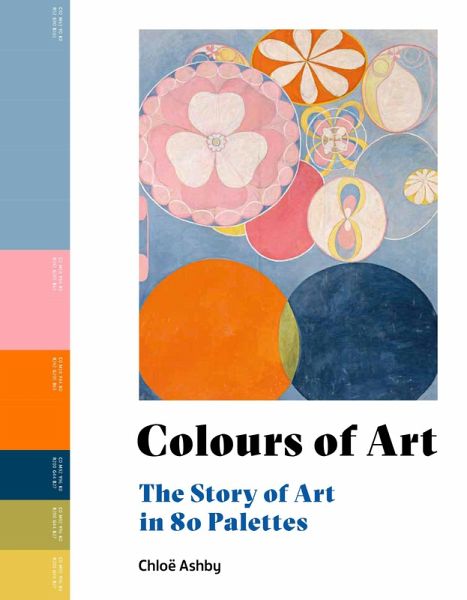
Colours of Art takes the reader on a journey through history via 80 carefully curated artworks and their palettes. For these pieces, colour is not only a tool (like a paintbrush or a canvas) but the fundamental secret to their success. Colour allows artists to express their individuality, evoke certain moods and portray positive or negative subliminal messages. And throughout history the greatest of artists have experimented with new pigments and new technologies to lead movements and deliver masterpieces. But as something so cardinal, we sometimes forget how poignant colour palettes can be,…mehr
Andere Kunden interessierten sich auch für
 William CasementMany Faces of Art Forgery28,99 €
 Erin C. DevineTranslation and Transgression in the Art of Shirin Neshat31,99 €
 William VaughanShadows7,99 €
 Lucy CraneArt and the Formation of Taste22,99 €
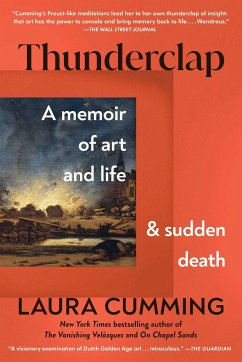
 Laura CummingThunderclap16,99 €
 Seventeenth Loan Exhibition of Paintings in Oils and Water Colours on the Occasion of the Opening of the New Gallery, 29th November, 1893, by His Exce15,99 €
 Auguste RodinArt18,99 €
-
-
-

Colours of Art takes the reader on a journey through history via 80 carefully curated artworks and their palettes. For these pieces, colour is not only a tool (like a paintbrush or a canvas) but the fundamental secret to their success. Colour allows artists to express their individuality, evoke certain moods and portray positive or negative subliminal messages. And throughout history the greatest of artists have experimented with new pigments and new technologies to lead movements and deliver masterpieces. But as something so cardinal, we sometimes forget how poignant colour palettes can be, and how much they can tell us. When Vermeer painted The Milkmaid, the amount of ultramarine he could use was written in the contract. How did that affect how he used it? When Turner experimented with Indian Yellow, he captured roaring flames that brought his paintings to life. If he had used a more ordinary yellow, would he have created something so extraordinary? And how did Warhol throw away the rulebook to change what colour could achieve? Structured chronologically, Colours of Art provides a fun, intelligent and visually engaging look at the greatest artistic palettes in art history – from Rafael’s use of perspective and Vermeer’s ultramarine, to Andy Warhol’s hot pinks and Lisa Brice’s blue women. Colours of Art offers a refreshing take on the subject and acts as a primer for artists, designers and art lovers who want to look at art history from a different perspective.
Produktdetails
- Produktdetails
- Verlag: Quarto Publishing PLC
- New Edition
- Seitenzahl: 256
- Erscheinungstermin: 24. September 2026
- Englisch
- Abmessung: 245mm x 190mm
- Gewicht: 750g
- ISBN-13: 9781805701484
- ISBN-10: 1805701487
- Artikelnr.: 76277630
- Herstellerkennzeichnung
- Libri GmbH
- Europaallee 1
- 36244 Bad Hersfeld
- gpsr@libri.de
- Verlag: Quarto Publishing PLC
- New Edition
- Seitenzahl: 256
- Erscheinungstermin: 24. September 2026
- Englisch
- Abmessung: 245mm x 190mm
- Gewicht: 750g
- ISBN-13: 9781805701484
- ISBN-10: 1805701487
- Artikelnr.: 76277630
- Herstellerkennzeichnung
- Libri GmbH
- Europaallee 1
- 36244 Bad Hersfeld
- gpsr@libri.de
Chloë Ashby is an author and critic who writes about art and visual culture for publications such as the Times, the Guardian, Harper’s Bazaar and the TLS. She frequently reviews exhibitions and books, and has interviewed artists such as Judy Chicago, Sarah Lucas and Damien Hirst. She is the author of two non-fiction books on art history, including Colours of Art: The Story of Art in 80 Palettes. She is also the author of the novels Wet Paint and Second Self. Her third novel, Family Friends, published in 2026 by Penguin Fig Tree . www.chloeashby.com
Introduction
1. First impressions
Stone Age, Egypt, Ancient Greece and Rome
Feature: The nature of colour – how artists created natural colours.
Horses, from the Chauvet cave near the Pont d’Arc
Bison, from Altamira
Nebamun Hunting Birds, from the tomb of Nebamun
Tomb of the Diver
2. Ordering the world
The Renaissance
Feature: A roaring trade – on the colour trade and the cost/availability of
colours
Lamentation, Giotto
Saint Ansanus Altarpiece, Simone Martini and Lippo Memmi
The Wilton Diptych
Saints Jerome and John the Baptist, Masaccio
Portrait of a Man with a Turban, Jan van Eyck
The Magdalen Reading, Rogier Van der Weyden
The Birth of Venus, Sandro Botticelli
The Rape of Europa, Titian
Philip II, Sofonisba Anguissola
Portrait of Bianca Degli Utili Maselli surrounded by six of her children,
Lavinia Fontana
3. Cutting
loose
Baroque to Rococo
Feature: The colour wheel – on Isaac Newton’s discovery of the colour
spectrum, and his error – trusting maths over the sensations of the eye
Rest on the Flight into Egypt, Caravaggio
Judith and her Maidservant with the Head of Holofernes, Artemisia
Gentileschi
The Toilet of Venus (The Rokeby Venus), Diego Velázquez
Rising and Setting of the Sun, François Boucher
Colour, Angelica Kauffman
Self-Portrait with Straw Hat, Élisabeth Louise Vigée Le Brun
4. Keeping it
real
Realism
Feature: Risky business – on poisonous colours and artists risking their
lives for their work.
Still Life with Cheeses, Artichoke and Cherries, Clara Peeters
A Woman Bathing in a Stream, Rembrandt van Rijn
The Goldfinch, Carel Fabritius
The Milkmaid, Johannes Vermeer
Flowers in a Vase, Rachel Ruysch
5. Two sides of a
coin
Neoclassicism to Romanticism
Feature: How we see colour – on Goethe’s new symmetrical colour wheel and
physiological theories.
Albion Rose, William Blake
Portrait of a Negress, Marie-Guillemine Benoist
Orphan Girl at the Cemetery, Eugène Delacroix
The Burning of the Houses of Parliament , Joseph Mallord William Turner
Comtesse d’Haussonville, Jean-Auguste-Dominique Ingres
6. Let there be light
The Impressionist Revolution
Feature: Colour chemistry – on the industrialisation of colour and the
making of synthetic pigments.
Two Women Chatting by the Sea, Camille Pissarro
Young Woman with Peonies, Frédéric Bazille
Symphony in Flesh Color and Pink: Portrait of Mrs Frances Leyland, by James
Abbott McNeill Whistler
Berthe Morisot with a Bouquet of Violets, Édouard Manet
In the Country (After Lunch), Berthe Morisot
Combing the Hair, Edgar Degas
The Child’s Bath, Mary Cassatt
Waterloo Bridge, Blurred Sun, Claude Monet
7. On the edge of the
spectrum
Post-Impressionists, Pre-Raphaelites, Les Nabis, Surrealists
Feature: Colour decorum – on the relativity of colour and its use and
reception in different cultural contexts. (An opportunity to touch on
non-Western art.)
Night and Sleep, Evelyn de Morgan
The Suitor, Édouard Vuillard
The Visit, Félix Vallotton
Interior. Strandgade 30, Vilhelm Hammershoi
Barbarian Tales, Paul Gauguin
The Life, Pablo Picasso
The Green Blouse, Pierre Bonnard
The Two Fridas, Frida Kahlo
The Old Maids, Leonora Carrington
8. Express yourself
Expressionism and Fauvism
Feature: The psychology of colour – on colour communicating and sparking
emotion.
Two Crabs, Vincent van Gogh
The Scream, Edvard Munch
Self-portrait on Sixth Wedding Anniversary, Paula Modersohn-Becker
Group X, No.1, Altarpiece, Hilma af Klint
The Yellow Scale, František Kupka
The Dessert: Harmony in Red, Henri Matisse
Seated Woman with Legs Drawn Up (Adele Herms), Egon Schiele
Still Life with Blackening Apples, by Helene Schjerfbeck
9. Seeing it
feelingly
Abstract Expressionism and Colour Field Painting
Feature: Properties of colour – on hue, intensity and tone, and the
changing precedence of each throughout art history
Electric Prisms, Sonia Delaunay
Mountains and Sea, Helen Frankenthaler
Bird Talk, Lee Krasner
No. 11 (Untitled), Mark Rothko
Ocean Park #79, Richard Diebenkorn
10. Show some restraint
Monochrome and Minimalism
Feature: The Pantone palette – on attempts to create a universal colour
language. Plus Pantone’s predecessors, eg Werner’s Nomenclature of Colours
(1814).
Homage to the Square: Apparition, Joseph Albers
The Marriage of Reason and Squalor, II, Frank Stella
IKB 79, Yves Klein
White Stone, Agnes Martin
11. By popular
demand
Pop Art to The Pictures Generation
Feature: Anything is possible – on new materials and colour experimentation
outside of the medium of painting.
Colour Her Gone, Pauline Boty
Ice Cream, Evelyne Axell
Untitled (Your Body is a Battleground), Barbara Kruger
A Bigger Splash, David Hockney
Ladies and Gentlemen (Iris), Andy Warhol
12. Here and Now
Contemporary art from the 1970s
Feature: The colour of art history – on artists painting black figures into
the mostly white canon.
Self-Portrait, Alice Neel
Self-Portrait, Basquiat
Untitled, Etel Adnan
To Tell Them There It’s Got To, Lynette Yiadom-Boakye
Spinners (Moths and Spiders Webs), Kiki Smith
Slaughter of the Innocents (They Might be Guilty of Something), Kara Walker
Shantavia Beal II, Kehinde Wiley
Boucher’s Flesh, Flora Yukhnovich
The Ruling Class (Eshu), Toyin Ojih Odutola
Sabine, Alison Watt
Untitled, Lisa Brice
Index
Further
reading
Picture
credits
Acknowledgements
1. First impressions
Stone Age, Egypt, Ancient Greece and Rome
Feature: The nature of colour – how artists created natural colours.
Horses, from the Chauvet cave near the Pont d’Arc
Bison, from Altamira
Nebamun Hunting Birds, from the tomb of Nebamun
Tomb of the Diver
2. Ordering the world
The Renaissance
Feature: A roaring trade – on the colour trade and the cost/availability of
colours
Lamentation, Giotto
Saint Ansanus Altarpiece, Simone Martini and Lippo Memmi
The Wilton Diptych
Saints Jerome and John the Baptist, Masaccio
Portrait of a Man with a Turban, Jan van Eyck
The Magdalen Reading, Rogier Van der Weyden
The Birth of Venus, Sandro Botticelli
The Rape of Europa, Titian
Philip II, Sofonisba Anguissola
Portrait of Bianca Degli Utili Maselli surrounded by six of her children,
Lavinia Fontana
3. Cutting
loose
Baroque to Rococo
Feature: The colour wheel – on Isaac Newton’s discovery of the colour
spectrum, and his error – trusting maths over the sensations of the eye
Rest on the Flight into Egypt, Caravaggio
Judith and her Maidservant with the Head of Holofernes, Artemisia
Gentileschi
The Toilet of Venus (The Rokeby Venus), Diego Velázquez
Rising and Setting of the Sun, François Boucher
Colour, Angelica Kauffman
Self-Portrait with Straw Hat, Élisabeth Louise Vigée Le Brun
4. Keeping it
real
Realism
Feature: Risky business – on poisonous colours and artists risking their
lives for their work.
Still Life with Cheeses, Artichoke and Cherries, Clara Peeters
A Woman Bathing in a Stream, Rembrandt van Rijn
The Goldfinch, Carel Fabritius
The Milkmaid, Johannes Vermeer
Flowers in a Vase, Rachel Ruysch
5. Two sides of a
coin
Neoclassicism to Romanticism
Feature: How we see colour – on Goethe’s new symmetrical colour wheel and
physiological theories.
Albion Rose, William Blake
Portrait of a Negress, Marie-Guillemine Benoist
Orphan Girl at the Cemetery, Eugène Delacroix
The Burning of the Houses of Parliament , Joseph Mallord William Turner
Comtesse d’Haussonville, Jean-Auguste-Dominique Ingres
6. Let there be light
The Impressionist Revolution
Feature: Colour chemistry – on the industrialisation of colour and the
making of synthetic pigments.
Two Women Chatting by the Sea, Camille Pissarro
Young Woman with Peonies, Frédéric Bazille
Symphony in Flesh Color and Pink: Portrait of Mrs Frances Leyland, by James
Abbott McNeill Whistler
Berthe Morisot with a Bouquet of Violets, Édouard Manet
In the Country (After Lunch), Berthe Morisot
Combing the Hair, Edgar Degas
The Child’s Bath, Mary Cassatt
Waterloo Bridge, Blurred Sun, Claude Monet
7. On the edge of the
spectrum
Post-Impressionists, Pre-Raphaelites, Les Nabis, Surrealists
Feature: Colour decorum – on the relativity of colour and its use and
reception in different cultural contexts. (An opportunity to touch on
non-Western art.)
Night and Sleep, Evelyn de Morgan
The Suitor, Édouard Vuillard
The Visit, Félix Vallotton
Interior. Strandgade 30, Vilhelm Hammershoi
Barbarian Tales, Paul Gauguin
The Life, Pablo Picasso
The Green Blouse, Pierre Bonnard
The Two Fridas, Frida Kahlo
The Old Maids, Leonora Carrington
8. Express yourself
Expressionism and Fauvism
Feature: The psychology of colour – on colour communicating and sparking
emotion.
Two Crabs, Vincent van Gogh
The Scream, Edvard Munch
Self-portrait on Sixth Wedding Anniversary, Paula Modersohn-Becker
Group X, No.1, Altarpiece, Hilma af Klint
The Yellow Scale, František Kupka
The Dessert: Harmony in Red, Henri Matisse
Seated Woman with Legs Drawn Up (Adele Herms), Egon Schiele
Still Life with Blackening Apples, by Helene Schjerfbeck
9. Seeing it
feelingly
Abstract Expressionism and Colour Field Painting
Feature: Properties of colour – on hue, intensity and tone, and the
changing precedence of each throughout art history
Electric Prisms, Sonia Delaunay
Mountains and Sea, Helen Frankenthaler
Bird Talk, Lee Krasner
No. 11 (Untitled), Mark Rothko
Ocean Park #79, Richard Diebenkorn
10. Show some restraint
Monochrome and Minimalism
Feature: The Pantone palette – on attempts to create a universal colour
language. Plus Pantone’s predecessors, eg Werner’s Nomenclature of Colours
(1814).
Homage to the Square: Apparition, Joseph Albers
The Marriage of Reason and Squalor, II, Frank Stella
IKB 79, Yves Klein
White Stone, Agnes Martin
11. By popular
demand
Pop Art to The Pictures Generation
Feature: Anything is possible – on new materials and colour experimentation
outside of the medium of painting.
Colour Her Gone, Pauline Boty
Ice Cream, Evelyne Axell
Untitled (Your Body is a Battleground), Barbara Kruger
A Bigger Splash, David Hockney
Ladies and Gentlemen (Iris), Andy Warhol
12. Here and Now
Contemporary art from the 1970s
Feature: The colour of art history – on artists painting black figures into
the mostly white canon.
Self-Portrait, Alice Neel
Self-Portrait, Basquiat
Untitled, Etel Adnan
To Tell Them There It’s Got To, Lynette Yiadom-Boakye
Spinners (Moths and Spiders Webs), Kiki Smith
Slaughter of the Innocents (They Might be Guilty of Something), Kara Walker
Shantavia Beal II, Kehinde Wiley
Boucher’s Flesh, Flora Yukhnovich
The Ruling Class (Eshu), Toyin Ojih Odutola
Sabine, Alison Watt
Untitled, Lisa Brice
Index
Further
reading
Picture
credits
Acknowledgements
Introduction
1. First impressions
Stone Age, Egypt, Ancient Greece and Rome
Feature: The nature of colour – how artists created natural colours.
Horses, from the Chauvet cave near the Pont d’Arc
Bison, from Altamira
Nebamun Hunting Birds, from the tomb of Nebamun
Tomb of the Diver
2. Ordering the world
The Renaissance
Feature: A roaring trade – on the colour trade and the cost/availability of
colours
Lamentation, Giotto
Saint Ansanus Altarpiece, Simone Martini and Lippo Memmi
The Wilton Diptych
Saints Jerome and John the Baptist, Masaccio
Portrait of a Man with a Turban, Jan van Eyck
The Magdalen Reading, Rogier Van der Weyden
The Birth of Venus, Sandro Botticelli
The Rape of Europa, Titian
Philip II, Sofonisba Anguissola
Portrait of Bianca Degli Utili Maselli surrounded by six of her children,
Lavinia Fontana
3. Cutting
loose
Baroque to Rococo
Feature: The colour wheel – on Isaac Newton’s discovery of the colour
spectrum, and his error – trusting maths over the sensations of the eye
Rest on the Flight into Egypt, Caravaggio
Judith and her Maidservant with the Head of Holofernes, Artemisia
Gentileschi
The Toilet of Venus (The Rokeby Venus), Diego Velázquez
Rising and Setting of the Sun, François Boucher
Colour, Angelica Kauffman
Self-Portrait with Straw Hat, Élisabeth Louise Vigée Le Brun
4. Keeping it
real
Realism
Feature: Risky business – on poisonous colours and artists risking their
lives for their work.
Still Life with Cheeses, Artichoke and Cherries, Clara Peeters
A Woman Bathing in a Stream, Rembrandt van Rijn
The Goldfinch, Carel Fabritius
The Milkmaid, Johannes Vermeer
Flowers in a Vase, Rachel Ruysch
5. Two sides of a
coin
Neoclassicism to Romanticism
Feature: How we see colour – on Goethe’s new symmetrical colour wheel and
physiological theories.
Albion Rose, William Blake
Portrait of a Negress, Marie-Guillemine Benoist
Orphan Girl at the Cemetery, Eugène Delacroix
The Burning of the Houses of Parliament , Joseph Mallord William Turner
Comtesse d’Haussonville, Jean-Auguste-Dominique Ingres
6. Let there be light
The Impressionist Revolution
Feature: Colour chemistry – on the industrialisation of colour and the
making of synthetic pigments.
Two Women Chatting by the Sea, Camille Pissarro
Young Woman with Peonies, Frédéric Bazille
Symphony in Flesh Color and Pink: Portrait of Mrs Frances Leyland, by James
Abbott McNeill Whistler
Berthe Morisot with a Bouquet of Violets, Édouard Manet
In the Country (After Lunch), Berthe Morisot
Combing the Hair, Edgar Degas
The Child’s Bath, Mary Cassatt
Waterloo Bridge, Blurred Sun, Claude Monet
7. On the edge of the
spectrum
Post-Impressionists, Pre-Raphaelites, Les Nabis, Surrealists
Feature: Colour decorum – on the relativity of colour and its use and
reception in different cultural contexts. (An opportunity to touch on
non-Western art.)
Night and Sleep, Evelyn de Morgan
The Suitor, Édouard Vuillard
The Visit, Félix Vallotton
Interior. Strandgade 30, Vilhelm Hammershoi
Barbarian Tales, Paul Gauguin
The Life, Pablo Picasso
The Green Blouse, Pierre Bonnard
The Two Fridas, Frida Kahlo
The Old Maids, Leonora Carrington
8. Express yourself
Expressionism and Fauvism
Feature: The psychology of colour – on colour communicating and sparking
emotion.
Two Crabs, Vincent van Gogh
The Scream, Edvard Munch
Self-portrait on Sixth Wedding Anniversary, Paula Modersohn-Becker
Group X, No.1, Altarpiece, Hilma af Klint
The Yellow Scale, František Kupka
The Dessert: Harmony in Red, Henri Matisse
Seated Woman with Legs Drawn Up (Adele Herms), Egon Schiele
Still Life with Blackening Apples, by Helene Schjerfbeck
9. Seeing it
feelingly
Abstract Expressionism and Colour Field Painting
Feature: Properties of colour – on hue, intensity and tone, and the
changing precedence of each throughout art history
Electric Prisms, Sonia Delaunay
Mountains and Sea, Helen Frankenthaler
Bird Talk, Lee Krasner
No. 11 (Untitled), Mark Rothko
Ocean Park #79, Richard Diebenkorn
10. Show some restraint
Monochrome and Minimalism
Feature: The Pantone palette – on attempts to create a universal colour
language. Plus Pantone’s predecessors, eg Werner’s Nomenclature of Colours
(1814).
Homage to the Square: Apparition, Joseph Albers
The Marriage of Reason and Squalor, II, Frank Stella
IKB 79, Yves Klein
White Stone, Agnes Martin
11. By popular
demand
Pop Art to The Pictures Generation
Feature: Anything is possible – on new materials and colour experimentation
outside of the medium of painting.
Colour Her Gone, Pauline Boty
Ice Cream, Evelyne Axell
Untitled (Your Body is a Battleground), Barbara Kruger
A Bigger Splash, David Hockney
Ladies and Gentlemen (Iris), Andy Warhol
12. Here and Now
Contemporary art from the 1970s
Feature: The colour of art history – on artists painting black figures into
the mostly white canon.
Self-Portrait, Alice Neel
Self-Portrait, Basquiat
Untitled, Etel Adnan
To Tell Them There It’s Got To, Lynette Yiadom-Boakye
Spinners (Moths and Spiders Webs), Kiki Smith
Slaughter of the Innocents (They Might be Guilty of Something), Kara Walker
Shantavia Beal II, Kehinde Wiley
Boucher’s Flesh, Flora Yukhnovich
The Ruling Class (Eshu), Toyin Ojih Odutola
Sabine, Alison Watt
Untitled, Lisa Brice
Index
Further
reading
Picture
credits
Acknowledgements
1. First impressions
Stone Age, Egypt, Ancient Greece and Rome
Feature: The nature of colour – how artists created natural colours.
Horses, from the Chauvet cave near the Pont d’Arc
Bison, from Altamira
Nebamun Hunting Birds, from the tomb of Nebamun
Tomb of the Diver
2. Ordering the world
The Renaissance
Feature: A roaring trade – on the colour trade and the cost/availability of
colours
Lamentation, Giotto
Saint Ansanus Altarpiece, Simone Martini and Lippo Memmi
The Wilton Diptych
Saints Jerome and John the Baptist, Masaccio
Portrait of a Man with a Turban, Jan van Eyck
The Magdalen Reading, Rogier Van der Weyden
The Birth of Venus, Sandro Botticelli
The Rape of Europa, Titian
Philip II, Sofonisba Anguissola
Portrait of Bianca Degli Utili Maselli surrounded by six of her children,
Lavinia Fontana
3. Cutting
loose
Baroque to Rococo
Feature: The colour wheel – on Isaac Newton’s discovery of the colour
spectrum, and his error – trusting maths over the sensations of the eye
Rest on the Flight into Egypt, Caravaggio
Judith and her Maidservant with the Head of Holofernes, Artemisia
Gentileschi
The Toilet of Venus (The Rokeby Venus), Diego Velázquez
Rising and Setting of the Sun, François Boucher
Colour, Angelica Kauffman
Self-Portrait with Straw Hat, Élisabeth Louise Vigée Le Brun
4. Keeping it
real
Realism
Feature: Risky business – on poisonous colours and artists risking their
lives for their work.
Still Life with Cheeses, Artichoke and Cherries, Clara Peeters
A Woman Bathing in a Stream, Rembrandt van Rijn
The Goldfinch, Carel Fabritius
The Milkmaid, Johannes Vermeer
Flowers in a Vase, Rachel Ruysch
5. Two sides of a
coin
Neoclassicism to Romanticism
Feature: How we see colour – on Goethe’s new symmetrical colour wheel and
physiological theories.
Albion Rose, William Blake
Portrait of a Negress, Marie-Guillemine Benoist
Orphan Girl at the Cemetery, Eugène Delacroix
The Burning of the Houses of Parliament , Joseph Mallord William Turner
Comtesse d’Haussonville, Jean-Auguste-Dominique Ingres
6. Let there be light
The Impressionist Revolution
Feature: Colour chemistry – on the industrialisation of colour and the
making of synthetic pigments.
Two Women Chatting by the Sea, Camille Pissarro
Young Woman with Peonies, Frédéric Bazille
Symphony in Flesh Color and Pink: Portrait of Mrs Frances Leyland, by James
Abbott McNeill Whistler
Berthe Morisot with a Bouquet of Violets, Édouard Manet
In the Country (After Lunch), Berthe Morisot
Combing the Hair, Edgar Degas
The Child’s Bath, Mary Cassatt
Waterloo Bridge, Blurred Sun, Claude Monet
7. On the edge of the
spectrum
Post-Impressionists, Pre-Raphaelites, Les Nabis, Surrealists
Feature: Colour decorum – on the relativity of colour and its use and
reception in different cultural contexts. (An opportunity to touch on
non-Western art.)
Night and Sleep, Evelyn de Morgan
The Suitor, Édouard Vuillard
The Visit, Félix Vallotton
Interior. Strandgade 30, Vilhelm Hammershoi
Barbarian Tales, Paul Gauguin
The Life, Pablo Picasso
The Green Blouse, Pierre Bonnard
The Two Fridas, Frida Kahlo
The Old Maids, Leonora Carrington
8. Express yourself
Expressionism and Fauvism
Feature: The psychology of colour – on colour communicating and sparking
emotion.
Two Crabs, Vincent van Gogh
The Scream, Edvard Munch
Self-portrait on Sixth Wedding Anniversary, Paula Modersohn-Becker
Group X, No.1, Altarpiece, Hilma af Klint
The Yellow Scale, František Kupka
The Dessert: Harmony in Red, Henri Matisse
Seated Woman with Legs Drawn Up (Adele Herms), Egon Schiele
Still Life with Blackening Apples, by Helene Schjerfbeck
9. Seeing it
feelingly
Abstract Expressionism and Colour Field Painting
Feature: Properties of colour – on hue, intensity and tone, and the
changing precedence of each throughout art history
Electric Prisms, Sonia Delaunay
Mountains and Sea, Helen Frankenthaler
Bird Talk, Lee Krasner
No. 11 (Untitled), Mark Rothko
Ocean Park #79, Richard Diebenkorn
10. Show some restraint
Monochrome and Minimalism
Feature: The Pantone palette – on attempts to create a universal colour
language. Plus Pantone’s predecessors, eg Werner’s Nomenclature of Colours
(1814).
Homage to the Square: Apparition, Joseph Albers
The Marriage of Reason and Squalor, II, Frank Stella
IKB 79, Yves Klein
White Stone, Agnes Martin
11. By popular
demand
Pop Art to The Pictures Generation
Feature: Anything is possible – on new materials and colour experimentation
outside of the medium of painting.
Colour Her Gone, Pauline Boty
Ice Cream, Evelyne Axell
Untitled (Your Body is a Battleground), Barbara Kruger
A Bigger Splash, David Hockney
Ladies and Gentlemen (Iris), Andy Warhol
12. Here and Now
Contemporary art from the 1970s
Feature: The colour of art history – on artists painting black figures into
the mostly white canon.
Self-Portrait, Alice Neel
Self-Portrait, Basquiat
Untitled, Etel Adnan
To Tell Them There It’s Got To, Lynette Yiadom-Boakye
Spinners (Moths and Spiders Webs), Kiki Smith
Slaughter of the Innocents (They Might be Guilty of Something), Kara Walker
Shantavia Beal II, Kehinde Wiley
Boucher’s Flesh, Flora Yukhnovich
The Ruling Class (Eshu), Toyin Ojih Odutola
Sabine, Alison Watt
Untitled, Lisa Brice
Index
Further
reading
Picture
credits
Acknowledgements