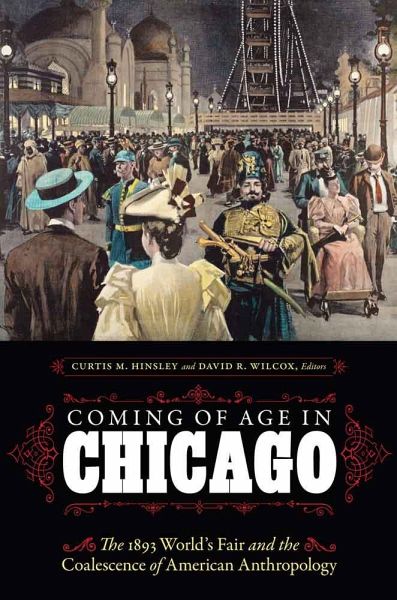
Coming of Age in Chicago explores a watershed moment in American anthropology, when an unprecedented number of historians and anthropologists of all subfields gathered on the 1893 Chicago Columbian Exposition fairgrounds, drawn together by the fair’s focus on Indigenous peoples. Participants included people making a living with their research, sporadic backyard diggers, religiously motivated researchers, and a small group who sought a “scientific” understanding of the lifeways of Indigenous peoples. At the fair they set the foundation for anthropological inquiry and redefined the field. At the…mehr
Coming of Age in Chicago explores a watershed moment in American anthropology, when an unprecedented number of historians and anthropologists of all subfields gathered on the 1893 Chicago Columbian Exposition fairgrounds, drawn together by the fair’s focus on Indigenous peoples. Participants included people making a living with their research, sporadic backyard diggers, religiously motivated researchers, and a small group who sought a “scientific” understanding of the lifeways of Indigenous peoples. At the fair they set the foundation for anthropological inquiry and redefined the field. At the same time, the American public became aware, through their own experiences at the fair, of a global humanity, with reactions that ranged from revulsion to curiosity, tolerance, and kindness. Curtis M. Hinsley and David R. Wilcox combine primary historical texts, modern essays, and rarely seen images from the period to create a volume essential for understanding the significance of this event. These texts explore the networking of thinkers, planners, dreamers, schemers, and scholars who interacted in a variety of venues to lay the groundwork for museums, academic departments, and expeditions. These new relationships helped shape the profession and the trajectory of the discipline, and they still resonate more than a century later.
Curtis M. Hinsley is Regents’ Professor Emeritus of History and Comparative Cultural Studies at Northern Arizona University. He is the coauthor (with David R. Wilcox) of The Lost Itinerary of Frank Hamilton Cushing and The Southwest in the American Imagination: The Writings of Sylvester Baxter, 1881–1889. David R. Wilcox (1944–2022) was the former head of the anthropology department at the Museum of Northern Arizona and was an adjunct professor at Northern Arizona University. He is the coeditor of Zuni Origins: Toward a New Synthesis of Southwestern Archaeology.
Inhaltsangabe
List of Illustrations List of Tables Introduction: The Chicago Fair and American Anthropology in 1893 Curtis M. Hinsley and David R. Wilcox Abbreviations Essay 1. Anthropology as Education and Entertainment: Frederic Ward Putnam at the World’s Fair Curtis M. Hinsley Document A. Franz Boas, “Ethnology at the Exposition” (1893) Document B. Frederic Ward Putnam, “The Columbus Memorial Museum: Address to the Commercial Club of Chicago” (1891) Document C. “Man and His Works: Ethnological Exhibit at the Fair” (1893)
Essay 2. Ambiguous Legacy: Daniel Garrison Brinton at the International Congress of Anthropology Curtis M. Hinsley Appendix: Analysis of Registered Members of the International Congress of Anthropology, World’s Columbian Exposition, 1893 David R. Wilcox Document D. William Henry Holmes, “The World’s Fair Congress of Anthropology” (1893) Essay 3. Anthropology in a Changing America: Interpreting the Chicago “Triumph” of Frank Hamilton Cushing David R. Wilcox Document E. Excerpts from the Diary of Frank Hamilton Cushing at the World’s Fair (June 16–September 12, 1893) Document F. Monthly Report of Mr. Frank Hamilton Cushing (September 1893)
Document G. “The Pueblos at Home” (September 1894) A Visual Interlude: Popular Images of Anthropology and Its Subjects at the Fair Curtis M. Hinsley Essay 4. Refracting Images: Anthropological Display at the Chicago World’s Fair, 1893 Ira Jacknis Essay 5. Relic Hunters in the White City: Artifacts, Authority, and Ambition at the World’s Columbian Exposition James E. Snead Document H. Cushing’s Analysis of the Hazzard Cliff Dweller Collection (1895) Document I. Warren King Moorehead, “The Ancient Man: The Anthropological Exhibit at the World’s Fair” (June 22, 1893) Essay 6. Patrons, Popularizers, and Professionals: The Institutional Setting of Late Nineteenth-Century Anthropology in Chicago Donald McVicker Document J. “Heir of the Big Fair: Field Columbian Museum Opened” (1894)
Essay 7. Going National: American Anthropology Successfully Redefines Itself as an Accepted Academic Domain David R. Wilcox Appendix: Comparison of Primary Contributors to the American Anthropologist , 1888–1925 David R. Wilcox Document K. Daniel Garrison Brinton, “The Aims of Anthropology” (1895) Document L. Franz Boas, “The Limitations of the Comparative Method of Anthropology” (1896) Afterword: The Ironies of the Fair, the Uncertainties of Anthropology Curtis M. Hinsley Acknowledgments Bibliography Contributors Index
List of Illustrations List of Tables Introduction: The Chicago Fair and American Anthropology in 1893 Curtis M. Hinsley and David R. Wilcox Abbreviations Essay 1. Anthropology as Education and Entertainment: Frederic Ward Putnam at the World’s Fair Curtis M. Hinsley Document A. Franz Boas, “Ethnology at the Exposition” (1893) Document B. Frederic Ward Putnam, “The Columbus Memorial Museum: Address to the Commercial Club of Chicago” (1891) Document C. “Man and His Works: Ethnological Exhibit at the Fair” (1893)
Essay 2. Ambiguous Legacy: Daniel Garrison Brinton at the International Congress of Anthropology Curtis M. Hinsley Appendix: Analysis of Registered Members of the International Congress of Anthropology, World’s Columbian Exposition, 1893 David R. Wilcox Document D. William Henry Holmes, “The World’s Fair Congress of Anthropology” (1893) Essay 3. Anthropology in a Changing America: Interpreting the Chicago “Triumph” of Frank Hamilton Cushing David R. Wilcox Document E. Excerpts from the Diary of Frank Hamilton Cushing at the World’s Fair (June 16–September 12, 1893) Document F. Monthly Report of Mr. Frank Hamilton Cushing (September 1893)
Document G. “The Pueblos at Home” (September 1894) A Visual Interlude: Popular Images of Anthropology and Its Subjects at the Fair Curtis M. Hinsley Essay 4. Refracting Images: Anthropological Display at the Chicago World’s Fair, 1893 Ira Jacknis Essay 5. Relic Hunters in the White City: Artifacts, Authority, and Ambition at the World’s Columbian Exposition James E. Snead Document H. Cushing’s Analysis of the Hazzard Cliff Dweller Collection (1895) Document I. Warren King Moorehead, “The Ancient Man: The Anthropological Exhibit at the World’s Fair” (June 22, 1893) Essay 6. Patrons, Popularizers, and Professionals: The Institutional Setting of Late Nineteenth-Century Anthropology in Chicago Donald McVicker Document J. “Heir of the Big Fair: Field Columbian Museum Opened” (1894)
Essay 7. Going National: American Anthropology Successfully Redefines Itself as an Accepted Academic Domain David R. Wilcox Appendix: Comparison of Primary Contributors to the American Anthropologist , 1888–1925 David R. Wilcox Document K. Daniel Garrison Brinton, “The Aims of Anthropology” (1895) Document L. Franz Boas, “The Limitations of the Comparative Method of Anthropology” (1896) Afterword: The Ironies of the Fair, the Uncertainties of Anthropology Curtis M. Hinsley Acknowledgments Bibliography Contributors Index
Es gelten unsere Allgemeinen Geschäftsbedingungen: www.buecher.de/agb
Impressum
www.buecher.de ist ein Internetauftritt der buecher.de internetstores GmbH
Geschäftsführung: Monica Sawhney | Roland Kölbl | Günter Hilger
Sitz der Gesellschaft: Batheyer Straße 115 - 117, 58099 Hagen
Postanschrift: Bürgermeister-Wegele-Str. 12, 86167 Augsburg
Amtsgericht Hagen HRB 13257
Steuernummer: 321/5800/1497
USt-IdNr: DE450055826