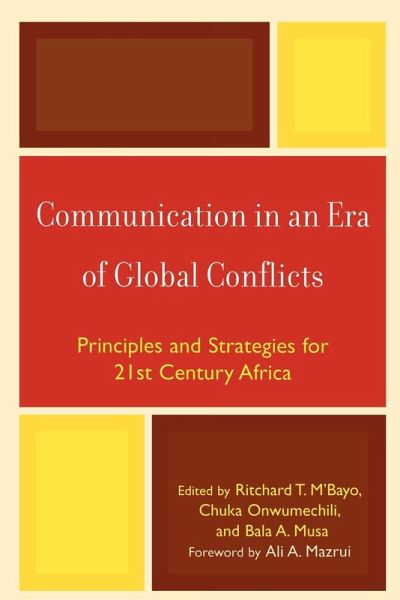
Communication in an Era of Global Conflicts
Principles and Strategies for 21st Century Africa
Herausgeber: M'Bayo, Ritchard; Musa, Bala; Onwumechili, Chuka
Communication in an Era of Global Conflicts
Principles and Strategies for 21st Century Africa
Herausgeber: M'Bayo, Ritchard; Musa, Bala; Onwumechili, Chuka
- Broschiertes Buch
- Merkliste
- Auf die Merkliste
- Bewerten Bewerten
- Teilen
- Produkt teilen
- Produkterinnerung
- Produkterinnerung
Communication in an Era of Global Conflicts assesses trends and issues in communication and their implications for conflicts in the African context.
Andere Kunden interessierten sich auch für
John L. WriglesworthLibertarian Conflicts in Social Choice42,99 €
Robert BabeCanadian Communication Thought54,99 €
David BrooksHow to Know a Person23,99 €
Franca IacovettaGender Conflicts30,99 €
Edmund Ronald LeachCulture and Communication27,99 €
Public Opinion and the Communication of Consent54,99 €
Scott LashIntensive Culture61,99 €-
-
-
Communication in an Era of Global Conflicts assesses trends and issues in communication and their implications for conflicts in the African context.
Produktdetails
- Produktdetails
- Verlag: University Press of America
- Seitenzahl: 410
- Erscheinungstermin: 22. Dezember 2008
- Englisch
- Abmessung: 229mm x 152mm x 24mm
- Gewicht: 663g
- ISBN-13: 9780761840947
- ISBN-10: 076184094X
- Artikelnr.: 25693278
- Herstellerkennzeichnung
- Libri GmbH
- Europaallee 1
- 36244 Bad Hersfeld
- gpsr@libri.de
- Verlag: University Press of America
- Seitenzahl: 410
- Erscheinungstermin: 22. Dezember 2008
- Englisch
- Abmessung: 229mm x 152mm x 24mm
- Gewicht: 663g
- ISBN-13: 9780761840947
- ISBN-10: 076184094X
- Artikelnr.: 25693278
- Herstellerkennzeichnung
- Libri GmbH
- Europaallee 1
- 36244 Bad Hersfeld
- gpsr@libri.de
Dr. Ritchard Tamba M'Bayo(Ph.D.) is Professor of Communication and Multimedia Studies at the American University of Nigeria. Dr. Chuka Onwumechili(Ph.D.) is Professor of Communication and Media Studies at Bowie State University. Mr. Bala A. Musa(Ph.D.) is Associate Professor of Communication Studies at Azusa Pacific University.
Part 1 PART I: THEORIES OF CONFLICT
Chapter 2 1.Attribution, Psychodynamics and Communication Behaviors of
Conflict Actors
Chapter 3 2.Media Messages, Sins of Distortion and Signs of Wisdom
Chapter 4 3.Agenda-Setting, African Media and Conflict
Chapter 5 4.Framing Theory and Conflict Transformation in Rwanda and Bosnia
Part 6 PART II: SYSTEMS PERSPECTIVES ON CONFLICT
Chapter 7 5. Professional and Organizational Influences on Conflict
Reporting
Chapter 8 6.Media Messages, the Academy and the Internet
Chapter 9 7.Global Media and Changing News Practices
Chapter 10 8.Conflict, Globalization, and the New World Information and
Communication Order
Chapter 11 9.Threat Perceptions and Security in the West African Sub-region
Chapter 12 10.Virtual Communication and the Role of Diasporic Communities
in Conflict Mediation
Part 13 PART III: CONFLICT STRATEGIES
Chapter 14 11.Harnessing the Power of African Traditional and Modern Media
Systems to Avert Conflicts in Africa
Chapter 15 12.Conflict Resolution in African Folklore
Chapter 16 13. The Press as Tools and Casualties of Political Conflicts in
Nigeria
Chapter 17 14.Mass Media and the Establishment of Peace as Path
toSustainable Development in Africa
Part 18 PART IV: AFRICA IN AN ERA OF GLOBAL CONFLICTS
Chapter 19 15.Mass Media and Ethnic Conflict in West Africa
Chapter 20 16.Social Conflict, Communication and Youth in Tanzania
Chapter 21 17.Negotiating the Thorny Road of Conflict as Nigeria Opens its
Communications Market to Private interests
Chapter 22 18. Global Media and the Replication of international Conflicts
in Northern Nigeria
Chapter 23 19.Conflict and Ferment in International Communication
Chapter 24 20.Multinational Corporations, Community Relations and the Niger
Delta Conflict
Chapter 25 21. Poverty, Professionalism and the Challenges of
Democratization among Conflicted Print Media Journalists in Nigeria
Chapter 26 22. Language of Conflict and the Coverage of Global Terrorism in
Kenyan Mass Media 1998-2005
Chapter 27 23.Managing Conflict in Nigeria through Television
Chapter 2 1.Attribution, Psychodynamics and Communication Behaviors of
Conflict Actors
Chapter 3 2.Media Messages, Sins of Distortion and Signs of Wisdom
Chapter 4 3.Agenda-Setting, African Media and Conflict
Chapter 5 4.Framing Theory and Conflict Transformation in Rwanda and Bosnia
Part 6 PART II: SYSTEMS PERSPECTIVES ON CONFLICT
Chapter 7 5. Professional and Organizational Influences on Conflict
Reporting
Chapter 8 6.Media Messages, the Academy and the Internet
Chapter 9 7.Global Media and Changing News Practices
Chapter 10 8.Conflict, Globalization, and the New World Information and
Communication Order
Chapter 11 9.Threat Perceptions and Security in the West African Sub-region
Chapter 12 10.Virtual Communication and the Role of Diasporic Communities
in Conflict Mediation
Part 13 PART III: CONFLICT STRATEGIES
Chapter 14 11.Harnessing the Power of African Traditional and Modern Media
Systems to Avert Conflicts in Africa
Chapter 15 12.Conflict Resolution in African Folklore
Chapter 16 13. The Press as Tools and Casualties of Political Conflicts in
Nigeria
Chapter 17 14.Mass Media and the Establishment of Peace as Path
toSustainable Development in Africa
Part 18 PART IV: AFRICA IN AN ERA OF GLOBAL CONFLICTS
Chapter 19 15.Mass Media and Ethnic Conflict in West Africa
Chapter 20 16.Social Conflict, Communication and Youth in Tanzania
Chapter 21 17.Negotiating the Thorny Road of Conflict as Nigeria Opens its
Communications Market to Private interests
Chapter 22 18. Global Media and the Replication of international Conflicts
in Northern Nigeria
Chapter 23 19.Conflict and Ferment in International Communication
Chapter 24 20.Multinational Corporations, Community Relations and the Niger
Delta Conflict
Chapter 25 21. Poverty, Professionalism and the Challenges of
Democratization among Conflicted Print Media Journalists in Nigeria
Chapter 26 22. Language of Conflict and the Coverage of Global Terrorism in
Kenyan Mass Media 1998-2005
Chapter 27 23.Managing Conflict in Nigeria through Television
Part 1 PART I: THEORIES OF CONFLICT
Chapter 2 1.Attribution, Psychodynamics and Communication Behaviors of
Conflict Actors
Chapter 3 2.Media Messages, Sins of Distortion and Signs of Wisdom
Chapter 4 3.Agenda-Setting, African Media and Conflict
Chapter 5 4.Framing Theory and Conflict Transformation in Rwanda and Bosnia
Part 6 PART II: SYSTEMS PERSPECTIVES ON CONFLICT
Chapter 7 5. Professional and Organizational Influences on Conflict
Reporting
Chapter 8 6.Media Messages, the Academy and the Internet
Chapter 9 7.Global Media and Changing News Practices
Chapter 10 8.Conflict, Globalization, and the New World Information and
Communication Order
Chapter 11 9.Threat Perceptions and Security in the West African Sub-region
Chapter 12 10.Virtual Communication and the Role of Diasporic Communities
in Conflict Mediation
Part 13 PART III: CONFLICT STRATEGIES
Chapter 14 11.Harnessing the Power of African Traditional and Modern Media
Systems to Avert Conflicts in Africa
Chapter 15 12.Conflict Resolution in African Folklore
Chapter 16 13. The Press as Tools and Casualties of Political Conflicts in
Nigeria
Chapter 17 14.Mass Media and the Establishment of Peace as Path
toSustainable Development in Africa
Part 18 PART IV: AFRICA IN AN ERA OF GLOBAL CONFLICTS
Chapter 19 15.Mass Media and Ethnic Conflict in West Africa
Chapter 20 16.Social Conflict, Communication and Youth in Tanzania
Chapter 21 17.Negotiating the Thorny Road of Conflict as Nigeria Opens its
Communications Market to Private interests
Chapter 22 18. Global Media and the Replication of international Conflicts
in Northern Nigeria
Chapter 23 19.Conflict and Ferment in International Communication
Chapter 24 20.Multinational Corporations, Community Relations and the Niger
Delta Conflict
Chapter 25 21. Poverty, Professionalism and the Challenges of
Democratization among Conflicted Print Media Journalists in Nigeria
Chapter 26 22. Language of Conflict and the Coverage of Global Terrorism in
Kenyan Mass Media 1998-2005
Chapter 27 23.Managing Conflict in Nigeria through Television
Chapter 2 1.Attribution, Psychodynamics and Communication Behaviors of
Conflict Actors
Chapter 3 2.Media Messages, Sins of Distortion and Signs of Wisdom
Chapter 4 3.Agenda-Setting, African Media and Conflict
Chapter 5 4.Framing Theory and Conflict Transformation in Rwanda and Bosnia
Part 6 PART II: SYSTEMS PERSPECTIVES ON CONFLICT
Chapter 7 5. Professional and Organizational Influences on Conflict
Reporting
Chapter 8 6.Media Messages, the Academy and the Internet
Chapter 9 7.Global Media and Changing News Practices
Chapter 10 8.Conflict, Globalization, and the New World Information and
Communication Order
Chapter 11 9.Threat Perceptions and Security in the West African Sub-region
Chapter 12 10.Virtual Communication and the Role of Diasporic Communities
in Conflict Mediation
Part 13 PART III: CONFLICT STRATEGIES
Chapter 14 11.Harnessing the Power of African Traditional and Modern Media
Systems to Avert Conflicts in Africa
Chapter 15 12.Conflict Resolution in African Folklore
Chapter 16 13. The Press as Tools and Casualties of Political Conflicts in
Nigeria
Chapter 17 14.Mass Media and the Establishment of Peace as Path
toSustainable Development in Africa
Part 18 PART IV: AFRICA IN AN ERA OF GLOBAL CONFLICTS
Chapter 19 15.Mass Media and Ethnic Conflict in West Africa
Chapter 20 16.Social Conflict, Communication and Youth in Tanzania
Chapter 21 17.Negotiating the Thorny Road of Conflict as Nigeria Opens its
Communications Market to Private interests
Chapter 22 18. Global Media and the Replication of international Conflicts
in Northern Nigeria
Chapter 23 19.Conflict and Ferment in International Communication
Chapter 24 20.Multinational Corporations, Community Relations and the Niger
Delta Conflict
Chapter 25 21. Poverty, Professionalism and the Challenges of
Democratization among Conflicted Print Media Journalists in Nigeria
Chapter 26 22. Language of Conflict and the Coverage of Global Terrorism in
Kenyan Mass Media 1998-2005
Chapter 27 23.Managing Conflict in Nigeria through Television