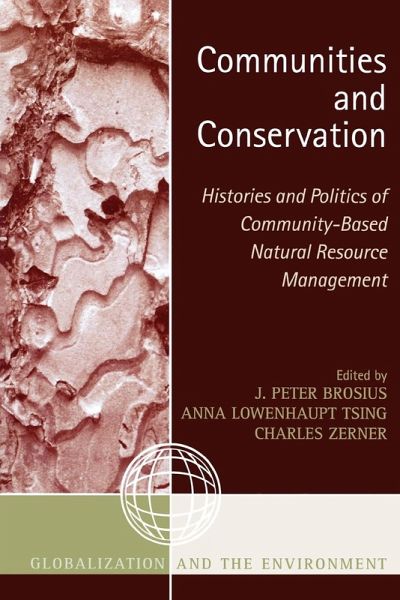
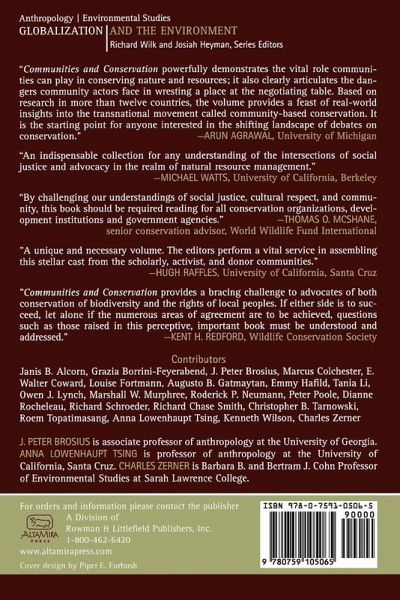
A group of distinguished environmentalists analyze and advocate for community-based natural resource management (CBNRM). They offer an overview of this transnational movement and its links between environmental management and social justice agendas. This book will be valuable to instructors, practitioners, and activists in environmental anthropology, justice, and policy, in cultural geography, political ecology, indigenous rights, conservation biology, and community-based cultural resource management.
A group of distinguished environmentalists analyze and advocate for community-based natural resource management (CBNRM). They offer an overview of this transnational movement and its links between environmental management and social justice agendas. This book will be valuable to instructors, practitioners, and activists in environmental anthropology, justice, and policy, in cultural geography, political ecology, indigenous rights, conservation biology, and community-based cultural resource management.
J. Peter Brosius is associate professor of anthropology at the University of Georgia. Anna Lowenhaupt Tsing is professor of anthropology at the University of California, Santa Cruz. Charles Zerner is the Barbara B. and Bertram J. Cohn Professor of Environmental Studies at Sarah Lawrence College and co-director of the Environmental Studies/Science, Technology and Society Colloquium Series.
Inhaltsangabe
1 Introduction 2 Part 1: Mobilizations and Models 3 A. Institutional Mandates 4 Chapter 1: Dances Around the Fire: Conservation Organizations and Community-Based Natural Resource Management 5 Chapter 2: Participatory Democracy in Natural Resource Management: A "Columbus' Egg"? 6 Chapter 3: Building Models of Community-Based Natural Resource Management: A Personal Narrative 7 B. Defining Community in National and Transnational Contexts 8 Chapter 4: Congruent Objectives, Competing Interests and Strategic Compromise: Concept and Process in the Evolution of Zimbabwe's CAMPFIRE Programme 9 Chapter 5: Of Diffusion and Context: The Bubbling Up of Community-BasedResource Management in Mozambique 10 Chapter 6: Model, Panacea, or Exception?: Contextualizing CAMPFIRE and Related Programs in Africa 11 Chapter 7: What We Need is a Community Bambi: The Perils and Possibilities of Powerful Symbols 12 C. Empowerment or Coercion? 13 Chapter 8: Community, Forestry and Conditionality in the Gambia 14 Chapter 9: Can David and Goliath Have a Happy Marriage: The Machiguenga People and the Camisea Gas Project in the Peruvian Amazon 15 Chapter 10: Social Movements, Community-Based Natural Resource Management, and the Struggle for Democracy: Experiences from Indonesia 16 Part 2: Stealing the Master's Tools: Mapping and Law in Community-Based Natural Resource Management 17 A. Mapping against Power 18 Chapter 11: Maps, Power and the Defense of Territory: The Upper Mazaruni Land Claim in Guyana 19 Chapter 12: The Ye'kuana Mapping Project 20 Chapter 13: Maps as Power-Tools: Locating "Communities" in Space or Situating People and Ecologies in Place? 21 Chapter 14: Mapping as Tool for Community Organizing Against Power: A Moluccas Experience 22 B. Legal Strategies for the Disenfranchised 23 Chapter 15: Concepts and Strategies for Promoting Legal Recognition of Community-Based Property Rights: Insights from the Philippines and Other Nations 24 Chapter 16: Engaging Simplifications: Community-Based Natural Resource Management, Market Processes, and State Agendas in Upland Southeast Asia 25 Chapter 17: Advocacy as Translation: Notes on the Philippine Experience 26 INDEX 27 ABOUT THE AUTHORS
1 Introduction 2 Part 1: Mobilizations and Models 3 A. Institutional Mandates 4 Chapter 1: Dances Around the Fire: Conservation Organizations and Community-Based Natural Resource Management 5 Chapter 2: Participatory Democracy in Natural Resource Management: A "Columbus' Egg"? 6 Chapter 3: Building Models of Community-Based Natural Resource Management: A Personal Narrative 7 B. Defining Community in National and Transnational Contexts 8 Chapter 4: Congruent Objectives, Competing Interests and Strategic Compromise: Concept and Process in the Evolution of Zimbabwe's CAMPFIRE Programme 9 Chapter 5: Of Diffusion and Context: The Bubbling Up of Community-BasedResource Management in Mozambique 10 Chapter 6: Model, Panacea, or Exception?: Contextualizing CAMPFIRE and Related Programs in Africa 11 Chapter 7: What We Need is a Community Bambi: The Perils and Possibilities of Powerful Symbols 12 C. Empowerment or Coercion? 13 Chapter 8: Community, Forestry and Conditionality in the Gambia 14 Chapter 9: Can David and Goliath Have a Happy Marriage: The Machiguenga People and the Camisea Gas Project in the Peruvian Amazon 15 Chapter 10: Social Movements, Community-Based Natural Resource Management, and the Struggle for Democracy: Experiences from Indonesia 16 Part 2: Stealing the Master's Tools: Mapping and Law in Community-Based Natural Resource Management 17 A. Mapping against Power 18 Chapter 11: Maps, Power and the Defense of Territory: The Upper Mazaruni Land Claim in Guyana 19 Chapter 12: The Ye'kuana Mapping Project 20 Chapter 13: Maps as Power-Tools: Locating "Communities" in Space or Situating People and Ecologies in Place? 21 Chapter 14: Mapping as Tool for Community Organizing Against Power: A Moluccas Experience 22 B. Legal Strategies for the Disenfranchised 23 Chapter 15: Concepts and Strategies for Promoting Legal Recognition of Community-Based Property Rights: Insights from the Philippines and Other Nations 24 Chapter 16: Engaging Simplifications: Community-Based Natural Resource Management, Market Processes, and State Agendas in Upland Southeast Asia 25 Chapter 17: Advocacy as Translation: Notes on the Philippine Experience 26 INDEX 27 ABOUT THE AUTHORS
Es gelten unsere Allgemeinen Geschäftsbedingungen: www.buecher.de/agb
Impressum
www.buecher.de ist ein Internetauftritt der buecher.de internetstores GmbH
Geschäftsführung: Monica Sawhney | Roland Kölbl | Günter Hilger
Sitz der Gesellschaft: Batheyer Straße 115 - 117, 58099 Hagen
Postanschrift: Bürgermeister-Wegele-Str. 12, 86167 Augsburg
Amtsgericht Hagen HRB 13257
Steuernummer: 321/5800/1497
USt-IdNr: DE450055826