- Broschiertes Buch
- Merkliste
- Auf die Merkliste
- Bewerten Bewerten
- Teilen
- Produkt teilen
- Produkterinnerung
- Produkterinnerung
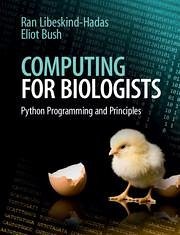
Shows life science students how to use Python programming in the context of biological applications.
Andere Kunden interessierten sich auch für
William BatesonProblems of Genetics44,99 €
Wilhelm JohannsenElemente der exakten Erblichkeitslehre59,99 €
R. RappaportCytokinesis in Animal Cells65,99 €
RNA Interference Technology65,99 €
Csba WeissGenetic Variation and Human Disease54,99 €
The Production of New Potato Varieties59,99 €
Pierre BaldiDNA Microarrays and Gene Expression47,99 €-
-
-
Shows life science students how to use Python programming in the context of biological applications.
Produktdetails
- Produktdetails
- Verlag: Cambridge University Press
- Seitenzahl: 218
- Erscheinungstermin: 22. September 2014
- Englisch
- Abmessung: 246mm x 187mm x 15mm
- Gewicht: 500g
- ISBN-13: 9781107642188
- ISBN-10: 1107642183
- Artikelnr.: 40911287
- Herstellerkennzeichnung
- Libri GmbH
- Europaallee 1
- 36244 Bad Hersfeld
- gpsr@libri.de
- Verlag: Cambridge University Press
- Seitenzahl: 218
- Erscheinungstermin: 22. September 2014
- Englisch
- Abmessung: 246mm x 187mm x 15mm
- Gewicht: 500g
- ISBN-13: 9781107642188
- ISBN-10: 1107642183
- Artikelnr.: 40911287
- Herstellerkennzeichnung
- Libri GmbH
- Europaallee 1
- 36244 Bad Hersfeld
- gpsr@libri.de
Ran Libeskind-Hadas is the R. Michael Shanahan Professor of Computer Science at Harvey Mudd College, USA, working in the areas of algorithms and computational biology. He is a recipient of both the Iris and Howard Critchell Professorship and the Joseph B. Platt Professorship for teaching, as well as the Distinguished Alumni Educator Award from the University of Illinois, Urbana-Champaign Department of Computer Science.
Preface
Meet python
Part I. Python versus Pathogens: 1. Computing GC content
2. Pathogenicity islands
3. Open reading frames and genes
4. Finding genes (at last!)
Part II. Sequence Alignment and Sex Determination: 5. Recursion
6. The use-it-or-lose-it principle
7. Dictionaries, memoization, and speed
8. Sequence alignments and the evolution of sex chromosomes
Part III. Phylogenetic Reconstruction and the Origin of Modern Humans: 9. Representing and working with trees
10. Drawing trees
11. The UPGMA algorithm
Part IV. Additional Topics: 12. RNA secondary structure prediction
13. Gene regulatory networks and the maximum likelihood method
14. Birds, bees, and genetic algorithms
Where to go from here
Index.

Meet python
Part I. Python versus Pathogens: 1. Computing GC content
2. Pathogenicity islands
3. Open reading frames and genes
4. Finding genes (at last!)
Part II. Sequence Alignment and Sex Determination: 5. Recursion
6. The use-it-or-lose-it principle
7. Dictionaries, memoization, and speed
8. Sequence alignments and the evolution of sex chromosomes
Part III. Phylogenetic Reconstruction and the Origin of Modern Humans: 9. Representing and working with trees
10. Drawing trees
11. The UPGMA algorithm
Part IV. Additional Topics: 12. RNA secondary structure prediction
13. Gene regulatory networks and the maximum likelihood method
14. Birds, bees, and genetic algorithms
Where to go from here
Index.
Preface
Meet python
Part I. Python versus Pathogens: 1. Computing GC content
2. Pathogenicity islands
3. Open reading frames and genes
4. Finding genes (at last!)
Part II. Sequence Alignment and Sex Determination: 5. Recursion
6. The use-it-or-lose-it principle
7. Dictionaries, memoization, and speed
8. Sequence alignments and the evolution of sex chromosomes
Part III. Phylogenetic Reconstruction and the Origin of Modern Humans: 9. Representing and working with trees
10. Drawing trees
11. The UPGMA algorithm
Part IV. Additional Topics: 12. RNA secondary structure prediction
13. Gene regulatory networks and the maximum likelihood method
14. Birds, bees, and genetic algorithms
Where to go from here
Index.
Meet python
Part I. Python versus Pathogens: 1. Computing GC content
2. Pathogenicity islands
3. Open reading frames and genes
4. Finding genes (at last!)
Part II. Sequence Alignment and Sex Determination: 5. Recursion
6. The use-it-or-lose-it principle
7. Dictionaries, memoization, and speed
8. Sequence alignments and the evolution of sex chromosomes
Part III. Phylogenetic Reconstruction and the Origin of Modern Humans: 9. Representing and working with trees
10. Drawing trees
11. The UPGMA algorithm
Part IV. Additional Topics: 12. RNA secondary structure prediction
13. Gene regulatory networks and the maximum likelihood method
14. Birds, bees, and genetic algorithms
Where to go from here
Index.