
Andere Kunden interessierten sich auch für
 Conflict, Negotiation and European Union Enlargement78,99 €
 Leadership and Negotiation in the European Union115,99 €
 The Enlargement of the European Union and NATO105,99 €
 Order, Conflict, and Violence116,99 €
 Land, Conflict, and Justice42,99 €
 Land, Conflict, and Justice117,99 €
 The Politics of European Union Enlargement179,99 €
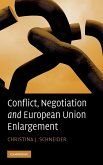
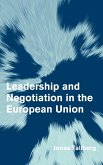

Each wave of expansion of the European Union has led to political tensions and conflict. Existing members fear their membership privileges will diminish and candidates are loath to concede the expected benefits of membership. Despite these conflicts, enlargement has always succeeded - so why does the EU continue to admit new states even though current members might lose from their accession? Combining political economy logic with statistical and case study analyses, Christina J. Schneider argues that the dominant theories of EU enlargement ignore how EU members and applicant states negotiate the distribution of enlargement benefits and costs. She explains that EU enlargement happens despite distributional conflicts if the overall gains of enlargement are redistributed from the relative winners among existing members and applicants to the relative losers. If the overall gains from enlargement are sufficiently great, a redistribution of these gains will compensate losers, making enlargement attractive for all states.