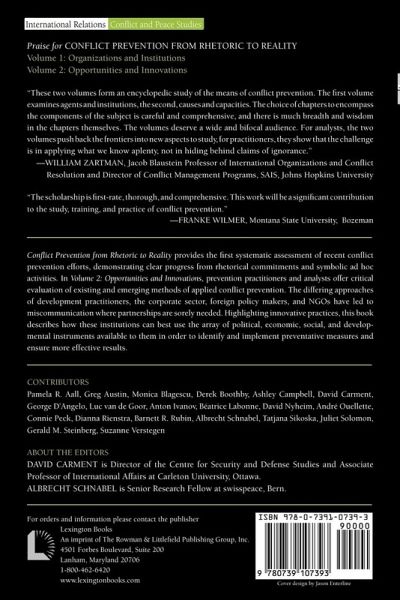
Offers a critical evaluation of existing and emerging approaches to applied conflict prevention that involve nontraditional actors ranging from the corporate sector and NGOs to regional and multilateral economic and political organizations. The volume suggests best practices for individuals within these organizations to use the array of political, economic, social and developmental instruments available to them.
Offers a critical evaluation of existing and emerging approaches to applied conflict prevention that involve nontraditional actors ranging from the corporate sector and NGOs to regional and multilateral economic and political organizations. The volume suggests best practices for individuals within these organizations to use the array of political, economic, social and developmental instruments available to them.
Albrecht Schnabel is Senior Research Fellow at swisspeace, Bern. David Carment is Director of the Centre for Security and Defense Studies and Associate Professor of International Affairs at Carleton University, Ottawa.
Inhaltsangabe
Part 1 Introduction Chapter 2 Into the Mainstream: Applied Conflict Prevention Part 3 Analytical Requirements Chapter 3 Natural Resource Endowment and Conflicts in Developing Countries: From Causes to Possible Solutions Chapter 4 Sources of Violent Conflict Chapter 4 Introducing Gender in Conflict and Conflict Prevention: Conceptual and Policy Implications Chapter 7 Anticipating State Failure Chapter 7 "Mainstreaming" Conflict Prevention Policies of Third-party Actors: Building an In-house Capacity for Preventive Action Chapter 8 Generating the Means to an End: Political Will and Integrated Responses to Early Warning Chapter 8 Human Security and Conflict Prevention Part 9 Response Strategies and Capacity Building Chapter 9 Non-governmental Organizations and Conflict Prevention: Roles, Capabilities, Limitations Chapter 11 Training as a Means to Build Capacity in Conflict Prevention: The UNITAR Approach Chapter 12 Building Capacity within the United Nations: Cooperation of the Prevention of Violent Conflicts Chapter 13 Conflict Prevention through Peace Education: A Debate Part 16 The Frontiers of Applied Conflict Prevention Chapter 17 The Centrality of Confidence Building Measures: Lessons from the Middle East Chapter 18 Preventing Terrorism? Direct Measures First-Intrusive, Nomrative, and Personal Chapter 19 Conflict Prevention and Financial Capacity Building Chapter 20 Assessing the Corporate Sector's Role in Conflict Prevention Chapter 21 The Private Sector and Conflict Prevention Mainstreaming
Part 1 Introduction Chapter 2 Into the Mainstream: Applied Conflict Prevention Part 3 Analytical Requirements Chapter 3 Natural Resource Endowment and Conflicts in Developing Countries: From Causes to Possible Solutions Chapter 4 Sources of Violent Conflict Chapter 4 Introducing Gender in Conflict and Conflict Prevention: Conceptual and Policy Implications Chapter 7 Anticipating State Failure Chapter 7 "Mainstreaming" Conflict Prevention Policies of Third-party Actors: Building an In-house Capacity for Preventive Action Chapter 8 Generating the Means to an End: Political Will and Integrated Responses to Early Warning Chapter 8 Human Security and Conflict Prevention Part 9 Response Strategies and Capacity Building Chapter 9 Non-governmental Organizations and Conflict Prevention: Roles, Capabilities, Limitations Chapter 11 Training as a Means to Build Capacity in Conflict Prevention: The UNITAR Approach Chapter 12 Building Capacity within the United Nations: Cooperation of the Prevention of Violent Conflicts Chapter 13 Conflict Prevention through Peace Education: A Debate Part 16 The Frontiers of Applied Conflict Prevention Chapter 17 The Centrality of Confidence Building Measures: Lessons from the Middle East Chapter 18 Preventing Terrorism? Direct Measures First-Intrusive, Nomrative, and Personal Chapter 19 Conflict Prevention and Financial Capacity Building Chapter 20 Assessing the Corporate Sector's Role in Conflict Prevention Chapter 21 The Private Sector and Conflict Prevention Mainstreaming
Es gelten unsere Allgemeinen Geschäftsbedingungen: www.buecher.de/agb
Impressum
www.buecher.de ist ein Internetauftritt der buecher.de internetstores GmbH
Geschäftsführung: Monica Sawhney | Roland Kölbl | Günter Hilger
Sitz der Gesellschaft: Batheyer Straße 115 - 117, 58099 Hagen
Postanschrift: Bürgermeister-Wegele-Str. 12, 86167 Augsburg
Amtsgericht Hagen HRB 13257
Steuernummer: 321/5800/1497
USt-IdNr: DE450055826