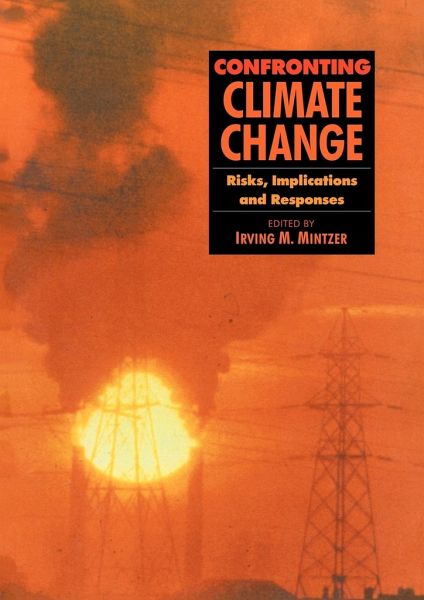
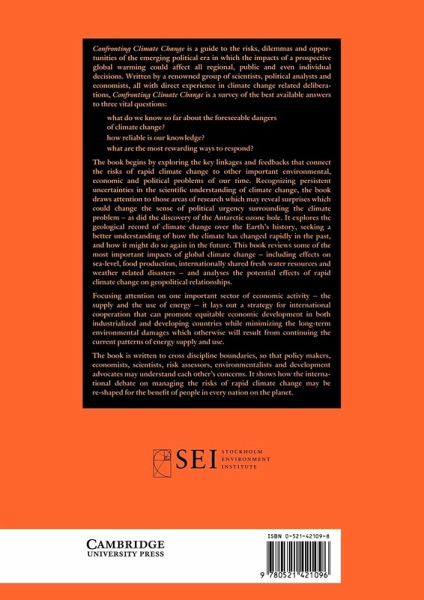
Confronting Climate Change is a guide to the risks, dilemmas and opportunities of the emerging political era in which the impacts of a prospective global warming could affect all regional, public and even individual decisions.This book reviews some of the most important impacts of global climate change--including effects on sea-level, food production, internationally shared fresh water resources and weather related disasters--and analyses the potential effects of rapid climate change on geopolitical relationships.
Confronting Climate Change is a guide to the risks, dilemmas and opportunities of the emerging political era in which the impacts of a prospective global warming could affect all regional, public and even individual decisions.This book reviews some of the most important impacts of global climate change--including effects on sea-level, food production, internationally shared fresh water resources and weather related disasters--and analyses the potential effects of rapid climate change on geopolitical relationships.
1. Living in a warming world; Part I. The Science of Climate Change: 2. Linkages between global warming, ozone depletion, acid deposition, and other aspects of global environmental change; 3. Climate sensitivity, climate feedbacks and policy implications; 4. Lessons from the ice cores: rapid climate changes during the last 160,000 years; 5. Changes in climates of the past: lessons for the future; 6. Indices and indicators of climate change: issues of detection, validation and climate sensitivity; Part II. Impacts of Climate Change: 7. Future sea level rise: environmental and socio-political considerations; 8. Effects of climate change on food production; 9. Effects of climate change on shared fresh water resources; 10. Effects of climate change on weather-related disasters; 11. The effect of changing climate on population; Part III. Energy Use and Technology: 12. The energy predicament in perspective; 13. Electricity: technological opportunities and management challenges to achieving a low-emissions future; 14. Transportation in developing nations: managing the institutional and technological transition to a low-emissions future; Part IV. Economics and the Role of Institutions: 15. The economics of near-term reductions in greenhouse gases; 16. 'Wait and see' versus 'No regrets': comparing the costs of economic strategies; 17. International organizations in a warming world: building a global climate regime; 18. Modifying the mandate of existing institutions: NGOs; 19. Modifying the mandate of existing institutions: corporations; 20. International trade, technology transfer, and climate change; Part V. Equity Considerations and Future Negotiations: 21. Sharing the burden; 22. Climate negotiations: the North South perspective; 23. Shaping institutions to build a new partnership: lessons from the past and a vision for the future.
1. Living in a warming world; Part I. The Science of Climate Change: 2. Linkages between global warming, ozone depletion, acid deposition, and other aspects of global environmental change; 3. Climate sensitivity, climate feedbacks and policy implications; 4. Lessons from the ice cores: rapid climate changes during the last 160,000 years; 5. Changes in climates of the past: lessons for the future; 6. Indices and indicators of climate change: issues of detection, validation and climate sensitivity; Part II. Impacts of Climate Change: 7. Future sea level rise: environmental and socio-political considerations; 8. Effects of climate change on food production; 9. Effects of climate change on shared fresh water resources; 10. Effects of climate change on weather-related disasters; 11. The effect of changing climate on population; Part III. Energy Use and Technology: 12. The energy predicament in perspective; 13. Electricity: technological opportunities and management challenges to achieving a low-emissions future; 14. Transportation in developing nations: managing the institutional and technological transition to a low-emissions future; Part IV. Economics and the Role of Institutions: 15. The economics of near-term reductions in greenhouse gases; 16. 'Wait and see' versus 'No regrets': comparing the costs of economic strategies; 17. International organizations in a warming world: building a global climate regime; 18. Modifying the mandate of existing institutions: NGOs; 19. Modifying the mandate of existing institutions: corporations; 20. International trade, technology transfer, and climate change; Part V. Equity Considerations and Future Negotiations: 21. Sharing the burden; 22. Climate negotiations: the North South perspective; 23. Shaping institutions to build a new partnership: lessons from the past and a vision for the future.
Es gelten unsere Allgemeinen Geschäftsbedingungen: www.buecher.de/agb
Impressum
www.buecher.de ist ein Internetauftritt der buecher.de internetstores GmbH
Geschäftsführung: Monica Sawhney | Roland Kölbl | Günter Hilger
Sitz der Gesellschaft: Batheyer Straße 115 - 117, 58099 Hagen
Postanschrift: Bürgermeister-Wegele-Str. 12, 86167 Augsburg
Amtsgericht Hagen HRB 13257
Steuernummer: 321/5800/1497
USt-IdNr: DE450055826