
Andere Kunden interessierten sich auch für
 Last Waltz of the Law of Nations119,99 €
 Security Sector Reform in Constitutional Transitions115,99 €
 Purse and the Sword173,99 €
 Priests of the Law119,99 €
 Notes Of Constitutional Decisions37,99 €
 Development of Transnational Commercial Law160,99 €
 Utility, Publicity, and Law124,99 €

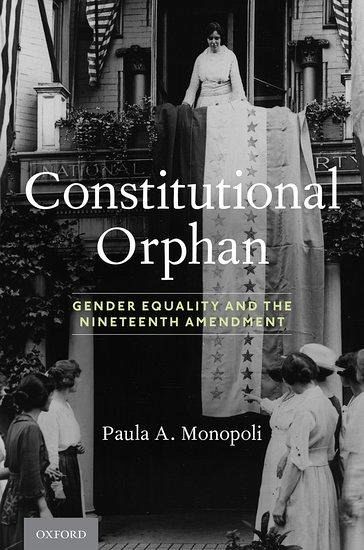
An account of the ramifications of the passage of the Nineteenth Amendment and the divisions it created in the courts and Congress, and in the women's movement itself. Constitutional Orphan explores the role of former suffragists in the constitutional development of the Nineteenth Amendment, during the decade following its ratification in 1920. It examines the pivot to new missions, immediately after ratification, by two national suffrage organizations, the National Woman's Party and the National American Woman Suffrage Association. The NWP turned from suffrage to a federal equal rights amendment. NAWSA became the National League of Women Voters, and turned to voter education and social welfare legislation. The book then connects that pivot by both groups, to the emergence of a thin conception of the Nineteenth Amendment, as a matter of constitutional interpretation. It surfaces the history around the Congressional failure to enact enforcement legislation, pursuant to the Nineteenth, and connects that with the NWP's perceived need for southern Congressional votes for the ERA. It also explores the choice to turn away from African American women suffragists asking for help to combat voter suppression efforts, after the November 1920 presidential election; and then evaluates the deep divisions among NWP members, some of whom were social feminists who opposed the ERA, and the NLWV, which supported the social feminists in that opposition. The book also analyzes how state courts, left without federal enforcement legislation to constrain or guide them, used strict construction to cabin the emergence of a more robust interpretation of the Nineteenth. It concludes with an examination of new legal scholarship, which suggests broader ways in which the Nineteenth could be used today to expand gender equality.