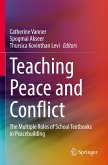
This open accessbook shows what teaching for democratic citizenship and peace can look like in classrooms in violent and less-violent contexts around the world. It features chapters written by leading scholars and practitioners based in Canada, Chile, Columbia, Cyprus, Mexico, Spain, the UK and the USA. It includes sections on navigating contested history and heritage; language teaching that bridges social identities; teaching democratic engagement with conflictual issues; and students Sharing Authority and Handling Systemic Violence. The chapters cover a wide range of topics with local and…mehr
This open accessbook shows what teaching for democratic citizenship and peace can look like in classrooms in violent and less-violent contexts around the world. It features chapters written by leading scholars and practitioners based in Canada, Chile, Columbia, Cyprus, Mexico, Spain, the UK and the USA. It includes sections on navigating contested history and heritage; language teaching that bridges social identities; teaching democratic engagement with conflictual issues; and students Sharing Authority and Handling Systemic Violence. The chapters cover a wide range of topics with local and global significance including indigenous praxis as peace building, social conflicts, transformative hope, teacher training, and student voice. Vignettes of practice accompany each chapter, grounded in careful scholarship and teaching experience.The book shows how teachers and young people can feasibly nurture and learn non-violent ways of dealing with difficult conflicts and social tensions, to become agents of democratic revitalization and peacebuilding in their own communities and beyond. The contributors also engage critically with the UN Sustainable Development Goals (SDG), SDG 4 and 16 in particular, arguing that teachers and teacher educators can make a crucial difference in meeting these goals. The ebook editions of this book are available open access under a CC BY-NC-ND 4.0 licence on bloomsburycollections.com. Open access was funded by The Weatherhead Canada Program.
Kathy Bickmore is Professor of Curriculum and Pedagogy, and Comparative and International Development Education, at OISE, University of Toronto, Canada.
Inhaltsangabe
Introduction: Making Space for Constructive Conflict-Peace Education Both Explicit and Implicit in Young People's Schooling Kathy Bickmore (University of Toronto Canada) Part I: Students and Teachers Navigating Difficult Histories and Heritage 1. Equipping Students with a Usable Past in Post-Apartheid South Africa Natasha Robinson (University of Bristol UK) 2. Living Violence Teaching Peace: Enacting Peace Education in Bogotá Colombia Michelle Bellino (University of Michigan USA) and Angela Bermúdez (Deusto University Spain) 3. Developing Pedagogies of Truth: Teacher Education and Intergenerational Dialogues Amidst Ongoing Conflict Maria Jose Bermeo and Diego Nieto (Universidad de los Andes Colombia) 4. Part Commentary Orelia Jonathan (Harvard University USA) Part II: Handling Identity and Language Justice Conflicts 5. Dealing With Conflicted Heritage: Implications for Teaching and Learning Constadina Charalambous (European University Cyprus) 6. Indigenous Maternal Praxis as Peace Building Jennifer Brant (University of Toronto Kanien'kehá:ka Mohawk Nation Canada) 7. Nurturing Democratic and Agentic Youth Engagement Amidst Social Conflicts and Violence Under Tyranny in Iran Najme Kishani Farahani (University of Toronto Canada) 8. Identity Language and Resistance in Pedagogies of Belonging for Refugee Students Sarah Dryden-Peterson (Harvard Graduate School of Education USA) 9. Part Commentary Paula Mantilla-Blanco (Columbia University USA) Part III: Teaching Conflictual Issues for Capable Citizen Engagement 10. Exploring a Case of Controversial School Murals through Deliberative Dialogue Judith Pace (University of San Francisco School of Education USA) 11. A Collaborative Deliberative Framework for Critical Harmony and Transformative Hope Li-Ching Ho (University of Wisconsin-Madison USA) 12. Learning to Teach about Conflicts: Experiences in the Education of Future Elementary School Teachers in Chile Gabriel Villalón-Gálvez Maria Isabel Toledo and Alicia Zamorano (Universidad de Chile Chile) 13. Part Commentary Catherine Pitcher (Harvard Graduate School of Education USA) and Maria Vamvalis (University of Toronto Canada) Part IV: Students Sharing Authority and Handling Systemic Violence 14. Pedagogies to Confront Inequity Conflicts: Teacher Training in a Context of Severe Violence and Social Vulnerability in Mexico Paloma Ramírez-Palacios and Patricia Carbajal (Centro de Investigación y Servicios para la Educación y la Formación México) 15. Unveiling Peacemaking Mechanisms in the Montessori Environment Yomna Awad (Toronto Metropolitan University Canada) 16. Student Voice Deliberative Competencies and Democratic Communities: The Possibilities And Challenges of School Participatory Budgeting Daniel Schugurensky and Tara Bartlett (Arizona State University USA) 17. Part Commentary Jennifer Emelife (OISE University of Toronto) Conclusion Kathy Bickmore (University of Toronto Canada) References Index
Introduction: Making Space for Constructive Conflict-Peace Education Both Explicit and Implicit in Young People's Schooling Kathy Bickmore (University of Toronto Canada) Part I: Students and Teachers Navigating Difficult Histories and Heritage 1. Equipping Students with a Usable Past in Post-Apartheid South Africa Natasha Robinson (University of Bristol UK) 2. Living Violence Teaching Peace: Enacting Peace Education in Bogotá Colombia Michelle Bellino (University of Michigan USA) and Angela Bermúdez (Deusto University Spain) 3. Developing Pedagogies of Truth: Teacher Education and Intergenerational Dialogues Amidst Ongoing Conflict Maria Jose Bermeo and Diego Nieto (Universidad de los Andes Colombia) 4. Part Commentary Orelia Jonathan (Harvard University USA) Part II: Handling Identity and Language Justice Conflicts 5. Dealing With Conflicted Heritage: Implications for Teaching and Learning Constadina Charalambous (European University Cyprus) 6. Indigenous Maternal Praxis as Peace Building Jennifer Brant (University of Toronto Kanien'kehá:ka Mohawk Nation Canada) 7. Nurturing Democratic and Agentic Youth Engagement Amidst Social Conflicts and Violence Under Tyranny in Iran Najme Kishani Farahani (University of Toronto Canada) 8. Identity Language and Resistance in Pedagogies of Belonging for Refugee Students Sarah Dryden-Peterson (Harvard Graduate School of Education USA) 9. Part Commentary Paula Mantilla-Blanco (Columbia University USA) Part III: Teaching Conflictual Issues for Capable Citizen Engagement 10. Exploring a Case of Controversial School Murals through Deliberative Dialogue Judith Pace (University of San Francisco School of Education USA) 11. A Collaborative Deliberative Framework for Critical Harmony and Transformative Hope Li-Ching Ho (University of Wisconsin-Madison USA) 12. Learning to Teach about Conflicts: Experiences in the Education of Future Elementary School Teachers in Chile Gabriel Villalón-Gálvez Maria Isabel Toledo and Alicia Zamorano (Universidad de Chile Chile) 13. Part Commentary Catherine Pitcher (Harvard Graduate School of Education USA) and Maria Vamvalis (University of Toronto Canada) Part IV: Students Sharing Authority and Handling Systemic Violence 14. Pedagogies to Confront Inequity Conflicts: Teacher Training in a Context of Severe Violence and Social Vulnerability in Mexico Paloma Ramírez-Palacios and Patricia Carbajal (Centro de Investigación y Servicios para la Educación y la Formación México) 15. Unveiling Peacemaking Mechanisms in the Montessori Environment Yomna Awad (Toronto Metropolitan University Canada) 16. Student Voice Deliberative Competencies and Democratic Communities: The Possibilities And Challenges of School Participatory Budgeting Daniel Schugurensky and Tara Bartlett (Arizona State University USA) 17. Part Commentary Jennifer Emelife (OISE University of Toronto) Conclusion Kathy Bickmore (University of Toronto Canada) References Index
Es gelten unsere Allgemeinen Geschäftsbedingungen: www.buecher.de/agb
Impressum
www.buecher.de ist ein Internetauftritt der buecher.de internetstores GmbH
Geschäftsführung: Monica Sawhney | Roland Kölbl | Günter Hilger
Sitz der Gesellschaft: Batheyer Straße 115 - 117, 58099 Hagen
Postanschrift: Bürgermeister-Wegele-Str. 12, 86167 Augsburg
Amtsgericht Hagen HRB 13257
Steuernummer: 321/5800/1497
USt-IdNr: DE450055826