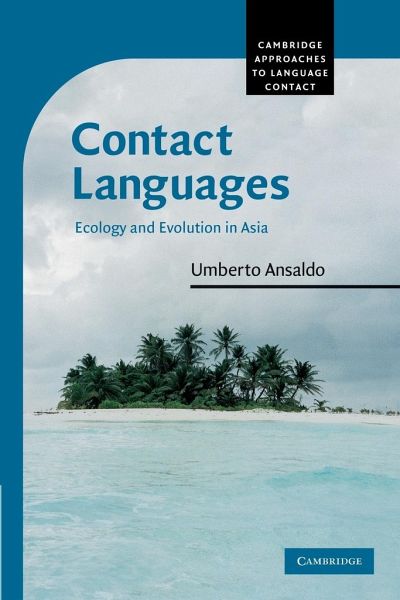
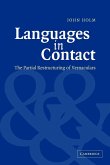
Why do groups of speakers in certain times and places come up with new varieties of languages? What are the social settings that determine whether a mixed language, a pidgin or a Creole will develop, and how can we understand the ways in which different languages contribute to the new grammar? Through the study of Malay contact varieties such as Baba Malay, Cocos Malay and Sri Lanka Malay, as well as the Asian Portuguese vernacular of Macau, and China Coast Pidgin, this book explores the social and structural dynamics that underlie the fascinating phenomenon of the creation of new, or…mehr
Why do groups of speakers in certain times and places come up with new varieties of languages? What are the social settings that determine whether a mixed language, a pidgin or a Creole will develop, and how can we understand the ways in which different languages contribute to the new grammar? Through the study of Malay contact varieties such as Baba Malay, Cocos Malay and Sri Lanka Malay, as well as the Asian Portuguese vernacular of Macau, and China Coast Pidgin, this book explores the social and structural dynamics that underlie the fascinating phenomenon of the creation of new, or restructured, grammars. It emphasizes the importance and interplay of historical documentation, socio-cultural observation and linguistic analysis in the study of contact languages, offering an evolutionary framework for the study of contact language formation - including pidgins and Creoles - in which historical, socio-cultural and typological observations come together.
Umberto Ansaldo is Associate Professor in Linguistics at the University of Hong Kong. He was formerly a Senior Researcher and Lecturer with the Amsterdam Center for Language and Communication at the University of Amsterdam. He has also worked in Sweden and Singapore and conducted fieldwork in China, the Cocos and Christmas Islands and Sri Lanka. He is the co-editor of the Creole Language Library Series and has co-edited various journals and books including Deconstructing Creole (2007).
Inhaltsangabe
Part I. Introduction: 1. Introduction to contact language formation 2. Research questions 3. The role of ecology in Asian contexts 4. Theory of language and contact language formation 5. Contact language formation beyond exceptional evolution 6. Outlook Part II. The Ecology of Monsoon Asia: 7. Monsoon Asia 8. Sino-Javanese trade 9. The city-ports 10. Manpower in Southeast Asia 11. The Western impact Part III. Linguistic Ecologies of Southeast Asia: 12. Southeast Asia and the role of Malay 13. Malay contact varieties 14. Introducing contexts of formation 15. The role of Portuguese in Southeast Asia and Southern China 16. Summary Part IV. Methodological Issues in the Study of Contact Languages: 17. The ideology of theory 18. Multilingualism and transmission 19. Conclusions Part V. Contact Language Formation in Evolutionary Theory: 20. Competence, performance and socialization 21. Language evolution and contact languages 22. Functionalist assets for contact linguistics 23. Conclusions Part VI. Congruence and Frequency in Sri Lanka Malay: 24. The SLM community 25. Selection and replication in SLM 26. Freeing SLM from the chains of exceptionalism 27. Final remarks Part VII. Identity Alignment in Malay and Asian-Portuguese Diaspora: 28. The ecology of identity alignment 29. Multiple alignments in contact settings 30. Identity alignment and admixture 31. Conclusions Part VIII. Pidgin Ecologies of the China Coast: 32. Sociohistorical background of Europe-China relations 33. The ecology of Macau and the Pearl River Delta 34. Grammatical features of China Coast Pidgin 35. The missing Makista link? 36. Discussion Part IX. Implications, Conclusions and New Horizons: 37. Theoretical and methodological implications 38. Conclusions and new horizons References Index Author index.
Part I. Introduction: 1. Introduction to contact language formation 2. Research questions 3. The role of ecology in Asian contexts 4. Theory of language and contact language formation 5. Contact language formation beyond exceptional evolution 6. Outlook Part II. The Ecology of Monsoon Asia: 7. Monsoon Asia 8. Sino-Javanese trade 9. The city-ports 10. Manpower in Southeast Asia 11. The Western impact Part III. Linguistic Ecologies of Southeast Asia: 12. Southeast Asia and the role of Malay 13. Malay contact varieties 14. Introducing contexts of formation 15. The role of Portuguese in Southeast Asia and Southern China 16. Summary Part IV. Methodological Issues in the Study of Contact Languages: 17. The ideology of theory 18. Multilingualism and transmission 19. Conclusions Part V. Contact Language Formation in Evolutionary Theory: 20. Competence, performance and socialization 21. Language evolution and contact languages 22. Functionalist assets for contact linguistics 23. Conclusions Part VI. Congruence and Frequency in Sri Lanka Malay: 24. The SLM community 25. Selection and replication in SLM 26. Freeing SLM from the chains of exceptionalism 27. Final remarks Part VII. Identity Alignment in Malay and Asian-Portuguese Diaspora: 28. The ecology of identity alignment 29. Multiple alignments in contact settings 30. Identity alignment and admixture 31. Conclusions Part VIII. Pidgin Ecologies of the China Coast: 32. Sociohistorical background of Europe-China relations 33. The ecology of Macau and the Pearl River Delta 34. Grammatical features of China Coast Pidgin 35. The missing Makista link? 36. Discussion Part IX. Implications, Conclusions and New Horizons: 37. Theoretical and methodological implications 38. Conclusions and new horizons References Index Author index.
Es gelten unsere Allgemeinen Geschäftsbedingungen: www.buecher.de/agb
Impressum
www.buecher.de ist ein Internetauftritt der buecher.de internetstores GmbH
Geschäftsführung: Monica Sawhney | Roland Kölbl | Günter Hilger
Sitz der Gesellschaft: Batheyer Straße 115 - 117, 58099 Hagen
Postanschrift: Bürgermeister-Wegele-Str. 12, 86167 Augsburg
Amtsgericht Hagen HRB 13257
Steuernummer: 321/5800/1497
USt-IdNr: DE450055826