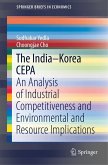
This book helps to solve the problem of substantial waste and inefficiency in port production by analyzing operational efficiency at more than 30 Chinese and Korean leading container ports using three types of DEA model. In addition it offers a returns-to-scale analysis, which is particularly useful for port managers or policy makers deciding on the scale of production. The results provide port managers and relevant scholars with insights into resource allocation and operating performance optimization. This book was supported by the National Science and Technology Academic Publications Fund of China in 2015.…mehr
This book helps to solve the problem of substantial waste and inefficiency in port production by analyzing operational efficiency at more than 30 Chinese and Korean leading container ports using three types of DEA model. In addition it offers a returns-to-scale analysis, which is particularly useful for port managers or policy makers deciding on the scale of production. The results provide port managers and relevant scholars with insights into resource allocation and operating performance optimization. This book was supported by the National Science and Technology Academic Publications Fund of China in 2015.
Professor Bo Lu is a Chinese national youth talent and chief expert of a major project of the National Social Science Fund. Professor Lu has been engaged in research and teaching in the field of shipping economic and port operation for nearly 20 years. He has published nearly 60 scientific research papers as the first author or corresponding author and 6 monographs in both Chinese and English.
Inhaltsangabe
Introduction.- 1.1 Background of Research.- 1.2 Purpose and Method of Research.- . DEA Conceptual Exposition and Literature Review.- 2.1 Data Envelopment Analysis Conceptual Exposition.- 2.2 Economic Meanings of DEA Efficiency.- 2.3 Literature Review of DEA to Container Terminals.- . Evaluation Modeling for Container Terminal.- 3.1 Approach of Definition Variables.- 3.2 Implementation of Definition Variables.- 3.3 Definition of Output Variable.- 3.4 Definition of Inputs Variables.- 3.5 Standardization of Output and Input Variables.- 3.6 Flow Process of DEA Analyses.- 3.7 Research Procedure.- . Data Collection and Analysis.- 4.1 Outline of Chinese Container Ports.- 4.2 Outline of Korean Container Ports.- 4.3 Collected Data Analysis.- . Efficiency Analysis and Implication.- 5.1 Efficiency Analysis of Container Terminals.- 5.2 Implication of Efficiency Analysis.- . Conclusion.
Introduction.- 1.1 Background of Research.- 1.2 Purpose and Method of Research.- . DEA Conceptual Exposition and Literature Review.- 2.1 Data Envelopment Analysis Conceptual Exposition.- 2.2 Economic Meanings of DEA Efficiency.- 2.3 Literature Review of DEA to Container Terminals.- . Evaluation Modeling for Container Terminal.- 3.1 Approach of Definition Variables.- 3.2 Implementation of Definition Variables.- 3.3 Definition of Output Variable.- 3.4 Definition of Inputs Variables.- 3.5 Standardization of Output and Input Variables.- 3.6 Flow Process of DEA Analyses.- 3.7 Research Procedure.- . Data Collection and Analysis.- 4.1 Outline of Chinese Container Ports.- 4.2 Outline of Korean Container Ports.- 4.3 Collected Data Analysis.- . Efficiency Analysis and Implication.- 5.1 Efficiency Analysis of Container Terminals.- 5.2 Implication of Efficiency Analysis.- . Conclusion.
Es gelten unsere Allgemeinen Geschäftsbedingungen: www.buecher.de/agb
Impressum
www.buecher.de ist ein Internetauftritt der buecher.de internetstores GmbH
Geschäftsführung: Monica Sawhney | Roland Kölbl | Günter Hilger
Sitz der Gesellschaft: Batheyer Straße 115 - 117, 58099 Hagen
Postanschrift: Bürgermeister-Wegele-Str. 12, 86167 Augsburg
Amtsgericht Hagen HRB 13257
Steuernummer: 321/5800/1497
USt-IdNr: DE450055826