
Andere Kunden interessierten sich auch für
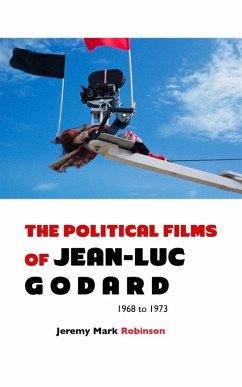
 THE POLITICAL FILMS OF JEAN-LUC GODARD22,99 €
 This Much is True44,99 €
 Participatory Worlds54,99 €
 Digital Uncanny58,99 €
 RESILIENCE FOR FILMMAKERS, CREATIVES & SOLO CREATORS18,99 €
 The Producers31,99 €
 Producing 10148,99 €




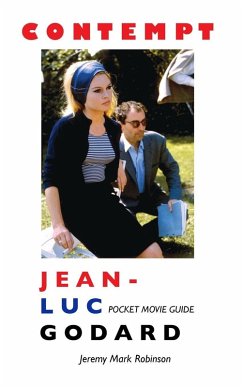
CONTEMPT JEAN-LUC GODARD POCKET MOVIE GUIDE By Jeremy Mark Robinson There's no one else quite like Jean-Luc Godard, one of the most significant and inspiring filmmakers of recent times. Where the flood of movies globally now runs into many thousands, Godard's works stand out as original, acerbic, romantic, ironic, controversial, humorous and explorative. Le Mépris (a.k.a. Contempt, a.k.a., A Ghost At Noon, 1963) was one of Jean-Luc Godard's films about films, in particular the contemporary, Hollywood film industry. Contempt was an international production: it was filmed in French (with parts in English, Italian and German), set (and filmed) in Italy, produced by an Italian (Carlo Ponti), a Frenchman (Georges de Beauregard) and an American (Joe Levine), based on a novel by an Italian writer (Alberto Moravia's Il Disprezzo [A Ghost At Noon]), and starred an American (Jack Palance, as U.S. film producer Jerry Prokosch), a German (Fritz Lang, as himself, a German filmmaker in exile, 72 at the time of making Contempt), and two French actors (Brigitte Bardot as Camille Javal a 28 year-old French typist and Michel Piccoli as her husband Paul Javal, a playwright). Camille Javal is Bardot's real name. Contempt is also a movie about movies, a movie about art, and communication, and exile, and Europe, and capitalism, and despair, and - of course - death. Contempt is a commentary upon the possibility of one day perhaps thinking about making a movie on subjects which might include love, marriage, betrayal, integrity, loyalty, desire and power. Fully illustrated. Bibliography, filmography, Godardisms and notes.