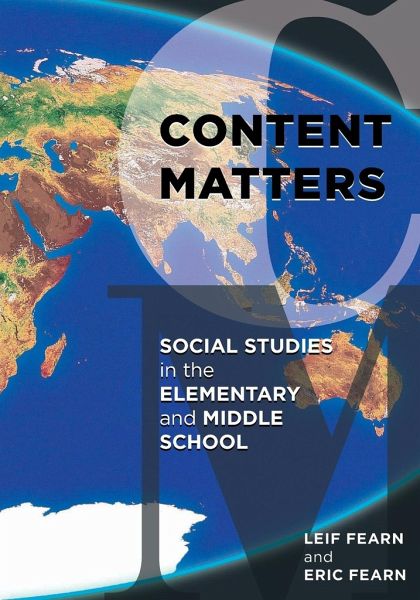
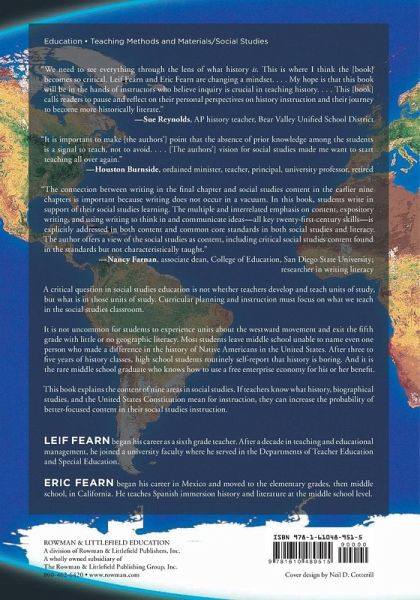
This book explains the content of nine areas in social studies. If teachers know what history, biographical studies, and the United States Constitution mean for instruction, they can increase the probability of better-focused content in their social studies instruction.
This book explains the content of nine areas in social studies. If teachers know what history, biographical studies, and the United States Constitution mean for instruction, they can increase the probability of better-focused content in their social studies instruction.
Leif Fearn began his career as a sixth grade teacher. After a decade in teaching and educational management, he joined the university faculty where he served in the departments of teacher education and special education.
Inhaltsangabe
Acknowledgments Introduction References Chapter One: Biographical Studies: People of Note The Content for Teaching Biographical Studies Applications to the Classroom References Chapter Two: History: The United States and the World The Content for Teaching History Two Kinds of History Three Belief Systems About Teaching History History as Scale Applications to the Classroom References Chapter Three: World Religions: Monday School, Not Sunday School The Content for Teaching World Religions History and World Religions Hinduism Buddhism Christianity Judaism Islam Geography and World Religions Biographies and World Religions Applications to the Classroom References Chapter Four: The United States Constitution: The Nation's Scripture? The Content for Teaching the United States Constitution Control of Factions Representation Individual Freedom Taxation Military What K-8 Teachers Must Know and Understand Constitution Simulations The Structure of the United States Constitution Applications to the Classroom References Chapter Five: The Declaration of Independence: Making the Argument The Story of the Declaration of Independence The Content for Teaching the Declaration of Independence Story Grammar and the Declaration of Independence Annotating the Declaration of Independence Applications to the Classroom References Chapter Six: Personal Finance: Equity and Economic Justice The Content for Teaching Personal Finance The Money Game How Do Children Get Money? The Relationship Between 7 and 10 Inflation Social Security Gross vs. Net Income What Does Enough Mean? What Do We Teach Children About Personal Finance? Applications to the Classroom A Resource Chapter 7: Geography Matters: How We Know Who and Where We Are The Content for Teaching Geography Geography Themes A Change in Perspective: What Do Geographers Do? Applications to the Classroom References Chapter Eight: Native Peoples: It's About Now! The Content for Teaching About Native Peoples Basic Principles for Instruction About Native Peoples The Right To Be Wrong Separate Nation Status Native Peoples and Social Studies Content Applications to the Classroom References Chapter Nine: Media Literacy: Radio, Television, and Print Media as Social Studies Text The Content for Teaching Media Literacy Media Literacy Liberal Media Conservative Media Libertarian Media Independent Media Noncommercial or Public Media Bias and What It Means in the Media Creative and Critical Thinking and a Media Literacy Matrix Applications to the Classroom References Chapter Ten: Writing in the Social Studies Thinking and Writing in Paragraphs Arranging Sentences Paragraph Sentence Cards Paragraph Completion Writing Extended Discourse Read-Write-Share Summarizing Describing Comparing and Contrasting Response to Reading Essays That Share Opinions with an Persuade Readers Reports of Information Sentences and Word Study References
Acknowledgments Introduction References Chapter One: Biographical Studies: People of Note The Content for Teaching Biographical Studies Applications to the Classroom References Chapter Two: History: The United States and the World The Content for Teaching History Two Kinds of History Three Belief Systems About Teaching History History as Scale Applications to the Classroom References Chapter Three: World Religions: Monday School, Not Sunday School The Content for Teaching World Religions History and World Religions Hinduism Buddhism Christianity Judaism Islam Geography and World Religions Biographies and World Religions Applications to the Classroom References Chapter Four: The United States Constitution: The Nation's Scripture? The Content for Teaching the United States Constitution Control of Factions Representation Individual Freedom Taxation Military What K-8 Teachers Must Know and Understand Constitution Simulations The Structure of the United States Constitution Applications to the Classroom References Chapter Five: The Declaration of Independence: Making the Argument The Story of the Declaration of Independence The Content for Teaching the Declaration of Independence Story Grammar and the Declaration of Independence Annotating the Declaration of Independence Applications to the Classroom References Chapter Six: Personal Finance: Equity and Economic Justice The Content for Teaching Personal Finance The Money Game How Do Children Get Money? The Relationship Between 7 and 10 Inflation Social Security Gross vs. Net Income What Does Enough Mean? What Do We Teach Children About Personal Finance? Applications to the Classroom A Resource Chapter 7: Geography Matters: How We Know Who and Where We Are The Content for Teaching Geography Geography Themes A Change in Perspective: What Do Geographers Do? Applications to the Classroom References Chapter Eight: Native Peoples: It's About Now! The Content for Teaching About Native Peoples Basic Principles for Instruction About Native Peoples The Right To Be Wrong Separate Nation Status Native Peoples and Social Studies Content Applications to the Classroom References Chapter Nine: Media Literacy: Radio, Television, and Print Media as Social Studies Text The Content for Teaching Media Literacy Media Literacy Liberal Media Conservative Media Libertarian Media Independent Media Noncommercial or Public Media Bias and What It Means in the Media Creative and Critical Thinking and a Media Literacy Matrix Applications to the Classroom References Chapter Ten: Writing in the Social Studies Thinking and Writing in Paragraphs Arranging Sentences Paragraph Sentence Cards Paragraph Completion Writing Extended Discourse Read-Write-Share Summarizing Describing Comparing and Contrasting Response to Reading Essays That Share Opinions with an Persuade Readers Reports of Information Sentences and Word Study References
Es gelten unsere Allgemeinen Geschäftsbedingungen: www.buecher.de/agb
Impressum
www.buecher.de ist ein Internetauftritt der buecher.de internetstores GmbH
Geschäftsführung: Monica Sawhney | Roland Kölbl | Günter Hilger
Sitz der Gesellschaft: Batheyer Straße 115 - 117, 58099 Hagen
Postanschrift: Bürgermeister-Wegele-Str. 12, 86167 Augsburg
Amtsgericht Hagen HRB 13257
Steuernummer: 321/5800/1497
USt-IdNr: DE450055826