Theories of citizenship from the West - pre-eminently those by T.H. Marshall - provide only a limited insight into East Asian political history. The Marshallian trajectory - juridical, political and social rights - was not repeated in Asia and the late nineteenth-century debate about liberalism and citizenship among intellectuals in Japan and China was eventually stifled by war, colonialism and authoritarian governments (both nationalist and communist). Subsequent attempts to import western-style democratic values and citizenship were to a large extent failures. Social rights have rarely…mehr
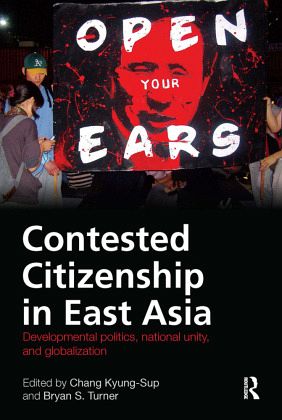
Theories of citizenship from the West - pre-eminently those by T.H. Marshall - provide only a limited insight into East Asian political history.
The Marshallian trajectory - juridical, political and social rights - was not repeated in Asia and the late nineteenth-century debate about liberalism and citizenship among intellectuals in Japan and China was eventually stifled by war, colonialism and authoritarian governments (both nationalist and communist). Subsequent attempts to import western-style democratic values and citizenship were to a large extent failures. Social rights have rarely been systematically incorporated into the political ideology and administrative framework of ruling governments. In reality, the predominant concern of both the state elite and the ordinary citizens was economic development and a modicum of material well-being rather than civil liberties. The developmental state and its politics take precedence in the everyday political process of mostEast Asian societies.
These essays provide a systematic and comparative account of the tensions between rapid economic growth and citizenship, and the ways in which those tensions are played out in civil society.
Kyung-Sup Chang is Professor of Sociology and Director of the Institute for Social Development and Policy Research at Seoul National University. His research interests include: developmental politics and social policy, comparative modernities (compressed modernity), post-socialist transitions in Asia. His work on these issues has appeared in journals including Economy and Society, World Development, Journal of Development Studies, International Sociology. He is also author of South Korea under Compressed Modernity: Familial Political Economy in Transition (Routledge, 2010). Bryan Turner is the Presidential Professor of Sociology and the Director of the Committee on Religion at the City University of New York. He has published extensively in this area, and books include Muslims in Singapore (Routledge, 2009), and The Body in Asia (Berghahn, 2010). He has also edited The Routledge International Handbook of Globalization Studies (Routledge, 2010), The Routledge Handbook of Body Studies (Routledge, 2012), and is the founding editor of Citizenship Studies.
Inhaltsangabe
Introduction: East Asia and Citizenship Part I: East Asia and Citizenship in Perspective 1. National and Social Citizenship: Some Structural and Cultural Problems with Modern Citizenship 2. Colonialism, Revolution, Development: A Historical Perspective on Citizenship in Political Struggles in Eastern Asia 3. Different Beds, One Dream? State-Society Relationships and Citizenship Regimes in East Asia Part II: China, Taiwan, Hong Kong 4. Community Citizens or Egoistic Men: Property Rights Activism in China's New Urban Neighbourhoods 5. Corporate Citizenship in Contemporary China: Social Responsibility for Saving Jobs 6. Transnational or Compatriotic Bourgeoisie? Taiwanese Entrepreneurs and their Contested Citizenship Across the Taiwan Strait n 7. The Making of Citizenship in a Divided Nation: Neoliberal Citizenship in Hong Kong and National Citizenship in China Part III: Japan and Koreas 8. Social Citizenship in Action: Gender and Political Economy of Social-Care Policy Reforms in Japan 9. The Growth and Erosion of Japanese Identity in Ryukyu: a Citizenship Perspective 10. Developmental Citizenship in Perspective: The South Korean Case and Beyond 11. The Emergence of the 'Multicultural Family' and Genderized Citizenship in South Korea 12. Circumstantial Citizens: North Korean 'Migrants' in South Korea Part IV: Conclusion 13. Whither East Asian Citizenship? Index.
Introduction: East Asia and Citizenship Part I: East Asia and Citizenship in Perspective 1. National and Social Citizenship: Some Structural and Cultural Problems with Modern Citizenship 2. Colonialism, Revolution, Development: A Historical Perspective on Citizenship in Political Struggles in Eastern Asia 3. Different Beds, One Dream? State-Society Relationships and Citizenship Regimes in East Asia Part II: China, Taiwan, Hong Kong 4. Community Citizens or Egoistic Men: Property Rights Activism in China's New Urban Neighbourhoods 5. Corporate Citizenship in Contemporary China: Social Responsibility for Saving Jobs 6. Transnational or Compatriotic Bourgeoisie? Taiwanese Entrepreneurs and their Contested Citizenship Across the Taiwan Strait n 7. The Making of Citizenship in a Divided Nation: Neoliberal Citizenship in Hong Kong and National Citizenship in China Part III: Japan and Koreas 8. Social Citizenship in Action: Gender and Political Economy of Social-Care Policy Reforms in Japan 9. The Growth and Erosion of Japanese Identity in Ryukyu: a Citizenship Perspective 10. Developmental Citizenship in Perspective: The South Korean Case and Beyond 11. The Emergence of the 'Multicultural Family' and Genderized Citizenship in South Korea 12. Circumstantial Citizens: North Korean 'Migrants' in South Korea Part IV: Conclusion 13. Whither East Asian Citizenship? Index.
Es gelten unsere Allgemeinen Geschäftsbedingungen: www.buecher.de/agb
Impressum
www.buecher.de ist ein Internetauftritt der buecher.de internetstores GmbH
Geschäftsführung: Monica Sawhney | Roland Kölbl | Günter Hilger
Sitz der Gesellschaft: Batheyer Straße 115 - 117, 58099 Hagen
Postanschrift: Bürgermeister-Wegele-Str. 12, 86167 Augsburg
Amtsgericht Hagen HRB 13257
Steuernummer: 321/5800/1497
USt-IdNr: DE450055826