
Andere Kunden interessierten sich auch für
 Contribuição para o conhecimento veterinário39,99 €
 Animal Assisted Therapy Use Application by Condition101,99 €
 Book on Chicken Keeping45,99 €
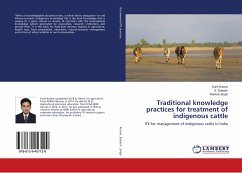
 Traditional knowledge practices for treatment of indigenous cattle47,99 €
 Veterinary Anatomy of Domestic Animals40,99 €
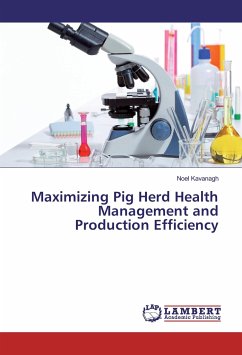
 Maximizing Pig Herd Health Management and Production Efficiency25,99 €
 Indigenous technical knowledge among pastoralists of District Doda33,99 €
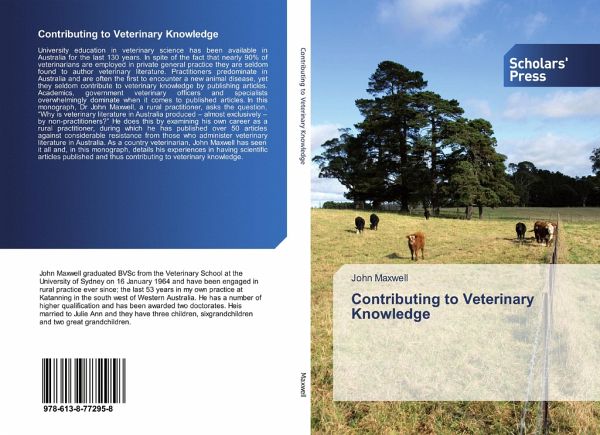
University education in veterinary science has been available in Australia for the last 130 years. In spite of the fact that nearly 90% of veterinarians are employed in private general practice they are seldom found to author veterinary literature. Practitioners predominate in Australia and are often the first to encounter a new animal disease, yet they seldom contribute to veterinary knowledge by publishing articles. Academics, government veterinary officers and specialists overwhelmingly dominate when it comes to published articles. In this monograph, Dr John Maxwell, a rural practitioner, asks the question, "Why is veterinary literature in Australia produced - almost exclusively - by non-practitioners?" He does this by examining his own career as a rural practitioner, during which he has published over 50 articles against considerable resistance from those who administer veterinary literature in Australia. As a country veterinarian, John Maxwell has seen it all and, in this monograph, details his experiences in having scientific articles published and thus contributing to veterinary knowledge.