This book aims to provide the reader with an in-depth overview of the diagnostic and therapeutic options currently available in epilepsy surgery. It juxtaposes diagnostic methods and surgical techniques that have existed for a long time and others that have recently been developed or have gained importance. The nuanced comparison shows that several methods may be applicable for the same indication but, depending on the specific circumstances, one of them may be the best choice. The book is divided into four main parts, focusing on anatomy, pre-surgical diagnostic evaluation of epilepsy,…mehr
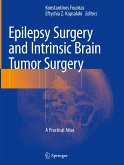
This book aims to provide the reader with an in-depth overview of the diagnostic and therapeutic options currently available in epilepsy surgery. It juxtaposes diagnostic methods and surgical techniques that have existed for a long time and others that have recently been developed or have gained importance. The nuanced comparison shows that several methods may be applicable for the same indication but, depending on the specific circumstances, one of them may be the best choice.
The book is divided into four main parts, focusing on anatomy, pre-surgical diagnostic evaluation of epilepsy, curative surgical treatment of epilepsy and symptomatic surgical treatment of epilepsy. The chapters are designed to describe not only a method or technique but also their specific risks or the limits where the competing option may become preferable.
The book thus guides the readers through the current controversies and helps them make a rational decision for their patients. It will be a valuable resource for neurosurgeons, neurologists,neurophysiologists, neuroradiologists and neuropsychologists dedicated to the treatment of drug-resistant epilepsy and for the multidisciplinary epilepsy surgery conferences.
Artikelnr. des Verlages: 89264754, 978-3-032-04181-4
Seitenzahl: 482
Erscheinungstermin: 23. März 2026
Englisch
Abmessung: 235mm x 155mm
ISBN-13: 9783032041814
ISBN-10: 3032041813
Artikelnr.: 74994992
Herstellerkennzeichnung
Springer-Verlag GmbH
Tiergartenstr. 17
69121 Heidelberg
ProductSafety@springernature.com
Autorenporträt
Dirk Van Roost graduated in medicine from KU Leuven University (Belgium) in 1977 and completed a training programme in neurosurgery at the University Hospitals of Leuven and Tübingen (Germany). From 1985 to 2003, he worked at the neurosurgery department of the University Hospital of Bonn (Germany) in various areas, including neuroradiology and neurosurgical intensive care. His habilitation (PhD) thesis at the University of Bonn addressed cerebral perfusion in brain tumours measured by xenon CT. In 2003, Dr. Van Roost was appointed professor at the University Hospital of Ghent (Belgium), where he served as Chairman of the Department of Neurosurgery from 2008 until his retirement in 2018. Since then, he has continued his neurosurgical work part-time in the same department. His surgical spectrum includes brain tumours, aneurysms and vascular malformations, skull base and spine surgery, brain endoscopy and pain management, but his areas of special interest are functional stereotaxis and epilepsy surgery. Dr. Van Roost is former president and currently an honorary member of the Belgian Society of Neurosurgery (BSN), former president of the Belgian Society of Stereotactic and Functional Neurosurgery (BSSFN), former president and current board member of the Belgian Brain Council (BBC), panel member of the EANS Functional Section and member of the executive committee of the European Society of Stereotactic and Functional Neurosurgery (ESSFN). Under the latter´s auspices, he organised three hands-on dissection courses on epilepsy surgery in Ghent. He has also been a regular lecturer at EANS training courses. He is a member of three other international scientific societies, and a former member of the international advisory board of the journal Neurosurgery. Olaf Schijns graduated in medicine from the University of Leiden (The Netherlands) in 1997. He is a neurosurgeon from Maastricht, The Netherlands, trained at the Maastricht University Medical Center (MUMC+) in general neurosurgery under Emile Beuls and at the Bonn University Hospital, Germany, in epilepsy surgery under Johannes Schramm. After returning from Bonn, he further developed the epilepsy surgery programme at the MUMC+ / Academic Center for Epileptology (ACE), in close collaboration with colleagues at the Kempenhaeghe Academic Center for Epileptology. In 2008, together with Albert Colon, neurologist at the Kempenhaeghe Academic Center for Epileptology, he introduced stereo-EEG in The Netherlands.He has been mainly involved in patient care and epilepsy research, with a special interest in ultra-high field imaging for epilepsy surgery and in minimally invasive diagnostic and therapeutic techniques (radiofrequency thermocoagulation with sEEG and stereotactic radiosurgery). He was elected Chair of the Functional Neurosurgery Section of the European Association of Neurosurgical Societies (EANS) in October 2021 and Chair of the Section of Functional Neurosurgery of the Dutch Neurosurgical Association (NVVN) in January 2022.Dr. Schijns is a regular lecturer at the EANS training courses and initiated the annual EANS Epilepsy Surgery Hands-on Dissection Course for senior neurosurgical trainees and young neurosurgeons in 2024.
Inhaltsangabe
Preface.- Part 1.- The Temporal Lobe and the Limbic System.- Anatomy of the Insula.- Anatomy of the Thalamus.- Part 2.- 3-Tesla MR Imaging for the Detection of Structural Lesions.- Clinical Applications of 7 Tesla Magnetic Resonance Imaging for Epilepsy.- Automated Detection of Structural Brain Lesions from MRI.- Ictal SPECT and its Value in the Localization of the Seizure-Onset Zone.- Interictal PET and its Value in the Localization of the Seizure-Onset Zone.- Neuropsychological Assessment of Cognition and Functional Reserve.- Functional Magnetic Resonance Imaging (fMRI) for the Evaluation of Cognition and Functional Reserve.- The Wada Test for the Evaluation of Cognition and Functional Reserve.- Electrical Source Imaging in the Presurgical Evaluation.- Magnetic Source Localization.- Indication and interpretation of SEEG.- Indication and Interpretation of Electrocorticography by Subdural and Spencer-Type Electrodes.- Frame-Based Implantation of Stereo EEG Electrodes.- Robot-Assisted Implantation of Stereo EEG Electrodes.- Frameless Implantation of Stereo EEG Electrodes.- Spatial Bayesian Approach to sEEG Electrode Placement.- Electrical Source Imaging Guidance of Depth Electrode Placement.- Intraoperative Electrocorticography.- Extraoperative Electrocorticography. Part 3.- Anterior Temporal Lobectomy for Temporal Lobe Epilepsy.- Selective Amygdalohippocampectomy.- Transsylvian approach to selective Amygdalohippocampectomy.- Subtemporal Approach for Amygdalohippocampectomy.- Selective Amygdalohippocampotomy using LITT.- Radiosurgery for mesial temporal lobe epilepsy.- Multiple Hippocampal Transection for Preservation of Verbal Memory.- Microsurgery and Endoscopic Surgery for Hypothalamic Hamartoma.- Radiosurgery for Hypothalamic Hamartoma.- LiTT Ablation for Hypothalamic Hamartoma.- Radiofrequency Ablation for Hypothalamic Hamartoma.- Stereo-electroencephalography guided RadioFrequency ThermoCoagulation for (sub)cortical epileptogenic lesions.- LiTT Ablation for Subcortical Epileptogenic Lesions.- Focused Ultrasound for Subcortical Epileptogenic Lesions.- Hemispherotomy through Vertical Approach.- Lateral Approach for Hemispherotomy.- Part 4.- The Evolution of Corpus Callosotomy: Theory and Practice.- Vagus Nerve Stimulation for the Management of Epilepsy and Epileptic Drop Attacks.- Radiofrequency ablation of the thalamic centrum medianum for catastrophic epilepsy.- Selective posterior callosotomy: An innovative approach targeted to disconnect fibers relevant to epileptic drop attacks.- Callosotomy by means of radiosurgery.- Subthalamic Nucleus as Deep Brain Stimulation Target in the Management of Epilepsy.- The Centromedian Thalamic Nucleus as a Deep Brain Stimulation Target in the Management of Epilepsy.- The Anterior Nucleus of Thalamus as a Deep Brain Stimulation Target in the Management of Epilepsy.- Open vs. Closed-Loop Stimulation in the Management of Drug-Resistant Epilepsy.- Extraventricular Approach for Deep Brain Stimulation of the Anterior Nucleus of Thalamus.- Transventricular Approach to Anterior Nucleus of Thalamus.- The Psychological Impact of Epilepsy Surgery.
Preface.- Part 1.- The Temporal Lobe and the Limbic System.- Anatomy of the Insula.- Anatomy of the Thalamus.- Part 2.- 3-Tesla MR Imaging for the Detection of Structural Lesions.- Clinical Applications of 7 Tesla Magnetic Resonance Imaging for Epilepsy.- Automated Detection of Structural Brain Lesions from MRI.- Ictal SPECT and its Value in the Localization of the Seizure-Onset Zone.- Interictal PET and its Value in the Localization of the Seizure-Onset Zone.- Neuropsychological Assessment of Cognition and Functional Reserve.- Functional Magnetic Resonance Imaging (fMRI) for the Evaluation of Cognition and Functional Reserve.- The Wada Test for the Evaluation of Cognition and Functional Reserve.- Electrical Source Imaging in the Presurgical Evaluation.- Magnetic Source Localization.- Indication and interpretation of SEEG.- Indication and Interpretation of Electrocorticography by Subdural and Spencer-Type Electrodes.- Frame-Based Implantation of Stereo EEG Electrodes.- Robot-Assisted Implantation of Stereo EEG Electrodes.- Frameless Implantation of Stereo EEG Electrodes.- Spatial Bayesian Approach to sEEG Electrode Placement.- Electrical Source Imaging Guidance of Depth Electrode Placement.- Intraoperative Electrocorticography.- Extraoperative Electrocorticography. Part 3.- Anterior Temporal Lobectomy for Temporal Lobe Epilepsy.- Selective Amygdalohippocampectomy.- Transsylvian approach to selective Amygdalohippocampectomy.- Subtemporal Approach for Amygdalohippocampectomy.- Selective Amygdalohippocampotomy using LITT.- Radiosurgery for mesial temporal lobe epilepsy.- Multiple Hippocampal Transection for Preservation of Verbal Memory.- Microsurgery and Endoscopic Surgery for Hypothalamic Hamartoma.- Radiosurgery for Hypothalamic Hamartoma.- LiTT Ablation for Hypothalamic Hamartoma.- Radiofrequency Ablation for Hypothalamic Hamartoma.- Stereo-electroencephalography guided RadioFrequency ThermoCoagulation for (sub)cortical epileptogenic lesions.- LiTT Ablation for Subcortical Epileptogenic Lesions.- Focused Ultrasound for Subcortical Epileptogenic Lesions.- Hemispherotomy through Vertical Approach.- Lateral Approach for Hemispherotomy.- Part 4.- The Evolution of Corpus Callosotomy: Theory and Practice.- Vagus Nerve Stimulation for the Management of Epilepsy and Epileptic Drop Attacks.- Radiofrequency ablation of the thalamic centrum medianum for catastrophic epilepsy.- Selective posterior callosotomy: An innovative approach targeted to disconnect fibers relevant to epileptic drop attacks.- Callosotomy by means of radiosurgery.- Subthalamic Nucleus as Deep Brain Stimulation Target in the Management of Epilepsy.- The Centromedian Thalamic Nucleus as a Deep Brain Stimulation Target in the Management of Epilepsy.- The Anterior Nucleus of Thalamus as a Deep Brain Stimulation Target in the Management of Epilepsy.- Open vs. Closed-Loop Stimulation in the Management of Drug-Resistant Epilepsy.- Extraventricular Approach for Deep Brain Stimulation of the Anterior Nucleus of Thalamus.- Transventricular Approach to Anterior Nucleus of Thalamus.- The Psychological Impact of Epilepsy Surgery.
Es gelten unsere Allgemeinen Geschäftsbedingungen: www.buecher.de/agb
Impressum
www.buecher.de ist ein Internetauftritt der buecher.de internetstores GmbH
Geschäftsführung: Monica Sawhney | Roland Kölbl | Günter Hilger
Sitz der Gesellschaft: Batheyer Straße 115 - 117, 58099 Hagen
Postanschrift: Bürgermeister-Wegele-Str. 12, 86167 Augsburg
Amtsgericht Hagen HRB 13257
Steuernummer: 321/5800/1497
USt-IdNr: DE450055826