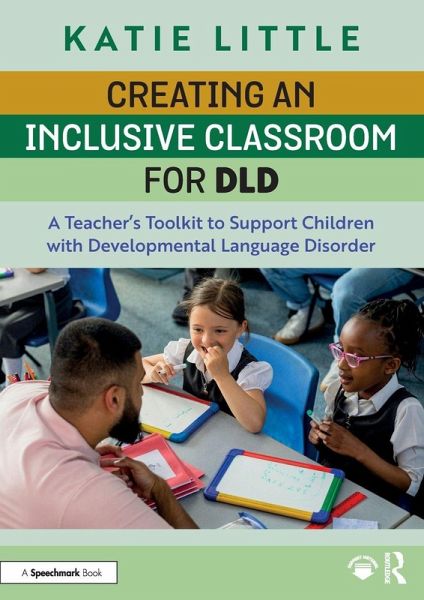
Developmental Language Disorder (DLD) affects an average of two children in every mainstream classroom, yet it continues to be a relatively unknown condition. This book equips teachers with a practical toolkit of strategies and resources which will not only support children with DLD but enhance the learning of the whole class.
Developmental Language Disorder (DLD) affects an average of two children in every mainstream classroom, yet it continues to be a relatively unknown condition. This book equips teachers with a practical toolkit of strategies and resources which will not only support children with DLD but enhance the learning of the whole class.
Katie Little is a Special Needs Coordinator (SENCo) at an inner-city school in Bradford. She has worked in mainstream primary schools for over 20 years across the Bradford and Keighley area and has been a SENCo for over six years. Katie is passionate about supporting all children with additional needs, particularly those with Developmental Language Disorder. She has previously worked in an outstanding school where she was instrumental in developing pathways, processes, school guidance and training for SEND. Katie champions self-advocacy in students and strives to enable pupils to understand and achieve their own potential, working closely with families and practitioners collaboratively.
Inhaltsangabe
About the Author Introduction 1 Developmental Language Disorder What Is Developmental Language Disorder? What Are the Signs of DLD? What Challenges Do Children and Young People with DLD Face? Why Is it Important to Act Now and Why Include Universal Strategies for All? Why Is it More Prevalent Today and What Are the Challenges that Schools Face? The Importance of Developing a Holistic Approach to DLD which Includes Families and Children Developmental Language Disorder Awareness Day References Chapter 1 Resources Section 2 Classroom Culture and the Learning Environment Creating a Safe and Secure Learning Environment Creating a Positive Classroom Culture Building Positive Relationships Reducing Extraneous Cognitive Load Economy of Language and Extra Processing Time References Chapter 2 Resources Section 3 Vocabulary Development The Importance of Vocabulary Vocabulary Exploration and Development Discussions and Good Talk Emotional Development and Regulation References Recommended Books and Websites Chapter 3 Resources Section 4 The Use of Visuals The Importance of Visuals Timetables and Boards Displays and Classroom Resources Learning Tasks and Activities References Chapter 4 Resources Section 5 Transition Transition A Whole-class Transition Social Story References Chapter 5 Resources Section Conclusion Index
About the Author Introduction 1 Developmental Language Disorder What Is Developmental Language Disorder? What Are the Signs of DLD? What Challenges Do Children and Young People with DLD Face? Why Is it Important to Act Now and Why Include Universal Strategies for All? Why Is it More Prevalent Today and What Are the Challenges that Schools Face? The Importance of Developing a Holistic Approach to DLD which Includes Families and Children Developmental Language Disorder Awareness Day References Chapter 1 Resources Section 2 Classroom Culture and the Learning Environment Creating a Safe and Secure Learning Environment Creating a Positive Classroom Culture Building Positive Relationships Reducing Extraneous Cognitive Load Economy of Language and Extra Processing Time References Chapter 2 Resources Section 3 Vocabulary Development The Importance of Vocabulary Vocabulary Exploration and Development Discussions and Good Talk Emotional Development and Regulation References Recommended Books and Websites Chapter 3 Resources Section 4 The Use of Visuals The Importance of Visuals Timetables and Boards Displays and Classroom Resources Learning Tasks and Activities References Chapter 4 Resources Section 5 Transition Transition A Whole-class Transition Social Story References Chapter 5 Resources Section Conclusion Index
Es gelten unsere Allgemeinen Geschäftsbedingungen: www.buecher.de/agb
Impressum
www.buecher.de ist ein Internetauftritt der buecher.de internetstores GmbH
Geschäftsführung: Monica Sawhney | Roland Kölbl | Günter Hilger
Sitz der Gesellschaft: Batheyer Straße 115 - 117, 58099 Hagen
Postanschrift: Bürgermeister-Wegele-Str. 12, 86167 Augsburg
Amtsgericht Hagen HRB 13257
Steuernummer: 321/5800/1497
USt-IdNr: DE450055826