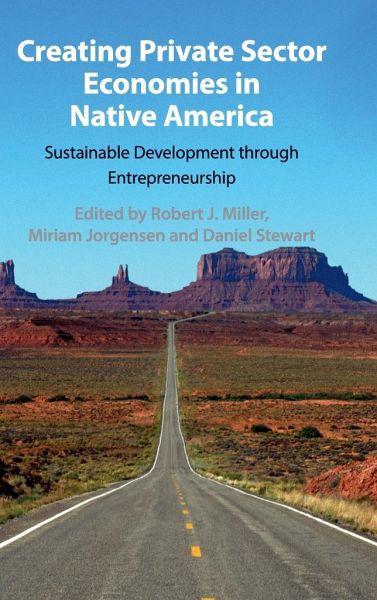
Creating Private Sector Economies in Native America
Herausgeber: Miller, Robert J.; Stewart, Daniel; Jorgensen, Miriam
Creating Private Sector Economies in Native America
Herausgeber: Miller, Robert J.; Stewart, Daniel; Jorgensen, Miriam
- Gebundenes Buch
- Merkliste
- Auf die Merkliste
- Bewerten Bewerten
- Teilen
- Produkt teilen
- Produkterinnerung
- Produkterinnerung
Looks at the underdevelopment of the private sector on American Indian reservations, with the goal of sustaining and growing Native nation communities.
Andere Kunden interessierten sich auch für
Augustine Edobor ArimoroPublic-Private Partnerships in Emerging Economies141,99 €
Special Economic Zones in Asian Market Economies204,99 €
E. F. HeningHistory of the African Mission of the Protestant Episcopal Church in the United States: With Memoirs of Deceased Missionaries, and Notices of Native C32,99 €
Bank Insolvency Law in Developing Economies149,99 €
Transkeian TerritoriesProclamations, Notices, and Regulations in Force in the Native Territories of the Cape Colony On the 20Th of July, 189634,99 €
Hakan SahinHost Government Agreements and the Law in the Energy Sector167,99 €
Bryant SophieLiberty, Order and law Under Native Irish Rule36,99 €-
-
-
Looks at the underdevelopment of the private sector on American Indian reservations, with the goal of sustaining and growing Native nation communities.
Produktdetails
- Produktdetails
- Verlag: Cambridge University Press
- Seitenzahl: 240
- Erscheinungstermin: 24. Oktober 2019
- Englisch
- Abmessung: 235mm x 157mm x 18mm
- Gewicht: 504g
- ISBN-13: 9781108481045
- ISBN-10: 1108481043
- Artikelnr.: 56714156
- Herstellerkennzeichnung
- Libri GmbH
- Europaallee 1
- 36244 Bad Hersfeld
- gpsr@libri.de
- Verlag: Cambridge University Press
- Seitenzahl: 240
- Erscheinungstermin: 24. Oktober 2019
- Englisch
- Abmessung: 235mm x 157mm x 18mm
- Gewicht: 504g
- ISBN-13: 9781108481045
- ISBN-10: 1108481043
- Artikelnr.: 56714156
- Herstellerkennzeichnung
- Libri GmbH
- Europaallee 1
- 36244 Bad Hersfeld
- gpsr@libri.de
Introduction Miriam Jorgensen; Part I. The Setting: 1. Private sector
economic development in Indian Country Robert J. Miller; 2. Opportunities
to diversify: reservation workplaces and job numbers compared to nearby
county areas Randall Akee, Elton Mykerezi and Richard M. Todd; Part II.
Policy Barriers and Policy Needs: 3. The challenges of American Indian land
tenure and the vastness of entrepreneurial potential Jessica A. Shoemaker;
4. Right-sizing use rights: Navajo land, bureaucracy, and home Ezra Rosser;
5. Access to credit in Indian Country: the promise of secured transaction
systems in creating strong economies Patrice Kunesh and Benjamin Horowitz;
6. Retooling Indian Country for economic resurgence: reflections from a
native CDFI practitioner David Castillo; Part III. Learning from Business
Scholars: 7. Becoming an entrepreneur: essentials for any environment Mark
C. Maletz; 8. Prototype, validate, pivot, repeat: a short, short course in
entrepreneurship Daniel Stewart; 9. Mapping the sustainable development
goals to Indian nations Carla F. Fredericks; 10. Supply chain management
and Native American entrepreneurs Stephanie L. Black and Deanna M. Kennedy;
Part IV. From Learning to Doing: Examples of Entrepreneurship in Indian
Country: 11. Native American food sovereignty and youth entrepreneurship
Raymond Foxworth, Krystal Langholz and A-dae Romero-Briones; 12. Indigenous
arts ecology - a new investment model for Indian Country Lori Lea Pourier.
economic development in Indian Country Robert J. Miller; 2. Opportunities
to diversify: reservation workplaces and job numbers compared to nearby
county areas Randall Akee, Elton Mykerezi and Richard M. Todd; Part II.
Policy Barriers and Policy Needs: 3. The challenges of American Indian land
tenure and the vastness of entrepreneurial potential Jessica A. Shoemaker;
4. Right-sizing use rights: Navajo land, bureaucracy, and home Ezra Rosser;
5. Access to credit in Indian Country: the promise of secured transaction
systems in creating strong economies Patrice Kunesh and Benjamin Horowitz;
6. Retooling Indian Country for economic resurgence: reflections from a
native CDFI practitioner David Castillo; Part III. Learning from Business
Scholars: 7. Becoming an entrepreneur: essentials for any environment Mark
C. Maletz; 8. Prototype, validate, pivot, repeat: a short, short course in
entrepreneurship Daniel Stewart; 9. Mapping the sustainable development
goals to Indian nations Carla F. Fredericks; 10. Supply chain management
and Native American entrepreneurs Stephanie L. Black and Deanna M. Kennedy;
Part IV. From Learning to Doing: Examples of Entrepreneurship in Indian
Country: 11. Native American food sovereignty and youth entrepreneurship
Raymond Foxworth, Krystal Langholz and A-dae Romero-Briones; 12. Indigenous
arts ecology - a new investment model for Indian Country Lori Lea Pourier.
Introduction Miriam Jorgensen; Part I. The Setting: 1. Private sector
economic development in Indian Country Robert J. Miller; 2. Opportunities
to diversify: reservation workplaces and job numbers compared to nearby
county areas Randall Akee, Elton Mykerezi and Richard M. Todd; Part II.
Policy Barriers and Policy Needs: 3. The challenges of American Indian land
tenure and the vastness of entrepreneurial potential Jessica A. Shoemaker;
4. Right-sizing use rights: Navajo land, bureaucracy, and home Ezra Rosser;
5. Access to credit in Indian Country: the promise of secured transaction
systems in creating strong economies Patrice Kunesh and Benjamin Horowitz;
6. Retooling Indian Country for economic resurgence: reflections from a
native CDFI practitioner David Castillo; Part III. Learning from Business
Scholars: 7. Becoming an entrepreneur: essentials for any environment Mark
C. Maletz; 8. Prototype, validate, pivot, repeat: a short, short course in
entrepreneurship Daniel Stewart; 9. Mapping the sustainable development
goals to Indian nations Carla F. Fredericks; 10. Supply chain management
and Native American entrepreneurs Stephanie L. Black and Deanna M. Kennedy;
Part IV. From Learning to Doing: Examples of Entrepreneurship in Indian
Country: 11. Native American food sovereignty and youth entrepreneurship
Raymond Foxworth, Krystal Langholz and A-dae Romero-Briones; 12. Indigenous
arts ecology - a new investment model for Indian Country Lori Lea Pourier.
economic development in Indian Country Robert J. Miller; 2. Opportunities
to diversify: reservation workplaces and job numbers compared to nearby
county areas Randall Akee, Elton Mykerezi and Richard M. Todd; Part II.
Policy Barriers and Policy Needs: 3. The challenges of American Indian land
tenure and the vastness of entrepreneurial potential Jessica A. Shoemaker;
4. Right-sizing use rights: Navajo land, bureaucracy, and home Ezra Rosser;
5. Access to credit in Indian Country: the promise of secured transaction
systems in creating strong economies Patrice Kunesh and Benjamin Horowitz;
6. Retooling Indian Country for economic resurgence: reflections from a
native CDFI practitioner David Castillo; Part III. Learning from Business
Scholars: 7. Becoming an entrepreneur: essentials for any environment Mark
C. Maletz; 8. Prototype, validate, pivot, repeat: a short, short course in
entrepreneurship Daniel Stewart; 9. Mapping the sustainable development
goals to Indian nations Carla F. Fredericks; 10. Supply chain management
and Native American entrepreneurs Stephanie L. Black and Deanna M. Kennedy;
Part IV. From Learning to Doing: Examples of Entrepreneurship in Indian
Country: 11. Native American food sovereignty and youth entrepreneurship
Raymond Foxworth, Krystal Langholz and A-dae Romero-Briones; 12. Indigenous
arts ecology - a new investment model for Indian Country Lori Lea Pourier.