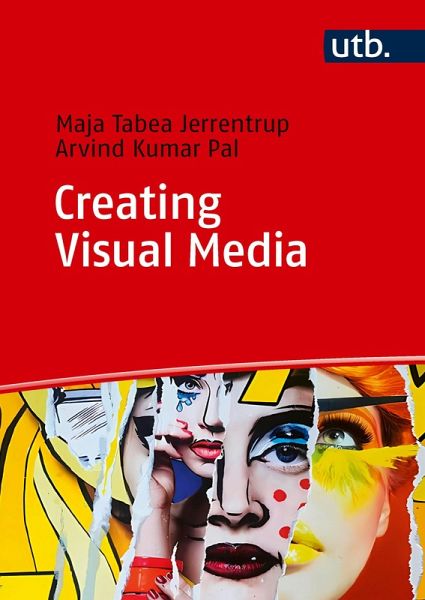
We encounter media everywhere: Design determines whether we perceive objects and how we judge them and it corresponds in many ways with their content. This book provides a comprehensive introduction to the world of media. The chosen perspective is holistic and sociological, historical and psychological aspects are touched upon where appropriate, and practical exercises complete the book.
We encounter media everywhere: Design determines whether we perceive objects and how we judge them and it corresponds in many ways with their content. This book provides a comprehensive introduction to the world of media. The chosen perspective is holistic and sociological, historical and psychological aspects are touched upon where appropriate, and practical exercises complete the book.
Dr. Maja Tabea Jerrentrup ist Professorin für Neue Medien/Interkulturelle Kommunikation an der Hochschuel Landshut und leitet das Zentrum für Medienkultur.
Inhaltsangabe
Preface 7 1. Introduction: Composing the melody 9 2. Basics: Media effects 11 2.1 Media-theoretical foundations 11 2.2 The design experience 19 2.3 Empirical research on media design 29 3. The elements of media design 41 3.1 Central concepts 41 3.2 Signs 51 3.3 Colors 54 3.4 Lines and shapes 64 3.5 Typeface and typography 69 3.6 Images 88 4. The combination 107 4.1 Layout 107 4.2 Design principles 109 4.3 Arrangements 116 4.4 Content-related reference of image and text elements 122 5. Digital media 131 5.1 The history of digital media 131 5.2 Virtualization beyond "real life" 136 5.3 Digitization as a social task 139 5.4 Success factors and design implications 140 6. Your personal handwriting 149 6.1 Creativity 149 6.2 Meeting customers' needs 156 6.3 Individuality 158 6.4 Ethics 162 6.5 Ten principles of good design 165 7. Practice 171 7.1 Business card 173 7.2 Posters 175 7.3 Covers 180 7.4 Magazines 190 7.5 Portfolio folders and photo books 195 7.6 Web design 199 7.7 Apps 202 7.8 Games 206 7.9 Tattoos 210 7.10 Social media 216 7.11 Corporate Identity 223 7.12 AI image generation 230 7.13 Getting started 233 8. Outlook 237 References 239 Index 255
Preface 7 1. Introduction: Composing the melody 9 2. Basics: Media effects 11 2.1 Media-theoretical foundations 11 2.2 The design experience 19 2.3 Empirical research on media design 29 3. The elements of media design 41 3.1 Central concepts 41 3.2 Signs 51 3.3 Colors 54 3.4 Lines and shapes 64 3.5 Typeface and typography 69 3.6 Images 88 4. The combination 107 4.1 Layout 107 4.2 Design principles 109 4.3 Arrangements 116 4.4 Content-related reference of image and text elements 122 5. Digital media 131 5.1 The history of digital media 131 5.2 Virtualization beyond "real life" 136 5.3 Digitization as a social task 139 5.4 Success factors and design implications 140 6. Your personal handwriting 149 6.1 Creativity 149 6.2 Meeting customers' needs 156 6.3 Individuality 158 6.4 Ethics 162 6.5 Ten principles of good design 165 7. Practice 171 7.1 Business card 173 7.2 Posters 175 7.3 Covers 180 7.4 Magazines 190 7.5 Portfolio folders and photo books 195 7.6 Web design 199 7.7 Apps 202 7.8 Games 206 7.9 Tattoos 210 7.10 Social media 216 7.11 Corporate Identity 223 7.12 AI image generation 230 7.13 Getting started 233 8. Outlook 237 References 239 Index 255
Es gelten unsere Allgemeinen Geschäftsbedingungen: www.buecher.de/agb
Impressum
www.buecher.de ist ein Internetauftritt der buecher.de internetstores GmbH
Geschäftsführung: Monica Sawhney | Roland Kölbl | Günter Hilger
Sitz der Gesellschaft: Batheyer Straße 115 - 117, 58099 Hagen
Postanschrift: Bürgermeister-Wegele-Str. 12, 86167 Augsburg
Amtsgericht Hagen HRB 13257
Steuernummer: 321/5800/1497
USt-IdNr: DE450055826