
Andere Kunden interessierten sich auch für
 Barriers to Learning34,99 €
 Barriers and Enablers of Scheduled Caste students in Higher Education36,99 €
 Bridging Theory and Practice:40,99 €
 Views of Effective Leadership in Alberta & Ontario Secondary Schools25,99 €
 Practitioner perspectives on a franchise FHE relationship53,99 €
 Restorative justice in practice: building more peaceful schools31,99 €
 Strategic use of ICT in the Saudi system of higher education: KSU42,99 €


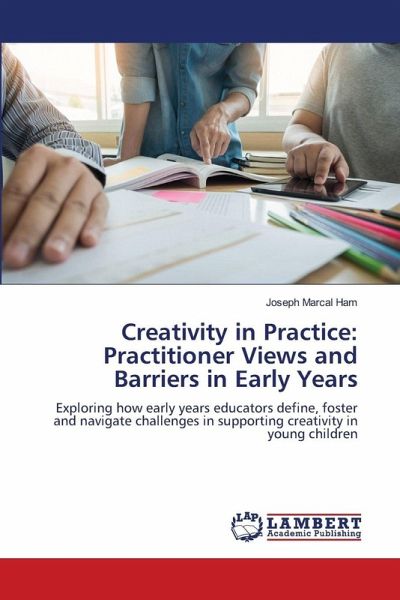
This work explores how early years practitioners understand, support and experience barriers to creativity within educational settings. Drawing on qualitative data from four practitioners across diverse early years environments, the research examines how creativity is defined, observed and facilitated through both child-led and adult-guided approaches. The study highlights that creativity extends beyond artistic expression, encompassing problem-solving, imagination and critical thinking. Findings reveal that practitioners value the creative process over the final product and recognise the importance of play and autonomy in nurturing children's creative potential. However, structural barriers such as curriculum constraints, limited resources and policy pressures within the Early Years Foundation Stage (EYFS) often restrict creative opportunities. The study concludes that fostering creativity requires reflective, flexible practitioners who balance structure with freedom and advocate for creativity as a fundamental element of early childhood development rather than a peripheral subject area.