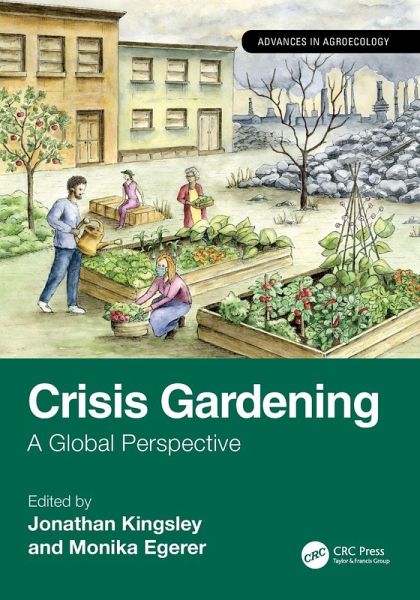
Gardening during times of crisis can have significant benefits to individuals and populations in terms of health, wellbeing, social and economic outcomes. In this book crisis gardening is explored to better define, describe and provide recommendations about this activity globally.
Gardening during times of crisis can have significant benefits to individuals and populations in terms of health, wellbeing, social and economic outcomes. In this book crisis gardening is explored to better define, describe and provide recommendations about this activity globally.
Jonathan Kingsley is a Senior Lecturer in Health Promotion at Swinburne University of Technology. Prior to moving into academia Jonathan worked in Aboriginal Community Controlled Health Organisations, government bodies, and NGOs across Australia in public health and community development. Examples of these organisations include Oxfam Australia, VicHealth and the Victorian Aboriginal Community Controlled Health Organisation. Jonathan views the natural environment as having the capacity to bridge health inequalities (the basis of his Honours, Masters, PhD and previous Visiting Academic position at Cambridge University). Jonathan views himself as not only an academic but an activist winning environment community engagement awards (for example, from Parks Victoria and the International Association for Ecology and Health) and sitting on multiple steering committees and research groups related to Indigenous and environmental health. Dr. Monika Egerer is a professor at the Technical University of Munich in the School of Life Sciences. Her research investigates relationships between biodiversity conservation, ecosystem service provision, and human wellbeing in urban ecosystems, with a focus on urban agricultural systems such as urban gardens and farms. Monika's work aims to bridge theory and practice to create productive systems in cities that offer food, habitat and community.
Inhaltsangabe
Section 1. Crisis gardening in relation to agroecology, transformative change in food systems and public health 1. Gardening as a Response to Food Insecurity During Acute and Chronic Crises: A Narrative Review from the United States 2. How Gardening can Work Towards Combating the Biodiversity Crisis: A Landscape Perspective 3. Opportunities of Urban Gardens for an Agri-food transition in the Context of Structural Crises in Argentina Section 2. Case studies from around the world of crisis gardening from various social-ecological perspectives 4. Growth in Adversity: Exploring Crisis Gardening in African Cities from a Decolonial Perspective 5. The Langa Agri-Food Hub in Cape Town, South Africa: Strengthening Farmers' Networks and Transforming Food Systems in Crisis 6. From Crisis to Opportunity: Exploring Urban Food Growing in the UK During and Beyond the COVID-19 Pandemic 7. Combatting the Crisis of Social Isolation and Loneliness through Gardening 8. Meaningful Activities During the COVID-19 Public Health Crisis: Benefits and Challenges of Home Food Gardening in Santiago, Chile 9. 'A Sweet and Quiet Lesson in Motion': The Pleasures of Pandemic Gardening 10. Mitigating a Public Health Crisis: Exploring the Benefits of Gardening for People Living with Dementia through Collaborative Autoethnography Section 3. The potential of gardening during crisis: scaling up the lessons from crisis gardening to transform food systems, public health systems, policy and landscape planning processes 11. Community Gardens as a Source of Social Capital for Earthquake Preparedness: Case Studies from Old Neighborhoods in Kobe, Japan 12. Homegardens in the Crises of Climate Change, Biodiversity Conservation, and Gender Equity: Perspectives from Bangladesh 13. Towards Urban Resilience: Urban Gardening in Post-Earthquake Christchurch, New Zealand 14. Response Options related to Health Benefits of Gardening in Times of Crisis. Conclusion
Section 1. Crisis gardening in relation to agroecology, transformative change in food systems and public health 1. Gardening as a Response to Food Insecurity During Acute and Chronic Crises: A Narrative Review from the United States 2. How Gardening can Work Towards Combating the Biodiversity Crisis: A Landscape Perspective 3. Opportunities of Urban Gardens for an Agri-food transition in the Context of Structural Crises in Argentina Section 2. Case studies from around the world of crisis gardening from various social-ecological perspectives 4. Growth in Adversity: Exploring Crisis Gardening in African Cities from a Decolonial Perspective 5. The Langa Agri-Food Hub in Cape Town, South Africa: Strengthening Farmers' Networks and Transforming Food Systems in Crisis 6. From Crisis to Opportunity: Exploring Urban Food Growing in the UK During and Beyond the COVID-19 Pandemic 7. Combatting the Crisis of Social Isolation and Loneliness through Gardening 8. Meaningful Activities During the COVID-19 Public Health Crisis: Benefits and Challenges of Home Food Gardening in Santiago, Chile 9. 'A Sweet and Quiet Lesson in Motion': The Pleasures of Pandemic Gardening 10. Mitigating a Public Health Crisis: Exploring the Benefits of Gardening for People Living with Dementia through Collaborative Autoethnography Section 3. The potential of gardening during crisis: scaling up the lessons from crisis gardening to transform food systems, public health systems, policy and landscape planning processes 11. Community Gardens as a Source of Social Capital for Earthquake Preparedness: Case Studies from Old Neighborhoods in Kobe, Japan 12. Homegardens in the Crises of Climate Change, Biodiversity Conservation, and Gender Equity: Perspectives from Bangladesh 13. Towards Urban Resilience: Urban Gardening in Post-Earthquake Christchurch, New Zealand 14. Response Options related to Health Benefits of Gardening in Times of Crisis. Conclusion
Es gelten unsere Allgemeinen Geschäftsbedingungen: www.buecher.de/agb
Impressum
www.buecher.de ist ein Internetauftritt der buecher.de internetstores GmbH
Geschäftsführung: Monica Sawhney | Roland Kölbl | Günter Hilger
Sitz der Gesellschaft: Batheyer Straße 115 - 117, 58099 Hagen
Postanschrift: Bürgermeister-Wegele-Str. 12, 86167 Augsburg
Amtsgericht Hagen HRB 13257
Steuernummer: 321/5800/1497
USt-IdNr: DE450055826