
Andere Kunden interessierten sich auch für
 Managing Software Crisis: A Smart Way to Enterprise Agility76,99 €
 Managing Software Crisis: A Smart Way to Enterprise Agility76,99 €
 IT Crisisology: Smart Crisis Management in Software Engineering113,99 €
 IT Crisisology: Smart Crisis Management in Software Engineering113,99 €
 Software Engineering Research, Management and Applications76,99 €
 Advances in Artificial Intelligence, Software and Systems Engineering166,99 €
 IT Crisisology Casebook106,99 €
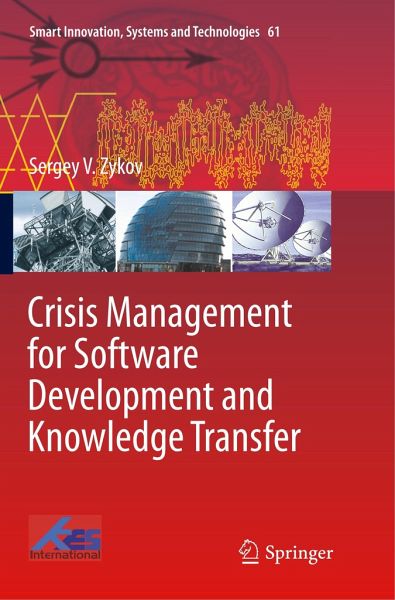
This well structured book discusses lifecycle optimization of software projects for crisis management by means of software engineering methods and tools. Its outcomes are based on lessons learned from the software engineering crisis which started in the 1960s. The book presents a systematic approach to overcome the crisis in software engineering depends which not only depends on technology-related but also on human-related factors. It proposes an adaptive methodology for software product development, which optimizes the software product lifecycle in order to avoid "local" crises of software production. The general lifecycle pattern and its stages are discussed, and their impact on the time and budget of the software product development is analyzed. The book identifies key advantages and disadvantages for various models selected and concludes that there is no "silver bullet", or universal model, which suits all software products equally well. It approaches software architecture in terms of process, data and system perspectives and proposes an incremental methodology for crisis-agile development of large-scale, distributed heterogeneous applications. The book introduces a number of specialized approaches which are widely used in industry but are often ignored in general writings because of their vendor-specificity. In doing so, the book builds a helpful bridge from academic conceptions of software engineering to the world of software engineering practice. With its systematic coverage of different software engineering methodologies and the presented rich systems engineering examples the book will be beneficial for a broader audience.