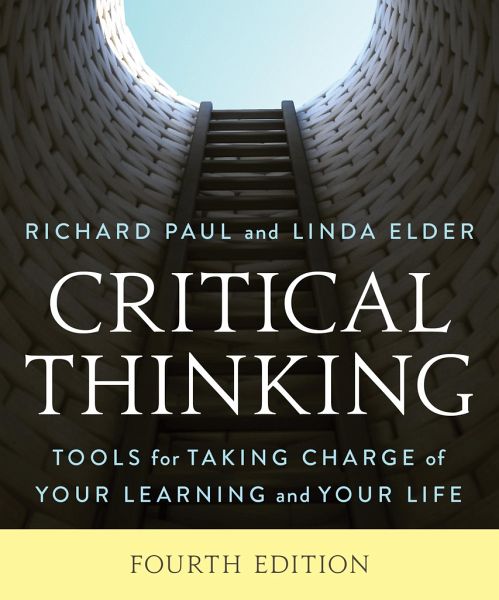
This introductory critical thinking text provides an integrated, universal concept of critical thinking that is both substantive and practical. As leading scholars of the critical thinking field, Paul and Elder give students the intellectual tools needed for life-long learning.
This introductory critical thinking text provides an integrated, universal concept of critical thinking that is both substantive and practical. As leading scholars of the critical thinking field, Paul and Elder give students the intellectual tools needed for life-long learning.
Preface Introduction Chapter 1. Become A Fairminded Thinker Chapter 2. The First Four Stages of Development: At What Level of Thinking Would You Place Yourself? Chapter 3. Self-Understanding in a Complex World Chapter 4. The Parts of Thinking Chapter 5. Standards for Thinking Chapter 6. Ask Questions That Lead to Good Thinking Chapter 7. Master the Thinking, Master the Content Chapter 8. Discover How the Best Thinkers Learn Chapter 9. Redefine Grades as Levels of Thinking and Learning Chapter 10. Make Decisions and Solve Problems Chapter 11. Argumentation Theory and Critical Thinking Chapter 12. Deal with Your Irrational Mind Chapter 13. Develop as an Ethical Reasoner Chapter 14. How to Detect Media Bias and Political Propaganda Chapter 15. Fallacies: The Art of Mental Trickery and Manipulation Chapter 16. Learning & Using Information Critically & Ethically, Part One Chapter 17. Learning & Using Information Critically & Ethically, Part Two Chapter 18. Strategic Thinking: Part One Chapter 19. Strategic Thinking: Part Two Chapter 20. Becoming An Advanced Thinker: Our Conclusion Appendices A. A Brief History of The Idea of Critical Thinking B. Sample Analysis of The Logic of . . . Glossary References
Preface Introduction Chapter 1. Become A Fairminded Thinker Chapter 2. The First Four Stages of Development: At What Level of Thinking Would You Place Yourself? Chapter 3. Self-Understanding in a Complex World Chapter 4. The Parts of Thinking Chapter 5. Standards for Thinking Chapter 6. Ask Questions That Lead to Good Thinking Chapter 7. Master the Thinking, Master the Content Chapter 8. Discover How the Best Thinkers Learn Chapter 9. Redefine Grades as Levels of Thinking and Learning Chapter 10. Make Decisions and Solve Problems Chapter 11. Argumentation Theory and Critical Thinking Chapter 12. Deal with Your Irrational Mind Chapter 13. Develop as an Ethical Reasoner Chapter 14. How to Detect Media Bias and Political Propaganda Chapter 15. Fallacies: The Art of Mental Trickery and Manipulation Chapter 16. Learning & Using Information Critically & Ethically, Part One Chapter 17. Learning & Using Information Critically & Ethically, Part Two Chapter 18. Strategic Thinking: Part One Chapter 19. Strategic Thinking: Part Two Chapter 20. Becoming An Advanced Thinker: Our Conclusion Appendices A. A Brief History of The Idea of Critical Thinking B. Sample Analysis of The Logic of . . . Glossary References
Es gelten unsere Allgemeinen Geschäftsbedingungen: www.buecher.de/agb
Impressum
www.buecher.de ist ein Internetauftritt der buecher.de internetstores GmbH
Geschäftsführung: Monica Sawhney | Roland Kölbl | Günter Hilger
Sitz der Gesellschaft: Batheyer Straße 115 - 117, 58099 Hagen
Postanschrift: Bürgermeister-Wegele-Str. 12, 86167 Augsburg
Amtsgericht Hagen HRB 13257
Steuernummer: 321/5800/1497
USt-IdNr: DE450055826