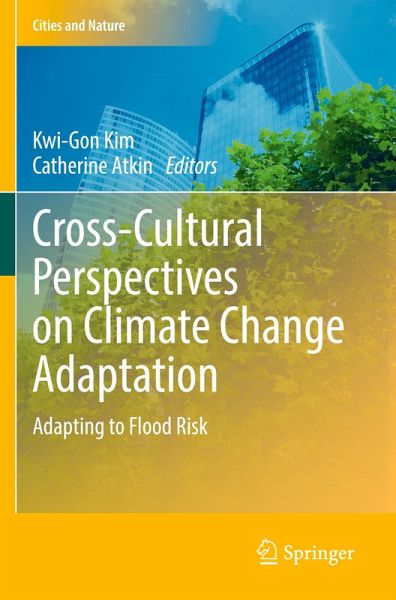
This book provides important new and actionable tools for diverse cities and communities facing climate disasters to engage in risk assessment and green recovery. The on the ground perspective from case studies across the global south ensures a culturally inclusive perspective too often missing from the current dialogue. This book offers integrated, actionable and culturally inclusive risk management and green recovery conceptual frameworks and methodologies based on case studies from communities across the global south. Through its focus on flood disasters, this book provides an integrated…mehr
This book provides important new and actionable tools for diverse cities and communities facing climate disasters to engage in risk assessment and green recovery. The on the ground perspective from case studies across the global south ensures a culturally inclusive perspective too often missing from the current dialogue. This book offers integrated, actionable and culturally inclusive risk management and green recovery conceptual frameworks and methodologies based on case studies from communities across the global south. Through its focus on flood disasters, this book provides an integrated approach to climate adaptation, green growth and mitigation that can unlock climate action and increase community resilience across the global south. This book is intended for university students, professionals, local governments, and policy decision makers.
Professor Kim, Kwi-Gon is an environmental ecological planner actively involving himself to the center of environmental and climate field where environmental problems have become global issues and green growth, a vision of nations. He received his bachelor's degree in Forestry from Seoul National University, master's degree in Landscape Architecture at the University of Canterbury, New Zealand and master's degree in Regional and Urban Planning Studies at the School of Planning, University of Reading, UK and a Ph. D. in Planning Studies at the Bartlett School of Architecture and Planning, UCL, University of London, UK. His current field of interest is planning and creation of Low- Carbon Ecopolis and Climate Smart Cities, ideal cities where human beings and nature coexist. Catherine Atkin is an attorney, entrepreneur and urban planner committed to building equitable and effective climate solutions and leveraging the power of carbon data transparency and climate technology innovations to drive climate impact and sustainable development. She received a BA from Stanford University, a law degree from Berkeley School of Law (UCB) and a master's degree in Urban Planning from University of California Los Angeles (UCLA). She is a member of the California Bar and a member of the California Lawyers Association Environmental Law Section. She is Co-chair of the Stanford Law School CodeX Center for Legal Informatics Climate Data Policy Initiative and is an expert on national and sub-national GHG data policies and accounting frameworks with a special focus on how next-gen technologies like BC, AI and IoT can be leveraged for greater transparency and impact and is. She is co-chair of the UNFCCC Global Innovation Hub Consumption Based Accounting City Initiative Working Group where she is focused on the development of new GHG accounting and financing solutions that can catalyze sustainable and climate positive value chains.
Inhaltsangabe
Introduction. Part I: Climate Change and Flood Disaster: Current Global Context and Theory of Climate Disaster Risk Assessment and Green Recovery. Chapter 1. International Movements towards Climate Disaster and Green Recovery: Sustainable Development Goals, The Paris Climate Agreement, Green Deal, COVID 19 Disaster, and the City (Kwi Gon Kim, Catherine Atkin). Chapter 2. Concept and Definition of Disasters, Issues and Emerging Solutions (Kwi Gon Kim). Part II: Flood Risk Assessment and Green Recovery Framework and Methods. Chapter 3. Nine Step Conceptual Framework for Climate Disaster Risk Assessment and Green Recovery Planning and Innovation (Kwi Gon Kim). Chapter 4. Methods and Technologies for Developing the Indicators of Climate Disaster Risk Assessment and Green Recovery Planning: The Standard Methods and Techniques for a Whole System (Kwi Gon Kim, Catherine Atkin). Part III: Cross cutting and Emerging Topics. Chapter 5. Untact Space Planning for a Post COVID 19 Pandemic as a Compound Flood Risk (Kwi Gon Kim). Chapter 6. Overview and Exploration of Nature based Flooding Solutions (Kwi Gon Kim). Chapter 7. Using green recovery principles to integrate City Wide Inclusive Sanitation (CWIS) with flood risk management (Rachel Carbone). Part IV: Food Risk Assessment and Green Recovery: Twelve Case Studies from Across the Globe. Chapter 8. Overview of Case Studies: Common Elements and Framework for Analysis (Kwi Gon Kim, Catherine Atkin). Chapter 9. Flash Floods Cambodia and Afghanistan. Chapter 10. Urban floods Uganda, Tanzania and Columbia. Chapter 11. Riverine Floods DR Congo, Ecuador, and East timor. Chapter 12. Rural Floods Loa, Tanzania, and Cambodia. Part V: The Synthesis of Case Studies. Chapter 13. Comparative Assessment of Case Studies Policy related Recommendations, Strategies, Actions, Tools and Technologies for Climate Change Adaptation (Catherine Atkin, Kwi Gon Kim). Chapter 14. Case Study Comparison with Adaptation in SelectMore Advanced Countries (Kwi Gon Kim, Catherine Atkin). Part VI: Adaptation and Mitigation Framework Integration and Innovation: Future Prospects. Chapter 15: Co benefits of Combining Adaptation and Mitigation Frameworks: A Cross Cutting Approach (Kwi Gon Kim, Catherine Atkin). Chapter 16. Digitalization of Flood Related Climate Innovations in Cities: A Practical Prototype to Address Data Requirements (Kwi Gon Kim, Catherine Atkin). Chapter 17. New Frontiers: Application of Blockchain (BC)/Distributed Ledger Technology (DLT) to Drive Flood Reduction Solution Markets and Financing (Si Chen). Chapter 18. Towards Disaster Free Cities and Communities: Climate Smart, Safe and Resilient Localities (Kwi Gon Kim, Catherine Atkin, all authors).
Introduction. Part I: Climate Change and Flood Disaster: Current Global Context and Theory of Climate Disaster Risk Assessment and Green Recovery. Chapter 1. International Movements towards Climate Disaster and Green Recovery: Sustainable Development Goals, The Paris Climate Agreement, Green Deal, COVID 19 Disaster, and the City (Kwi Gon Kim, Catherine Atkin). Chapter 2. Concept and Definition of Disasters, Issues and Emerging Solutions (Kwi Gon Kim). Part II: Flood Risk Assessment and Green Recovery Framework and Methods. Chapter 3. Nine Step Conceptual Framework for Climate Disaster Risk Assessment and Green Recovery Planning and Innovation (Kwi Gon Kim). Chapter 4. Methods and Technologies for Developing the Indicators of Climate Disaster Risk Assessment and Green Recovery Planning: The Standard Methods and Techniques for a Whole System (Kwi Gon Kim, Catherine Atkin). Part III: Cross cutting and Emerging Topics. Chapter 5. Untact Space Planning for a Post COVID 19 Pandemic as a Compound Flood Risk (Kwi Gon Kim). Chapter 6. Overview and Exploration of Nature based Flooding Solutions (Kwi Gon Kim). Chapter 7. Using green recovery principles to integrate City Wide Inclusive Sanitation (CWIS) with flood risk management (Rachel Carbone). Part IV: Food Risk Assessment and Green Recovery: Twelve Case Studies from Across the Globe. Chapter 8. Overview of Case Studies: Common Elements and Framework for Analysis (Kwi Gon Kim, Catherine Atkin). Chapter 9. Flash Floods Cambodia and Afghanistan. Chapter 10. Urban floods Uganda, Tanzania and Columbia. Chapter 11. Riverine Floods DR Congo, Ecuador, and East timor. Chapter 12. Rural Floods Loa, Tanzania, and Cambodia. Part V: The Synthesis of Case Studies. Chapter 13. Comparative Assessment of Case Studies Policy related Recommendations, Strategies, Actions, Tools and Technologies for Climate Change Adaptation (Catherine Atkin, Kwi Gon Kim). Chapter 14. Case Study Comparison with Adaptation in SelectMore Advanced Countries (Kwi Gon Kim, Catherine Atkin). Part VI: Adaptation and Mitigation Framework Integration and Innovation: Future Prospects. Chapter 15: Co benefits of Combining Adaptation and Mitigation Frameworks: A Cross Cutting Approach (Kwi Gon Kim, Catherine Atkin). Chapter 16. Digitalization of Flood Related Climate Innovations in Cities: A Practical Prototype to Address Data Requirements (Kwi Gon Kim, Catherine Atkin). Chapter 17. New Frontiers: Application of Blockchain (BC)/Distributed Ledger Technology (DLT) to Drive Flood Reduction Solution Markets and Financing (Si Chen). Chapter 18. Towards Disaster Free Cities and Communities: Climate Smart, Safe and Resilient Localities (Kwi Gon Kim, Catherine Atkin, all authors).
Es gelten unsere Allgemeinen Geschäftsbedingungen: www.buecher.de/agb
Impressum
www.buecher.de ist ein Internetauftritt der buecher.de internetstores GmbH
Geschäftsführung: Monica Sawhney | Roland Kölbl | Günter Hilger
Sitz der Gesellschaft: Batheyer Straße 115 - 117, 58099 Hagen
Postanschrift: Bürgermeister-Wegele-Str. 12, 86167 Augsburg
Amtsgericht Hagen HRB 13257
Steuernummer: 321/5800/1497
USt-IdNr: DE450055826