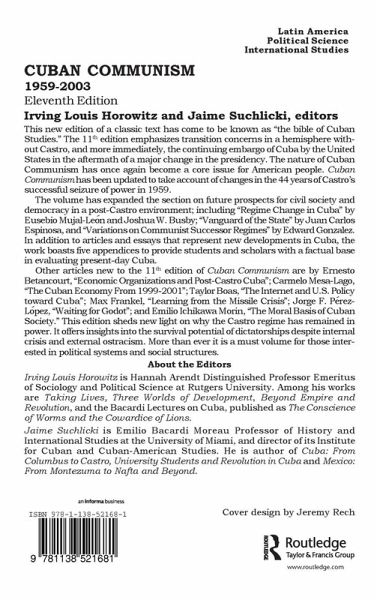
Cuban Communism, 1959-2003
Herausgeber: Horowitz, Irving Louis
Cuban Communism, 1959-2003
Herausgeber: Horowitz, Irving Louis
- Gebundenes Buch
- Merkliste
- Auf die Merkliste
- Bewerten Bewerten
- Teilen
- Produkt teilen
- Produkterinnerung
- Produkterinnerung
"Cuban Communism remains, like its previous ten editions, an important contribution to the field of Cuban Studies
Andere Kunden interessierten sich auch für
Joe R. FeaginLatinos Facing Racism212,99 €
R. Barry FarrellLeadership in East European Communism, 1945-1970168,99 €
Debating U.S.-Cuban Relations186,99 €
Ferdinand TonniesCommunism, Conformity and Liberties167,99 €
Sobre AmericaThe Cuban Revolution Into The 1990s176,99 €
Barry B LevineThe New Cuban Presence In The Caribbean113,99 €
Jorge I DominguezU.s.-cuban Relations In The 1990s168,99 €-
-
-
"Cuban Communism remains, like its previous ten editions, an important contribution to the field of Cuban Studies
Produktdetails
- Produktdetails
- Verlag: Routledge
- 11. Auflage
- Seitenzahl: 758
- Erscheinungstermin: 2. August 2017
- Englisch
- Abmessung: 235mm x 157mm x 45mm
- Gewicht: 1229g
- ISBN-13: 9781138521681
- ISBN-10: 113852168X
- Artikelnr.: 49208594
- Herstellerkennzeichnung
- Libri GmbH
- Europaallee 1
- 36244 Bad Hersfeld
- gpsr@libri.de
- Verlag: Routledge
- 11. Auflage
- Seitenzahl: 758
- Erscheinungstermin: 2. August 2017
- Englisch
- Abmessung: 235mm x 157mm x 45mm
- Gewicht: 1229g
- ISBN-13: 9781138521681
- ISBN-10: 113852168X
- Artikelnr.: 49208594
- Herstellerkennzeichnung
- Libri GmbH
- Europaallee 1
- 36244 Bad Hersfeld
- gpsr@libri.de
Irving Louis Horowitz
1: History
1: One Hundred Years of Ambiguity: U.S.-Cuba Relations in the 20th Century
2: Cuba: The United States and Batista, 1952-1958
3: The Sierra and the Plains
4: Guerrillas at War
5: Learning from the Cuban Missile Crisis
6: Immutable Proclamations and Unintended Consequences
7: Fidelismo: The Unfulfilled Ideology
2: Economy
8: The Cuban Economy in 1999-2001: Evaluation of Performance
9: Labor Conditions in Revolutionary Cuba
10: The Political Economy of Caudillismo
11: Market-Oriented Marxism: Post-Cold War Transition in Cuba and Vietnam
12: Waiting For Godot: Cuba's Stalled Reforms and Continuing Economic Crisis
13: Cuba's Transition from Communism to Political and Economic Freedom
14: Economic Organizations and Post-Castro Cuba
3: Society
15: Searching for Civil Society in Cuba
16: The Conventionalization of Collective Behavior
17: The Internet and U.S. Policy toward Cuba
18: Women, Family, and the Cuban Revolution *
19: Health Care in Cuba
20: Cuba's Refugees: Manifold Migrations
21: The Moral Basis of Cuban Society
4: Military
22: Political-Military Relations from 1959 to the Present
23: Vanguard of the State: The Cuban Armed Forces in Transition
24: Military Origin and Evolution of the Cuban Revolution
25: The Cuban Armed Forces: Changing Roles, Continued Loyalties
26: Cuban Military Influences on Political and Economic Decision-Making
5: Polity
27: Why the Cuban Regime Has Not Fallen
28: Cuba: Without Subsidies
29: Cuba: Economic Sanctions and American Diplomacy
30: Cuba and the United States: Back to the Beginning
31: Much Ado About Something?: Regime Change in Cuba
32: The Cuban Revolution and Its Acolytes
33: After Fidel, What?: Forecasting Institutional Changes in Cuba
6: Transition to Civil Society
34: The United States and Cuba: Future Security Issues
35: Role of the United States and International Lending Institutions in Cuba's Transition
36: Three Variations on Communist Successor Regimes
37: Festina Lente: The United States and Cuba After Castro
38: Humanitarian Assistance during a Democratic Transition in Cuba
39: Economic and Social Disparities in Cuba: Recommendations for Change
1: One Hundred Years of Ambiguity: U.S.-Cuba Relations in the 20th Century
2: Cuba: The United States and Batista, 1952-1958
3: The Sierra and the Plains
4: Guerrillas at War
5: Learning from the Cuban Missile Crisis
6: Immutable Proclamations and Unintended Consequences
7: Fidelismo: The Unfulfilled Ideology
2: Economy
8: The Cuban Economy in 1999-2001: Evaluation of Performance
9: Labor Conditions in Revolutionary Cuba
10: The Political Economy of Caudillismo
11: Market-Oriented Marxism: Post-Cold War Transition in Cuba and Vietnam
12: Waiting For Godot: Cuba's Stalled Reforms and Continuing Economic Crisis
13: Cuba's Transition from Communism to Political and Economic Freedom
14: Economic Organizations and Post-Castro Cuba
3: Society
15: Searching for Civil Society in Cuba
16: The Conventionalization of Collective Behavior
17: The Internet and U.S. Policy toward Cuba
18: Women, Family, and the Cuban Revolution *
19: Health Care in Cuba
20: Cuba's Refugees: Manifold Migrations
21: The Moral Basis of Cuban Society
4: Military
22: Political-Military Relations from 1959 to the Present
23: Vanguard of the State: The Cuban Armed Forces in Transition
24: Military Origin and Evolution of the Cuban Revolution
25: The Cuban Armed Forces: Changing Roles, Continued Loyalties
26: Cuban Military Influences on Political and Economic Decision-Making
5: Polity
27: Why the Cuban Regime Has Not Fallen
28: Cuba: Without Subsidies
29: Cuba: Economic Sanctions and American Diplomacy
30: Cuba and the United States: Back to the Beginning
31: Much Ado About Something?: Regime Change in Cuba
32: The Cuban Revolution and Its Acolytes
33: After Fidel, What?: Forecasting Institutional Changes in Cuba
6: Transition to Civil Society
34: The United States and Cuba: Future Security Issues
35: Role of the United States and International Lending Institutions in Cuba's Transition
36: Three Variations on Communist Successor Regimes
37: Festina Lente: The United States and Cuba After Castro
38: Humanitarian Assistance during a Democratic Transition in Cuba
39: Economic and Social Disparities in Cuba: Recommendations for Change
1: History
1: One Hundred Years of Ambiguity: U.S.-Cuba Relations in the 20th Century
2: Cuba: The United States and Batista, 1952-1958
3: The Sierra and the Plains
4: Guerrillas at War
5: Learning from the Cuban Missile Crisis
6: Immutable Proclamations and Unintended Consequences
7: Fidelismo: The Unfulfilled Ideology
2: Economy
8: The Cuban Economy in 1999-2001: Evaluation of Performance
9: Labor Conditions in Revolutionary Cuba
10: The Political Economy of Caudillismo
11: Market-Oriented Marxism: Post-Cold War Transition in Cuba and Vietnam
12: Waiting For Godot: Cuba's Stalled Reforms and Continuing Economic Crisis
13: Cuba's Transition from Communism to Political and Economic Freedom
14: Economic Organizations and Post-Castro Cuba
3: Society
15: Searching for Civil Society in Cuba
16: The Conventionalization of Collective Behavior
17: The Internet and U.S. Policy toward Cuba
18: Women, Family, and the Cuban Revolution *
19: Health Care in Cuba
20: Cuba's Refugees: Manifold Migrations
21: The Moral Basis of Cuban Society
4: Military
22: Political-Military Relations from 1959 to the Present
23: Vanguard of the State: The Cuban Armed Forces in Transition
24: Military Origin and Evolution of the Cuban Revolution
25: The Cuban Armed Forces: Changing Roles, Continued Loyalties
26: Cuban Military Influences on Political and Economic Decision-Making
5: Polity
27: Why the Cuban Regime Has Not Fallen
28: Cuba: Without Subsidies
29: Cuba: Economic Sanctions and American Diplomacy
30: Cuba and the United States: Back to the Beginning
31: Much Ado About Something?: Regime Change in Cuba
32: The Cuban Revolution and Its Acolytes
33: After Fidel, What?: Forecasting Institutional Changes in Cuba
6: Transition to Civil Society
34: The United States and Cuba: Future Security Issues
35: Role of the United States and International Lending Institutions in Cuba's Transition
36: Three Variations on Communist Successor Regimes
37: Festina Lente: The United States and Cuba After Castro
38: Humanitarian Assistance during a Democratic Transition in Cuba
39: Economic and Social Disparities in Cuba: Recommendations for Change
1: One Hundred Years of Ambiguity: U.S.-Cuba Relations in the 20th Century
2: Cuba: The United States and Batista, 1952-1958
3: The Sierra and the Plains
4: Guerrillas at War
5: Learning from the Cuban Missile Crisis
6: Immutable Proclamations and Unintended Consequences
7: Fidelismo: The Unfulfilled Ideology
2: Economy
8: The Cuban Economy in 1999-2001: Evaluation of Performance
9: Labor Conditions in Revolutionary Cuba
10: The Political Economy of Caudillismo
11: Market-Oriented Marxism: Post-Cold War Transition in Cuba and Vietnam
12: Waiting For Godot: Cuba's Stalled Reforms and Continuing Economic Crisis
13: Cuba's Transition from Communism to Political and Economic Freedom
14: Economic Organizations and Post-Castro Cuba
3: Society
15: Searching for Civil Society in Cuba
16: The Conventionalization of Collective Behavior
17: The Internet and U.S. Policy toward Cuba
18: Women, Family, and the Cuban Revolution *
19: Health Care in Cuba
20: Cuba's Refugees: Manifold Migrations
21: The Moral Basis of Cuban Society
4: Military
22: Political-Military Relations from 1959 to the Present
23: Vanguard of the State: The Cuban Armed Forces in Transition
24: Military Origin and Evolution of the Cuban Revolution
25: The Cuban Armed Forces: Changing Roles, Continued Loyalties
26: Cuban Military Influences on Political and Economic Decision-Making
5: Polity
27: Why the Cuban Regime Has Not Fallen
28: Cuba: Without Subsidies
29: Cuba: Economic Sanctions and American Diplomacy
30: Cuba and the United States: Back to the Beginning
31: Much Ado About Something?: Regime Change in Cuba
32: The Cuban Revolution and Its Acolytes
33: After Fidel, What?: Forecasting Institutional Changes in Cuba
6: Transition to Civil Society
34: The United States and Cuba: Future Security Issues
35: Role of the United States and International Lending Institutions in Cuba's Transition
36: Three Variations on Communist Successor Regimes
37: Festina Lente: The United States and Cuba After Castro
38: Humanitarian Assistance during a Democratic Transition in Cuba
39: Economic and Social Disparities in Cuba: Recommendations for Change