Gregory Berry
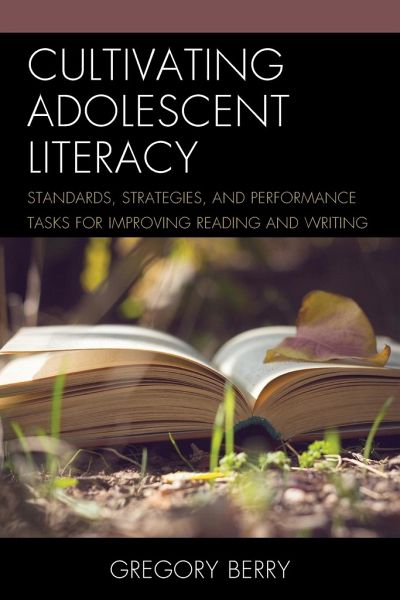
Cultivating Adolescent Literacy
Standards, Strategies, and Performance Tasks for Improving Reading and Writing
Gregory Berry
Cultivating Adolescent Literacy
Standards, Strategies, and Performance Tasks for Improving Reading and Writing
- Broschiertes Buch
- Merkliste
- Auf die Merkliste
- Bewerten Bewerten
- Teilen
- Produkt teilen
- Produkterinnerung
- Produkterinnerung
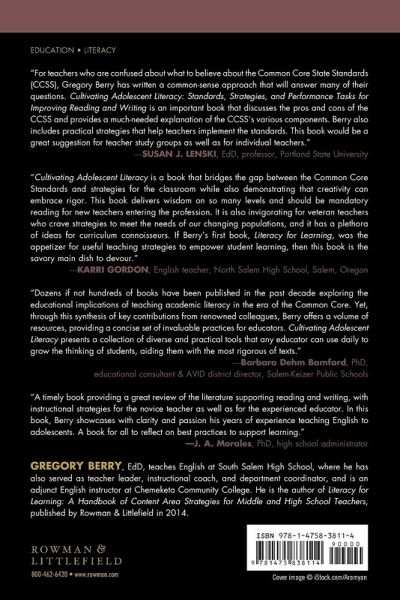
This book offers middle and high school teachers useful suggestions and strategies for cultivating literacy in their classrooms.
Andere Kunden interessierten sich auch für
Gregory BerryCultivating Adolescent Literacy76,99 €
Katherine S. McKnightStrategies to Support Struggling Adolescent Readers, Grades 6-1295,99 €
Paula SaineCultivating Diversity and Inclusion46,99 €
Paula SaineCultivating Diversity and Inclusion110,99 €
Developing Mathematical Literacy through Adolescent Literature38,99 €
Katherine S. McKnightStrategies to Support Struggling Adolescent Readers, Grades 6-1246,99 €
Pamela HartmanCultivating Democratic Literacy Through the Arts54,99 €-
-
-
This book offers middle and high school teachers useful suggestions and strategies for cultivating literacy in their classrooms.
Produktdetails
- Produktdetails
- Verlag: Rowman & Littlefield Publishers
- Seitenzahl: 174
- Erscheinungstermin: 4. Oktober 2017
- Englisch
- Abmessung: 229mm x 152mm x 10mm
- Gewicht: 262g
- ISBN-13: 9781475838114
- ISBN-10: 1475838115
- Artikelnr.: 48698143
- Herstellerkennzeichnung
- Libri GmbH
- Europaallee 1
- 36244 Bad Hersfeld
- gpsr@libri.de
- Verlag: Rowman & Littlefield Publishers
- Seitenzahl: 174
- Erscheinungstermin: 4. Oktober 2017
- Englisch
- Abmessung: 229mm x 152mm x 10mm
- Gewicht: 262g
- ISBN-13: 9781475838114
- ISBN-10: 1475838115
- Artikelnr.: 48698143
- Herstellerkennzeichnung
- Libri GmbH
- Europaallee 1
- 36244 Bad Hersfeld
- gpsr@libri.de
Gregory Berry teaches English at South Salem High School, where he has also served as teacher leader, instructional coach, and department coordinator, and is an adjunct English instructor at Chemeketa Community College. He received his BA in English, BS in Education, and MS is education from Eastern Oregon University and his doctorate in educational leadership, curriculum, and instruction from Portland State University in 2009. He is the author of Literacy for Learning: A Handbook of Content Area Strategies for Middle and High School Teachers, published by Rowman & Littlefield in 2014.
Preface
Acknowledgements
Introduction
Chapter One: English Language Arts, Educational Reform, and the Common Core
State Standards Movement
Cycles of ChangeThe Common Core State Standards: Promise and
ControversyHolding on To Literature in the English CurriculumChapter Two:
Cultivating Literacy Learning through Close Reading
The Importance of Integrating Reading and WritingClose Reading Strategies
for Literary and Informational Text Close Reading: What it Is and Why It's
ImportantClose Reading ControversyWhat is Complex TextSuggested Close
Reading StrategiesStrategy One: Four Basic QuestionsStrategy Two:
Think-AloudStrategy Three: Vocabulary: Structural Analysis and Context
CluesStrategy Four: Reading Like a WriterStrategy Five: Text
MarkingStrategy Six: Charting the TextStrategy Seven: Interactive Shared
ReadingStrategy Eight: Monitoring ComprehensionStrategy Nine: Multiple
ReadingsStrategy Ten: Using Evidence from TextStrategy Eleven:
Student-Determined Text-Dependent QuestionsStrategy Twelve: Teaching Text
StructureStrategy Thirteen: Color Coding of TextStrategy Fourteen:
CommentaryStrategy Fifteen: Analyzing a SourceStrategy Sixteen:
ParaphrasingStrategy Seventeen: KNOWSStrategy Eighteen: Apps for Promoting
Reading SkillStrategy Nineteen: The One PagerChapter Three: Textual
Evidence and Elaboration
Textual Evidence: What it is and Why it's ImportantSimple Ways to Teach
Textual EvidenceSample Strategies Color Coding StrategyPoetry Explication:
Supporting Your Reading by Citing Textual EvidenceUsing TransitionsA Time
to Dig Deeper: Answering Text-Based QuestionChapter Four: Performance Tasks
for Specific Literary Texts
What are Performance Tasks?Performance Tasks for Specific TextsHuckleberry
Finn and 19th Century Literature Performance Task Cyrano De Bergerac
Performance TaskThe Great Gatsby Performance TaskOur Town Performance
TaskOf Mice and Men Performance TaskThe Crucible Performance TaskRicochet
River Performance TaskThe Bean TreesHouse on Mango Street Performance
TaskPoetry Performance TasksPart One: Literary Analysis of ThemePart Two:
Layered CurriculumPoverty Performance TaskAfterword: Letting Our Garden
Grow
Acknowledgements
Introduction
Chapter One: English Language Arts, Educational Reform, and the Common Core
State Standards Movement
Cycles of ChangeThe Common Core State Standards: Promise and
ControversyHolding on To Literature in the English CurriculumChapter Two:
Cultivating Literacy Learning through Close Reading
The Importance of Integrating Reading and WritingClose Reading Strategies
for Literary and Informational Text Close Reading: What it Is and Why It's
ImportantClose Reading ControversyWhat is Complex TextSuggested Close
Reading StrategiesStrategy One: Four Basic QuestionsStrategy Two:
Think-AloudStrategy Three: Vocabulary: Structural Analysis and Context
CluesStrategy Four: Reading Like a WriterStrategy Five: Text
MarkingStrategy Six: Charting the TextStrategy Seven: Interactive Shared
ReadingStrategy Eight: Monitoring ComprehensionStrategy Nine: Multiple
ReadingsStrategy Ten: Using Evidence from TextStrategy Eleven:
Student-Determined Text-Dependent QuestionsStrategy Twelve: Teaching Text
StructureStrategy Thirteen: Color Coding of TextStrategy Fourteen:
CommentaryStrategy Fifteen: Analyzing a SourceStrategy Sixteen:
ParaphrasingStrategy Seventeen: KNOWSStrategy Eighteen: Apps for Promoting
Reading SkillStrategy Nineteen: The One PagerChapter Three: Textual
Evidence and Elaboration
Textual Evidence: What it is and Why it's ImportantSimple Ways to Teach
Textual EvidenceSample Strategies Color Coding StrategyPoetry Explication:
Supporting Your Reading by Citing Textual EvidenceUsing TransitionsA Time
to Dig Deeper: Answering Text-Based QuestionChapter Four: Performance Tasks
for Specific Literary Texts
What are Performance Tasks?Performance Tasks for Specific TextsHuckleberry
Finn and 19th Century Literature Performance Task Cyrano De Bergerac
Performance TaskThe Great Gatsby Performance TaskOur Town Performance
TaskOf Mice and Men Performance TaskThe Crucible Performance TaskRicochet
River Performance TaskThe Bean TreesHouse on Mango Street Performance
TaskPoetry Performance TasksPart One: Literary Analysis of ThemePart Two:
Layered CurriculumPoverty Performance TaskAfterword: Letting Our Garden
Grow
Preface
Acknowledgements
Introduction
Chapter One: English Language Arts, Educational Reform, and the Common Core
State Standards Movement
Cycles of ChangeThe Common Core State Standards: Promise and
ControversyHolding on To Literature in the English CurriculumChapter Two:
Cultivating Literacy Learning through Close Reading
The Importance of Integrating Reading and WritingClose Reading Strategies
for Literary and Informational Text Close Reading: What it Is and Why It's
ImportantClose Reading ControversyWhat is Complex TextSuggested Close
Reading StrategiesStrategy One: Four Basic QuestionsStrategy Two:
Think-AloudStrategy Three: Vocabulary: Structural Analysis and Context
CluesStrategy Four: Reading Like a WriterStrategy Five: Text
MarkingStrategy Six: Charting the TextStrategy Seven: Interactive Shared
ReadingStrategy Eight: Monitoring ComprehensionStrategy Nine: Multiple
ReadingsStrategy Ten: Using Evidence from TextStrategy Eleven:
Student-Determined Text-Dependent QuestionsStrategy Twelve: Teaching Text
StructureStrategy Thirteen: Color Coding of TextStrategy Fourteen:
CommentaryStrategy Fifteen: Analyzing a SourceStrategy Sixteen:
ParaphrasingStrategy Seventeen: KNOWSStrategy Eighteen: Apps for Promoting
Reading SkillStrategy Nineteen: The One PagerChapter Three: Textual
Evidence and Elaboration
Textual Evidence: What it is and Why it's ImportantSimple Ways to Teach
Textual EvidenceSample Strategies Color Coding StrategyPoetry Explication:
Supporting Your Reading by Citing Textual EvidenceUsing TransitionsA Time
to Dig Deeper: Answering Text-Based QuestionChapter Four: Performance Tasks
for Specific Literary Texts
What are Performance Tasks?Performance Tasks for Specific TextsHuckleberry
Finn and 19th Century Literature Performance Task Cyrano De Bergerac
Performance TaskThe Great Gatsby Performance TaskOur Town Performance
TaskOf Mice and Men Performance TaskThe Crucible Performance TaskRicochet
River Performance TaskThe Bean TreesHouse on Mango Street Performance
TaskPoetry Performance TasksPart One: Literary Analysis of ThemePart Two:
Layered CurriculumPoverty Performance TaskAfterword: Letting Our Garden
Grow
Acknowledgements
Introduction
Chapter One: English Language Arts, Educational Reform, and the Common Core
State Standards Movement
Cycles of ChangeThe Common Core State Standards: Promise and
ControversyHolding on To Literature in the English CurriculumChapter Two:
Cultivating Literacy Learning through Close Reading
The Importance of Integrating Reading and WritingClose Reading Strategies
for Literary and Informational Text Close Reading: What it Is and Why It's
ImportantClose Reading ControversyWhat is Complex TextSuggested Close
Reading StrategiesStrategy One: Four Basic QuestionsStrategy Two:
Think-AloudStrategy Three: Vocabulary: Structural Analysis and Context
CluesStrategy Four: Reading Like a WriterStrategy Five: Text
MarkingStrategy Six: Charting the TextStrategy Seven: Interactive Shared
ReadingStrategy Eight: Monitoring ComprehensionStrategy Nine: Multiple
ReadingsStrategy Ten: Using Evidence from TextStrategy Eleven:
Student-Determined Text-Dependent QuestionsStrategy Twelve: Teaching Text
StructureStrategy Thirteen: Color Coding of TextStrategy Fourteen:
CommentaryStrategy Fifteen: Analyzing a SourceStrategy Sixteen:
ParaphrasingStrategy Seventeen: KNOWSStrategy Eighteen: Apps for Promoting
Reading SkillStrategy Nineteen: The One PagerChapter Three: Textual
Evidence and Elaboration
Textual Evidence: What it is and Why it's ImportantSimple Ways to Teach
Textual EvidenceSample Strategies Color Coding StrategyPoetry Explication:
Supporting Your Reading by Citing Textual EvidenceUsing TransitionsA Time
to Dig Deeper: Answering Text-Based QuestionChapter Four: Performance Tasks
for Specific Literary Texts
What are Performance Tasks?Performance Tasks for Specific TextsHuckleberry
Finn and 19th Century Literature Performance Task Cyrano De Bergerac
Performance TaskThe Great Gatsby Performance TaskOur Town Performance
TaskOf Mice and Men Performance TaskThe Crucible Performance TaskRicochet
River Performance TaskThe Bean TreesHouse on Mango Street Performance
TaskPoetry Performance TasksPart One: Literary Analysis of ThemePart Two:
Layered CurriculumPoverty Performance TaskAfterword: Letting Our Garden
Grow