The purpose of this study is to explore play and story as forms of early childhood discourse in which cultural identity is both constructed and expressed in the Asian Indian community.
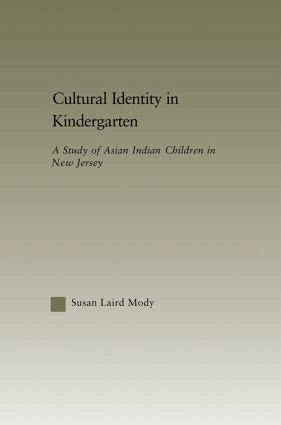
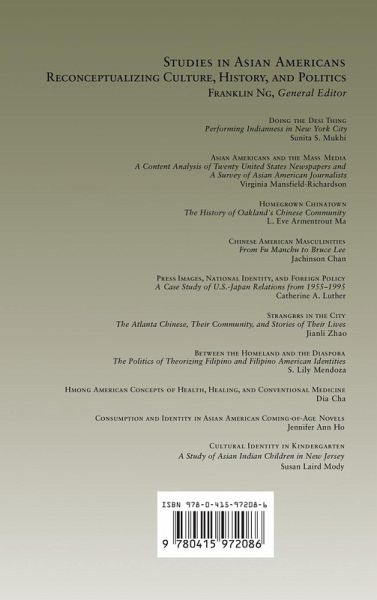
The purpose of this study is to explore play and story as forms of early childhood discourse in which cultural identity is both constructed and expressed in the Asian Indian community.
Acknowledgements Abstract List of Tables 1. Introduction and Methodology Statement of the Problem Research Questions Conceptual Framework Settings Methodology 2. Literature Review Cultural Identity in Social Worlds Children in Social Worlds Play and Discourse Studies in Ethnicity Asian Cultural Identity 3. Stony Brook: Stepping Stone to Success School Context: Constraint, Memory and Diversity Classroom Culture: Private Offices and Memory Machines Peer Interactions: Team and Familial Networking Styles Home is a Different Story The Ascriptive-Assertive Identity Stream Convergence of Voice in Rhetorical Practice 4. Fair Bridge: Trying to Mix School Context: Learning to be Friendly Classroom Culture: Time for Talk and Work Peer Interactions: Role Elaborations in Play Networks Visible Families, Separate Neighborhoods Identities in Dialogic Streams Varieties in Expressive Practice 5. Glimpses of Indian Familial Contexts Amalgamating, Incorporating and Proliferating Identity Interests Local Views of Indian Family Relationship Styles General Patterns in Talk and Play 6. Cultural Recognitions Harmonies: Mirroring Selves Discords: Constructing Safety Zones Boundary Work in Comic, Scary and Moral Discourse Kindergarten Ontologies 7. Conclusions Summary Implications References A ppendices A. Parent Consent Form B. Parent Consent Form in Spanish C. Stony Brook Demographics D. Fair Bridge Demographics
Acknowledgements Abstract List of Tables 1. Introduction and Methodology Statement of the Problem Research Questions Conceptual Framework Settings Methodology 2. Literature Review Cultural Identity in Social Worlds Children in Social Worlds Play and Discourse Studies in Ethnicity Asian Cultural Identity 3. Stony Brook: Stepping Stone to Success School Context: Constraint, Memory and Diversity Classroom Culture: Private Offices and Memory Machines Peer Interactions: Team and Familial Networking Styles Home is a Different Story The Ascriptive-Assertive Identity Stream Convergence of Voice in Rhetorical Practice 4. Fair Bridge: Trying to Mix School Context: Learning to be Friendly Classroom Culture: Time for Talk and Work Peer Interactions: Role Elaborations in Play Networks Visible Families, Separate Neighborhoods Identities in Dialogic Streams Varieties in Expressive Practice 5. Glimpses of Indian Familial Contexts Amalgamating, Incorporating and Proliferating Identity Interests Local Views of Indian Family Relationship Styles General Patterns in Talk and Play 6. Cultural Recognitions Harmonies: Mirroring Selves Discords: Constructing Safety Zones Boundary Work in Comic, Scary and Moral Discourse Kindergarten Ontologies 7. Conclusions Summary Implications References A ppendices A. Parent Consent Form B. Parent Consent Form in Spanish C. Stony Brook Demographics D. Fair Bridge Demographics
Es gelten unsere Allgemeinen Geschäftsbedingungen: www.buecher.de/agb
Impressum
www.buecher.de ist ein Internetauftritt der buecher.de internetstores GmbH
Geschäftsführung: Monica Sawhney | Roland Kölbl | Günter Hilger
Sitz der Gesellschaft: Batheyer Straße 115 - 117, 58099 Hagen
Postanschrift: Bürgermeister-Wegele-Str. 12, 86167 Augsburg
Amtsgericht Hagen HRB 13257
Steuernummer: 321/5800/1497
USt-IdNr: DE450055826