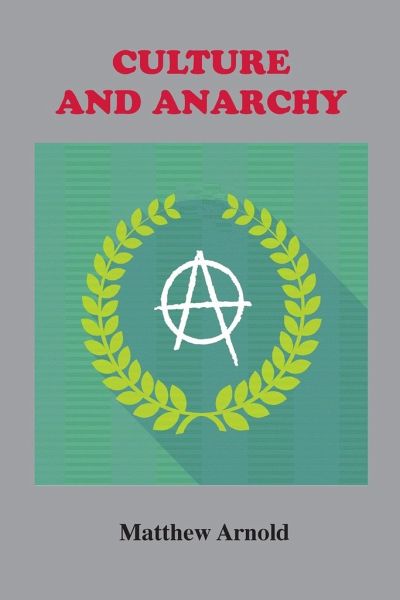
This is the complete edition, which includes the 40-page Editor’s Introduction. This well-known study is essential reading for those interested in the importance of culture and how to nurture its positive growth. Creating a harmonious growth of all facets of culture has become much more of a challenge in modern times. Following the precepts of this book can help insure success. Arnold is a champion for what he called an "organic" society—one that evolves slowly, grows into maturity, and avoids making great leaps into new forms of change that could, as a result, create trouble. There have…mehr
This is the complete edition, which includes the 40-page Editor’s Introduction. This well-known study is essential reading for those interested in the importance of culture and how to nurture its positive growth. Creating a harmonious growth of all facets of culture has become much more of a challenge in modern times. Following the precepts of this book can help insure success. Arnold is a champion for what he called an "organic" society—one that evolves slowly, grows into maturity, and avoids making great leaps into new forms of change that could, as a result, create trouble. There have always been those who are unhappy and wish to stir up unrest. If society can remain strong from the foundation that it has built, then anarchy will develop no foothold. Arnold provides a clear contrast between culture and the unrest that was prevalent in Victorian England, when this book was written. We can learn much from this study. From time to time, deep divisions can emerge in society. These social divisions often come from those who hold more radical ideologies from the norm. They attempt to create mistrust of authority, stereotyping, and the growth of fear in an effort to incite others and bring down the system. From studying this book one can better see how we got where we are today, and what may be needed to keep us going in a relatively safe way into the future, despite the increasing complexities we now face in the world today.
English poet and culture critic Matthew Arnold was born on December 24, 1822, and died on April 15, 1888. He also worked as a school inspector. He was born to Thomas Arnold, who was the famous teacher of Rugby School, and his siblings were Tom Arnold, who taught literature, and William Delafield Arnold, who wrote novels and ran the colonies. People have called Matthew Arnold a "sage writer," which means that his books chastise and teach the reader about modern social problems. He also worked as a school inspector for 35 years and backed the idea of secondary education being regulated by the state. Thomas Arnold and his wife Mary Penrose Arnold (1791-1873) had one son. He was born on December 24, 1822, in Laleham-On-Thames, Middlesex. Matthew asked John Keble to be his godfather. In 1828, Thomas Arnold was made Headmaster of Rugby School, which is where the family moved that same year. Arnold was taught in Laleham by his priest uncle John Buckland starting in 1831. In 1834, the Arnold family stayed at Fox How, a vacation home in the Lake District. Wordsworth lived nearby and was friendly with the people who lived there.
Es gelten unsere Allgemeinen Geschäftsbedingungen: www.buecher.de/agb
Impressum
www.buecher.de ist ein Internetauftritt der buecher.de internetstores GmbH
Geschäftsführung: Monica Sawhney | Roland Kölbl | Günter Hilger
Sitz der Gesellschaft: Batheyer Straße 115 - 117, 58099 Hagen
Postanschrift: Bürgermeister-Wegele-Str. 12, 86167 Augsburg
Amtsgericht Hagen HRB 13257
Steuernummer: 321/5800/1497
USt-IdNr: DE450055826