Lynne P. Sullivan, Terry S. Childs
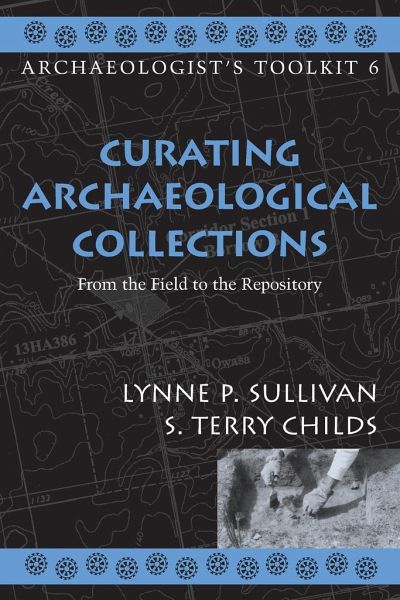
Curating Archaeological Collections
From the Field to the Repository
Lynne P. Sullivan, Terry S. Childs
Curating Archaeological Collections
From the Field to the Repository
- Broschiertes Buch
- Merkliste
- Auf die Merkliste
- Bewerten Bewerten
- Teilen
- Produkt teilen
- Produkterinnerung
- Produkterinnerung
Introduction to curation and preservation of archaeological materials.
Andere Kunden interessierten sich auch für
Arthur MacgregorA Summary Catalogue of the Continental Archaeological Collections (Roman Iron Age, Migration Period, Early Medieval)132,99 €
Active Collections46,99 €
Hamido HammadeCylinder Seals from the Collections of the Aleppo Museum, Syrian Arab Republic74,99 €
Arthur MacgregorA Summary Catalogue of the Anglo-Saxon Collections (Non-Ferrous Metals)129,99 €
Astrid NunnStamp Seals from the Collections of the Aleppo Museum, Syrian Arab Republic81,99 €
Curating Art177,99 €
Mitch J. HendricksonDesign Analysis of Chihuahuan Polychrome Jars from North American Museum Collections56,99 €-
-
-
Produktdetails
- Produktdetails
- Verlag: Altamira Press
- Seitenzahl: 164
- Erscheinungstermin: 12. März 2003
- Englisch
- Abmessung: 229mm x 152mm x 9mm
- Gewicht: 248g
- ISBN-13: 9780759100244
- ISBN-10: 0759100241
- Artikelnr.: 21359997
- Herstellerkennzeichnung
- Libri GmbH
- Europaallee 1
- 36244 Bad Hersfeld
- gpsr@libri.de
- Verlag: Altamira Press
- Seitenzahl: 164
- Erscheinungstermin: 12. März 2003
- Englisch
- Abmessung: 229mm x 152mm x 9mm
- Gewicht: 248g
- ISBN-13: 9780759100244
- ISBN-10: 0759100241
- Artikelnr.: 21359997
- Herstellerkennzeichnung
- Libri GmbH
- Europaallee 1
- 36244 Bad Hersfeld
- gpsr@libri.de
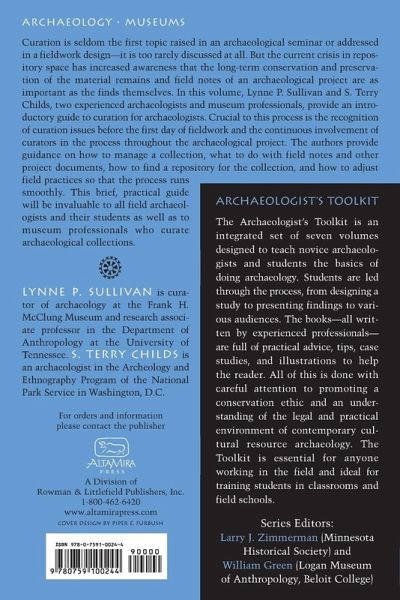
Lynne P. Sullivan is curator of archaeology at the Frank H. McClung Museum and research associate professor in the Department of Anthropology at the University of Tennessee. S. Terry Childs is an archaeologist in the Archeology and Ethnography Program of the National Park Service in Washington, D.C.
Part 1 Series Editors' Foreword
Part 2 Acknowledgments
Part 3 1 Introduction
Part 4 2 A Brief History of Archaeological Curation in the United States
Chapter 5 The Museum Era of Archaeology: Nineteenth Century to the 1930s /
Early Federal Archaeology Programs: 1930s and 1940s / The Postwar
Construction Boom and the "New Archaeology": 1945 to 1970 / Making versus
Caring for Collections: The 1970s and Beyond /
Part 6 3 The Current Status of Archaeological Collections
Chapter 7 Federal Legislation and Policy / Key Elements of the Curation
Crisis / The Bright Side
Part 8 4 Repositories: What Are They, and What Do They Do?
Chapter 9 Kinds of Repositories / What a Repository Does and Why /
Responsibilities and Training of Repository Staff / Conclusion
Part 10 5 Managing Curated Collections: The Basics
Chapter 11 Acquistions Policies and Practices / Accessioning / Cataloging /
Collections Preparation: Labeling and Conservation / Storage / Inventory
Control and Data Management / Deaccessioning / Public Access and Use /
Conclusion
Part 12 6 Making a Collection: Fieldwork Practices and Curation
Considerations
Chapter 13 Before the Field: Project Design / In the Field: Sampling and
Conservation / In the Laboratory: Applying the Sampling Strategy and More
Conservation / In Your Office after the Field Project: Records Management /
Conclusion
Part 14 7 Working with a Repository
Chapter 15 Arranging for Long-term Curation / Using Curated Collections /
ConclusionPart 16 8 The Future of Archaeological Collections Curation
Chapter 17 Access: Collections in the Computer Age / Use of Curated
Collections / The "Big Picture": Curated Collections as Samples of the
Archaeological Record / Encouraging Repositories to Curate Representative
Samples of the Archaeological Record / Coordinated
Part 18 Appendix: Useful Internet Sites Relating to Curating Archaeological
Collections
Part 19 References
Part 20 Index
Part 21 About the Authors

Part 2 Acknowledgments
Part 3 1 Introduction
Part 4 2 A Brief History of Archaeological Curation in the United States
Chapter 5 The Museum Era of Archaeology: Nineteenth Century to the 1930s /
Early Federal Archaeology Programs: 1930s and 1940s / The Postwar
Construction Boom and the "New Archaeology": 1945 to 1970 / Making versus
Caring for Collections: The 1970s and Beyond /
Part 6 3 The Current Status of Archaeological Collections
Chapter 7 Federal Legislation and Policy / Key Elements of the Curation
Crisis / The Bright Side
Part 8 4 Repositories: What Are They, and What Do They Do?
Chapter 9 Kinds of Repositories / What a Repository Does and Why /
Responsibilities and Training of Repository Staff / Conclusion
Part 10 5 Managing Curated Collections: The Basics
Chapter 11 Acquistions Policies and Practices / Accessioning / Cataloging /
Collections Preparation: Labeling and Conservation / Storage / Inventory
Control and Data Management / Deaccessioning / Public Access and Use /
Conclusion
Part 12 6 Making a Collection: Fieldwork Practices and Curation
Considerations
Chapter 13 Before the Field: Project Design / In the Field: Sampling and
Conservation / In the Laboratory: Applying the Sampling Strategy and More
Conservation / In Your Office after the Field Project: Records Management /
Conclusion
Part 14 7 Working with a Repository
Chapter 15 Arranging for Long-term Curation / Using Curated Collections /
ConclusionPart 16 8 The Future of Archaeological Collections Curation
Chapter 17 Access: Collections in the Computer Age / Use of Curated
Collections / The "Big Picture": Curated Collections as Samples of the
Archaeological Record / Encouraging Repositories to Curate Representative
Samples of the Archaeological Record / Coordinated
Part 18 Appendix: Useful Internet Sites Relating to Curating Archaeological
Collections
Part 19 References
Part 20 Index
Part 21 About the Authors
Part 1 Series Editors' Foreword
Part 2 Acknowledgments
Part 3 1 Introduction
Part 4 2 A Brief History of Archaeological Curation in the United States
Chapter 5 The Museum Era of Archaeology: Nineteenth Century to the 1930s /
Early Federal Archaeology Programs: 1930s and 1940s / The Postwar
Construction Boom and the "New Archaeology": 1945 to 1970 / Making versus
Caring for Collections: The 1970s and Beyond /
Part 6 3 The Current Status of Archaeological Collections
Chapter 7 Federal Legislation and Policy / Key Elements of the Curation
Crisis / The Bright Side
Part 8 4 Repositories: What Are They, and What Do They Do?
Chapter 9 Kinds of Repositories / What a Repository Does and Why /
Responsibilities and Training of Repository Staff / Conclusion
Part 10 5 Managing Curated Collections: The Basics
Chapter 11 Acquistions Policies and Practices / Accessioning / Cataloging /
Collections Preparation: Labeling and Conservation / Storage / Inventory
Control and Data Management / Deaccessioning / Public Access and Use /
Conclusion
Part 12 6 Making a Collection: Fieldwork Practices and Curation
Considerations
Chapter 13 Before the Field: Project Design / In the Field: Sampling and
Conservation / In the Laboratory: Applying the Sampling Strategy and More
Conservation / In Your Office after the Field Project: Records Management /
Conclusion
Part 14 7 Working with a Repository
Chapter 15 Arranging for Long-term Curation / Using Curated Collections /
ConclusionPart 16 8 The Future of Archaeological Collections Curation
Chapter 17 Access: Collections in the Computer Age / Use of Curated
Collections / The "Big Picture": Curated Collections as Samples of the
Archaeological Record / Encouraging Repositories to Curate Representative
Samples of the Archaeological Record / Coordinated
Part 18 Appendix: Useful Internet Sites Relating to Curating Archaeological
Collections
Part 19 References
Part 20 Index
Part 21 About the Authors
Part 2 Acknowledgments
Part 3 1 Introduction
Part 4 2 A Brief History of Archaeological Curation in the United States
Chapter 5 The Museum Era of Archaeology: Nineteenth Century to the 1930s /
Early Federal Archaeology Programs: 1930s and 1940s / The Postwar
Construction Boom and the "New Archaeology": 1945 to 1970 / Making versus
Caring for Collections: The 1970s and Beyond /
Part 6 3 The Current Status of Archaeological Collections
Chapter 7 Federal Legislation and Policy / Key Elements of the Curation
Crisis / The Bright Side
Part 8 4 Repositories: What Are They, and What Do They Do?
Chapter 9 Kinds of Repositories / What a Repository Does and Why /
Responsibilities and Training of Repository Staff / Conclusion
Part 10 5 Managing Curated Collections: The Basics
Chapter 11 Acquistions Policies and Practices / Accessioning / Cataloging /
Collections Preparation: Labeling and Conservation / Storage / Inventory
Control and Data Management / Deaccessioning / Public Access and Use /
Conclusion
Part 12 6 Making a Collection: Fieldwork Practices and Curation
Considerations
Chapter 13 Before the Field: Project Design / In the Field: Sampling and
Conservation / In the Laboratory: Applying the Sampling Strategy and More
Conservation / In Your Office after the Field Project: Records Management /
Conclusion
Part 14 7 Working with a Repository
Chapter 15 Arranging for Long-term Curation / Using Curated Collections /
ConclusionPart 16 8 The Future of Archaeological Collections Curation
Chapter 17 Access: Collections in the Computer Age / Use of Curated
Collections / The "Big Picture": Curated Collections as Samples of the
Archaeological Record / Encouraging Repositories to Curate Representative
Samples of the Archaeological Record / Coordinated
Part 18 Appendix: Useful Internet Sites Relating to Curating Archaeological
Collections
Part 19 References
Part 20 Index
Part 21 About the Authors