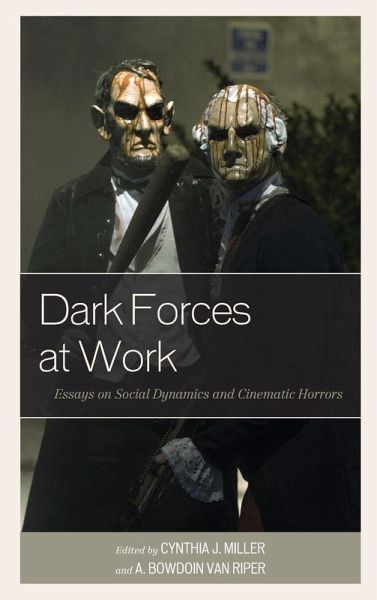
This collection focuses on the social forces and ideologies—such as race, class, gender, religion, and the economy—that play a key role in constructing and framing fear, monsters, and the monstrous across a range of films and eras.
This collection focuses on the social forces and ideologies—such as race, class, gender, religion, and the economy—that play a key role in constructing and framing fear, monsters, and the monstrous across a range of films and eras.
Cynthia J. Miller is senior faculty at the Emerson College Institute for the Liberal Arts and Interdisciplinary Studies. A. Bowdoin Van Riper is a historian who specializes in depictions of science and technology in popular culture.
Inhaltsangabe
Introduction Part I. National Identity: Haunting the Homeland Chapter One: Ringing Home, Missed Calls, and Unbroken Land-lines: Domestication of, and Miscommunication in, K- and J- Horror Rea Amit Chapter Two: Redefining the Heimat: Austrian Horror Cinema and the "Home" in a Global Age Michael Fuchs Chapter Three: Korean National Trauma and the Myth of Hypermasculinity in The Wailing (2016) Luisa Koo Chapter Four: The Witch, the Wolf, and the Monster: Monstrous Bodies and Empire in Penny Dreadful Allyson Marino Part II. Market Forces and Their Monsters Chapter Five: Recession Horror: The Haunted Housing Crisis in Contemporary Fiction Lindsey Michael Banco Chapter Six: Classism and Horror in the Seventies: The Rural Dweller as a Monster Erika Tiburcio Moreno Chapter Seven: All Against All: Dystopia, Dark Forces, and Hobbesian Anarchy in the Purge Films A. Bowdoin Van Riper Chapter Eight: Motor City Gothic: White Youth and Economic Anxiety in It Follows and Don't Breathe Russell Meeuf and Benjamin James Part III. Ideology: You Just Have to Believe Chapter Nine: Gothic Neoliberalism in 1980s British Horror Cinema Fernando Gabriel Pagnoni Berns, Juan Juvé, and Emiliano Aguilar Chapter Ten: Infringing on Cycles of Oppression: Artisanal Bricolage and Synthesis in Mumblegore Brandon Niezgoda Chapter Eleven: Faith as Confinement: Alejandro Amenábar's The Others (2004) Maria Gil Poisa Part IV. History Never Dies Chapter Twelve: The Pursuit of Certainty: Legends and Local Knowledge in Candyman Cynthia J. Miller Chapter Thirteen: "Nothing Is What It Seems": Montage and Misread Histories in Nicolas Roeg's Don't Look Now (1973) Thomas Prasch Chapter Fourteen: "Tens of Thousands of Men Died Here": Desire, Revenge, and Memories of War in Edgar G. Ulmer's The Black Cat James J. Ward Chapter Fifteen: Peril, Imprisonment, and the Power of Place in Jordan Peele's Get Out Michael C. Reiff Part V. The Horrors of Place Chapter Sixteen: The Hovel Condemned: The Environmental Psychology of Place in Horror Jacqueline Morrill Chapter Seventeen: Coming Home to Horror: Stephen King's Derry and Castle Rock Alissa Burger Chapter Eighteen: It Follows and the Uncertainties of the Middle Class Katherine Lizza Chapter Nineteen: "We're all in our private traps": Reconfiguring Suburbia's Protective Borders in Psycho (1960) Kevin Thomas McKenna
Introduction Part I. National Identity: Haunting the Homeland Chapter One: Ringing Home, Missed Calls, and Unbroken Land-lines: Domestication of, and Miscommunication in, K- and J- Horror Rea Amit Chapter Two: Redefining the Heimat: Austrian Horror Cinema and the "Home" in a Global Age Michael Fuchs Chapter Three: Korean National Trauma and the Myth of Hypermasculinity in The Wailing (2016) Luisa Koo Chapter Four: The Witch, the Wolf, and the Monster: Monstrous Bodies and Empire in Penny Dreadful Allyson Marino Part II. Market Forces and Their Monsters Chapter Five: Recession Horror: The Haunted Housing Crisis in Contemporary Fiction Lindsey Michael Banco Chapter Six: Classism and Horror in the Seventies: The Rural Dweller as a Monster Erika Tiburcio Moreno Chapter Seven: All Against All: Dystopia, Dark Forces, and Hobbesian Anarchy in the Purge Films A. Bowdoin Van Riper Chapter Eight: Motor City Gothic: White Youth and Economic Anxiety in It Follows and Don't Breathe Russell Meeuf and Benjamin James Part III. Ideology: You Just Have to Believe Chapter Nine: Gothic Neoliberalism in 1980s British Horror Cinema Fernando Gabriel Pagnoni Berns, Juan Juvé, and Emiliano Aguilar Chapter Ten: Infringing on Cycles of Oppression: Artisanal Bricolage and Synthesis in Mumblegore Brandon Niezgoda Chapter Eleven: Faith as Confinement: Alejandro Amenábar's The Others (2004) Maria Gil Poisa Part IV. History Never Dies Chapter Twelve: The Pursuit of Certainty: Legends and Local Knowledge in Candyman Cynthia J. Miller Chapter Thirteen: "Nothing Is What It Seems": Montage and Misread Histories in Nicolas Roeg's Don't Look Now (1973) Thomas Prasch Chapter Fourteen: "Tens of Thousands of Men Died Here": Desire, Revenge, and Memories of War in Edgar G. Ulmer's The Black Cat James J. Ward Chapter Fifteen: Peril, Imprisonment, and the Power of Place in Jordan Peele's Get Out Michael C. Reiff Part V. The Horrors of Place Chapter Sixteen: The Hovel Condemned: The Environmental Psychology of Place in Horror Jacqueline Morrill Chapter Seventeen: Coming Home to Horror: Stephen King's Derry and Castle Rock Alissa Burger Chapter Eighteen: It Follows and the Uncertainties of the Middle Class Katherine Lizza Chapter Nineteen: "We're all in our private traps": Reconfiguring Suburbia's Protective Borders in Psycho (1960) Kevin Thomas McKenna
Es gelten unsere Allgemeinen Geschäftsbedingungen: www.buecher.de/agb
Impressum
www.buecher.de ist ein Internetauftritt der buecher.de internetstores GmbH
Geschäftsführung: Monica Sawhney | Roland Kölbl | Günter Hilger
Sitz der Gesellschaft: Batheyer Straße 115 - 117, 58099 Hagen
Postanschrift: Bürgermeister-Wegele-Str. 12, 86167 Augsburg
Amtsgericht Hagen HRB 13257
Steuernummer: 321/5800/1497
USt-IdNr: DE450055826