
Andere Kunden interessierten sich auch für
 Eer En Trouw, Of Het Lijden En De Vreugde Eener Brave, Doch Ongelukkige Familie: Een Belangrijk Verhaal Uit De Geschiedenis Van Onzen Leeftijd, Volume29,99 €
") Geschiedenis Der Noord-Nederlandsche Letteren In De Xix Eeuw, Part 3 (1889)28,99 €
Geschiedenis Der Noord-Nederlandsche Letteren In De Xix Eeuw, Part 3 (1889)28,99 €") Handboekje Van De Geschiedenis Der Zending (1891)14,99 €
Handboekje Van De Geschiedenis Der Zending (1891)14,99 € Archief Voor De Geschiedenis Der Oude Hollandsche Zending V3-434,99 €
") Bijdrage Tot De Geschiedenis Van Het Utrechtsche Schisma (1892)16,99 €
Bijdrage Tot De Geschiedenis Van Het Utrechtsche Schisma (1892)16,99 €") De Levens Geschiedenis Van Orland De Lassus (1841)12,99 €
De Levens Geschiedenis Van Orland De Lassus (1841)12,99 €") Geschiedenis Van Den Oorsprong En De Lotgevallen Der Mormonen (1855)19,99 €
Geschiedenis Van Den Oorsprong En De Lotgevallen Der Mormonen (1855)19,99 €
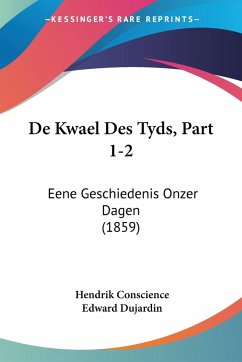
De Kwael Des Tyds, Part 1-2: Eene Geschiedenis Onzer Dagen (1859) is een boek geschreven door de Belgische schrijver Hendrik Conscience. Het boek vertelt het verhaal van de geschiedenis van de samenleving in de tijd waarin het geschreven is, namelijk de 19e eeuw. Het boek is verdeeld in twee delen en beschrijft de politieke, sociale en culturele ontwikkelingen van die tijd. Het is een belangrijk werk in de Belgische literatuur en geeft inzicht in de geschiedenis van Belgi¿¿¿¿¿. Het boek is geschreven in het Nederlands en is een interessante bron voor iedereen die ge¿¿¿¿¿nteresseerd is in de geschiedenis van Belgi¿¿¿¿¿ en de ontwikkeling van de samenleving in de 19e eeuw.This Book Is In Dutch.This scarce antiquarian book is a facsimile reprint of the old original and may contain some imperfections such as library marks and notations. Because we believe this work is culturally important, we have made it available as part of our commitment for protecting, preserving, and promoting the world's literature in affordable, high quality, modern editions, that are true to their original work.