
Andere Kunden interessierten sich auch für
 De Ciceronis Et Calvi Reliquorum-que Atticorum Arte Dicendi Quaestiones...15,99 €
 Ars Dicendi Priscorum Potissimum Praeceptis Et Exemplis...24,99 €
 M. Tullii Ciceronis De Oratore Liber Primus, With Notes of K.W. Piderit Tr. and Ed. by A.S. Wilkins17,99 €
 Cicero De Oratore25,99 €
 The Rhetoric of Aristotle22,99 €
 The Rhetoric of Aristotle20,99 €
 Ars Rhetorica22,99 €

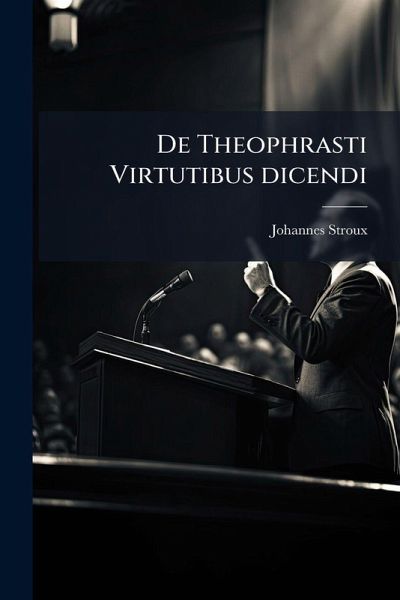
De Theophrasti Virtutibus dicendi is a scholarly work by Johannes Stroux, originally published in 1912. Written in Latin, it explores the rhetorical theories of Theophrastus, a successor to Aristotle in the Peripatetic school. This book delves into Theophrastus's teachings on the virtues of effective and persuasive speech, offering insights into classical rhetoric and its underlying philosophical principles. Stroux's work provides valuable material for students and scholars interested in the history of rhetoric, classical philosophy, and ancient linguistics. It remains a significant resource for understanding the evolution of rhetorical theory from the classical period. This work has been selected by scholars as being culturally important, and is part of the knowledge base of civilization as we know it. This work was reproduced from the original artifact, and remains as true to the original work as possible. Therefore, you will see the original copyright references, library stamps (as most of these works have been housed in our most important libraries around the world), and other notations in the work. This work is in the public domain in the United States of America, and possibly other nations. Within the United States, you may freely copy and distribute this work, as no entity (individual or corporate) has a copyright on the body of the work. As a reproduction of a historical artifact, this work may contain missing or blurred pages, poor pictures, errant marks, etc. Scholars believe, and we concur, that this work is important enough to be preserved, reproduced, and made generally available to the public. We appreciate your support of the preservation process, and thank you for being an important part of keeping this knowledge alive and relevant.