
Andere Kunden interessierten sich auch für
 The Commentaries of Cæsar17,99 €
 Hand-book To Map To Illustrate Cæsar De Bello Gallico15,99 €
 History of Julius Cæsar22,99 €
![History of Julius Cæsar [By Napoleon Iii, Transl.]. 2 Vols. [And] Atlas]( "History of Julius Cæsar [By Napoleon Iii, Transl.]. 2 Vols. [And] Atlas") History of Julius Cæsar [By Napoleon Iii, Transl.]. 2 Vols. [And] Atlas26,99 €
History of Julius Cæsar [By Napoleon Iii, Transl.]. 2 Vols. [And] Atlas26,99 € Julius CÆsar25,99 €
![The Commentaries of Cæsar On His Wars in Gaul [Books 1-4] Literally Tr]( "The Commentaries of Cæsar On His Wars in Gaul [Books 1-4] Literally Tr") The Commentaries of Cæsar On His Wars in Gaul [Books 1-4] Literally Tr17,99 €
The Commentaries of Cæsar On His Wars in Gaul [Books 1-4] Literally Tr17,99 € Cæsar25,99 €
![History of Julius Cæsar [By Napoleon Iii, Transl.]. 2 Vols. [And] Atlas](https://bilder.buecher.de/produkte/68/68926/68926997m.jpg "History of Julius Cæsar [By Napoleon Iii, Transl.]. 2 Vols. [And] Atlas")

![The Commentaries of Cæsar On His Wars in Gaul [Books 1-4] Literally Tr](https://bilder.buecher.de/produkte/68/68922/68922372m.jpg "The Commentaries of Cæsar On His Wars in Gaul [Books 1-4] Literally Tr")

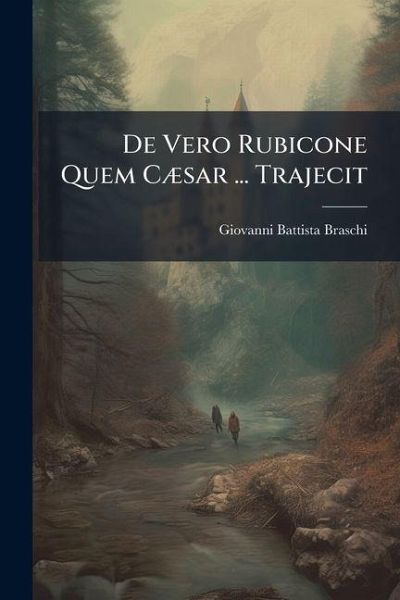
Uma análise histórica do verdadeiro rio Rubicão que Júlio César atravessou. Este livro explora em detalhes o contexto histórico e geográfico da famosa travessia de César, oferecendo uma perspectiva aprofundada sobre um dos momentos mais significativos da história romana. Giovanni Battista Braschi examina as fontes primárias e os relatos contemporâneos para identificar o verdadeiro Rubicão e entender as implicações políticas e militares da decisão de César. Uma leitura essencial para historiadores e entusiastas da história romana. This work has been selected by scholars as being culturally important, and is part of the knowledge base of civilization as we know it. This work was reproduced from the original artifact, and remains as true to the original work as possible. Therefore, you will see the original copyright references, library stamps (as most of these works have been housed in our most important libraries around the world), and other notations in the work. This work is in the public domain in the United States of America, and possibly other nations. Within the United States, you may freely copy and distribute this work, as no entity (individual or corporate) has a copyright on the body of the work. As a reproduction of a historical artifact, this work may contain missing or blurred pages, poor pictures, errant marks, etc. Scholars believe, and we concur, that this work is important enough to be preserved, reproduced, and made generally available to the public. We appreciate your support of the preservation process, and thank you for being an important part of keeping this knowledge alive and relevant.